
 EN
EN

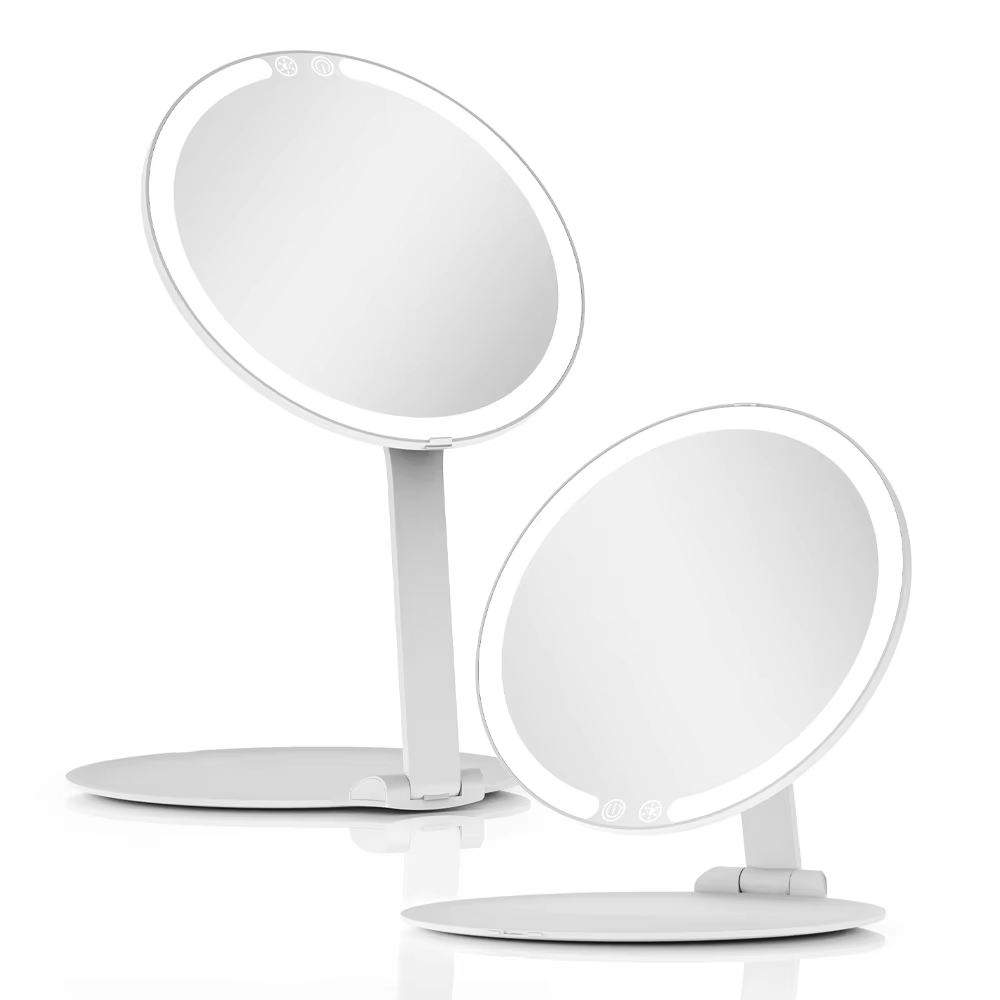
Understanding Magnifying Mirror Basics: How Magnification Affects Clarity, Field of View, and Usability
How magnification is calculated and why focal distance matters more than number alone
The magnification level shown on mirrors (like 5x or 10x) basically tells us how much bigger things look compared to when we use our naked eye. This depends largely on how curved the lenses are and how they're put together optically. However, what really matters for everyday use is something called focal distance. This refers to the sweet spot where your face should be positioned relative to the mirror surface. When going for higher magnifications, people need to get super close. At 10x magnification, someone needs to be only about 4 to 6 inches from the mirror, which makes everything appear much smaller than at 5x. The result? A kind of tunnel vision effect that leaves out parts of the face around the edges when applying makeup or shaving. According to basic optics principles, there's always a compromise here. Double the magnification and suddenly half the viewing area disappears, plus small hand movements become three times more noticeable. That's why it's smarter to look for mirrors designed with comfortable focal lengths that work with how most people naturally lean forward rather than chasing after whatever high number happens to be printed on the box.
The critical role of lighting and mirror stability in maximizing magnifying mirror performance
Good magnification won't show details unless there's proper lighting and absolutely no shaking involved. At around 5 times magnification and above, shadows start messing with those tiny features we want to see clearly. Most homes have bathroom lights under 500 lux according to recent studies, which isn't enough for detailed makeup work or skincare routines. That's why many professionals use LED rings rated at least 90 on the Color Rendering Index scale. These provide even lighting without harsh shadows and help maintain natural skin colors during procedures. Stability matters just as much though. Move a mirror even half a millimeter and at 10x magnification it looks like five whole millimeters of wobble. Lash artists know this well, which is why they mount their mirrors securely on tripods or attach them directly to walls. When both good lighting and solid construction come together, what was once frustrating becomes actually useful for close-up work.
5x Magnifying Mirror: The Gold Standard for Daily Makeup Application
Why 5x delivers optimal precision for eyeliner, concealer, brows, and mascara without distortion
Magnification at five times offers probably the best compromise for most people looking for clear vision without losing usability. This level really helps with things like applying eyeliner properly, covering those pesky spots, shaping eyebrows just right, and blending mascara smoothly. What makes it special is how it avoids problems that come with stronger magnifications like warped perspective, limited visibility area, and sensitivity to hand shaking. The broader viewing area lets makeup artists move seamlessly from one part of the face to another. Plus, since the optimal distance for focusing is around 12 to 18 inches away, users can hold these tools comfortably in their hands or attach them to adjustable arms without having to stretch their arms out uncomfortably or lean forward in strange ways.
Real-world validation: 72% of professional makeup artists prefer 5x for routine tasks (2023 MUA Survey)
According to a 2023 poll involving around 450 pro makeup artists, roughly 7 out of 10 pick 5x magnification as their go-to tool for day to day work. Most say they prefer it because it stays steady when hands move naturally, doesn't need those super bright lights everywhere, and just plain feels easier on the eyes after hours of use. What stands out is what people had to say about 10x mirrors. Many found them actually got in the way during regular jobs. It wasn't that there was less detail visible, but rather that small hand shakes became bigger problems and constantly adjusting position messed with their usual workflow and precision.
10x Magnifying Mirror: When Ultra-Precision Is Required—And When It Isn’t
While 5x mirrors meet the needs of most daily routines, magnifying mirrors with 10x magnification serve highly specialized functions requiring sub-millimeter scrutiny. This level enables procedures impossible at lower zoom—but only when physical and environmental conditions are precisely controlled.
Targeted use cases: Lash extension placement, beard line refinement, and ingrown hair removal
A tenfold magnifier makes all the difference when working with individual lashes for extensions, tracing those tiny hair growth patterns to get sharp beard lines, and spotting follicles hidden just below the skin during ingrown hair treatments. Most dermatologists point to 10x as their go to choice for dealing with those stubborn ingrown hairs because it shows what's going on underneath without needing any cutting or poking around. The thing is, this kind of magnification works best for short, targeted jobs rather than trying to do entire faces at once. We're talking about anything that takes less than two and a half minutes really.
The hidden risks: Increased tremor amplification, narrowed field of view, and lighting dependency
The limitations of 10x magnification are physical, not perceptual:
- Tremor amplification: Natural hand motion appears 10x more pronounced, making steady-line work like eyeliner impractical without bracing
- Severely restricted field: Users see only ~2–3 cm² per glance—roughly the size of a coffee cup’s base—increasing risk of uneven coverage or missed areas
- Extreme lighting demands: Shadows become obstructive without ¥1000 lux illumination, comparable to clinical or surgical settings
Ergonomic studies also show 38% greater eye strain with prolonged 10x use versus 5x. These constraints confirm that 10x is a precision tool—not a replacement—for broader cosmetic tasks like foundation blending or contouring.
Choosing the Right Magnifying Mirror: Matching Magnification to Your Routine, Space, and Goals
Picking the right magnification isn't about going for the highest number possible but matching what actually works for how we use mirrors day to day. When applying makeup regularly - think foundation, eyebrows, lipsticks, concealer stuff - getting a 5x magnifier tends to be best for most people. These give enough detail to see what needs fixing without making everything look distorted or forcing awkward angles when looking at ourselves. Save those 10x mirrors for really specific jobs where precision matters a lot, like doing lashes or spot treatments on problem areas. They need good mounting though since they can get heavy, plus pairing them with proper lighting makes all the difference. Some folks prefer wall mounts because they free up precious bathroom counterspace while others like having freestanding ones they can move around as needed. Lighting quality cannot be ignored either. Good dimmable LEDs with high CRI ratings are essential if colors appear true to life and shadows don't ruin our visibility despite great magnification power. And don't forget about comfort factors too! Mirrors with adjustable bases that let us tilt and swivel freely help keep our necks and shoulders from getting sore after spending more than ten minutes staring into them every morning. Ultimately, the mirror should fit into our routine naturally instead of turning grooming time into a painful experience trying to figure out how to position ourselves properly.
FAQ
What is focal distance in magnifying mirrors?
Focal distance refers to the ideal distance at which your face should be positioned from the mirror to achieve clear magnification.
Why is 5x magnification preferred by professional makeup artists?
5x magnification offers optimal clarity without distortion, wider usability, and enhances precision while minimizing drawbacks such as tremor amplification and restricted field.
When should someone use a 10x magnifying mirror?
10x magnification suits specialized tasks requiring high precision, such as lash extensions or ingrown hair treatment, but requires stable setup and good lighting conditions.
Table of Contents
- Understanding Magnifying Mirror Basics: How Magnification Affects Clarity, Field of View, and Usability
- 5x Magnifying Mirror: The Gold Standard for Daily Makeup Application
- 10x Magnifying Mirror: When Ultra-Precision Is Required—And When It Isn’t
- Choosing the Right Magnifying Mirror: Matching Magnification to Your Routine, Space, and Goals
- FAQ