
 EN
EN

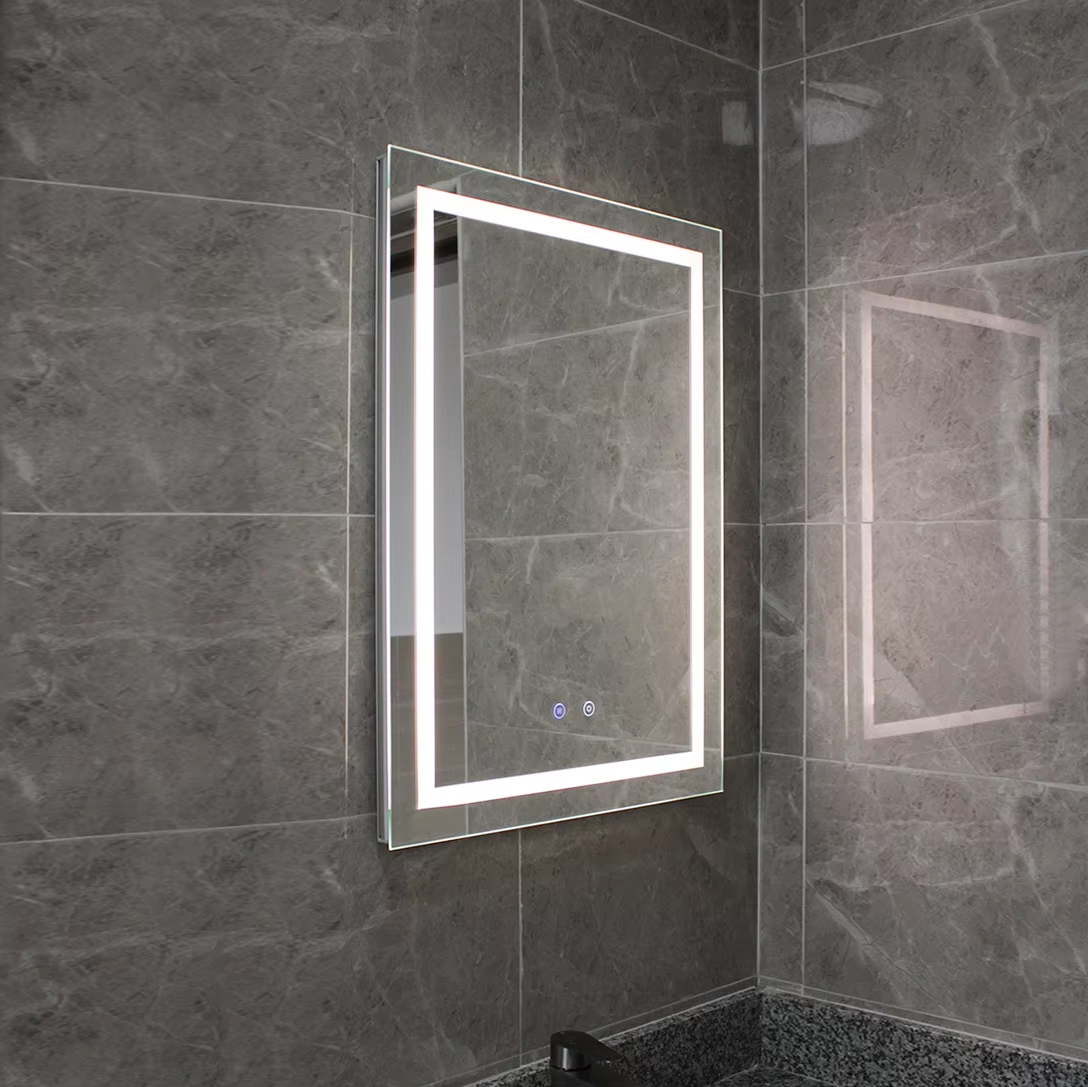
Frameless LED Bathroom Mirrors: Clean Lines and Spatial Harmony
How frameless construction eliminates visual noise and reinforces minimalist purity
Frameless LED mirrors for bathrooms get rid of those thick frames that break up the look of a room. The lack of border makes everything feel cleaner and more modern since there's nothing interrupting the reflection or sticking out from the wall. When there's no frame around it, the mirror just blends right into the wall surface instead of standing out as something extra added on. That helps keep the mind from getting overwhelmed by too many different shapes and textures in small spaces. Especially in tiny bathrooms where every inch counts, these mirrors make rooms appear bigger while still providing good lighting across the whole area. Getting rid of that line between wall and glass means they follow that old saying about doing more with less, combining practicality and style without sacrificing either aspect.
Precision edge finishes—beveled, polished, or seamless—and their role in enhancing perceived simplicity
The minimalist impact of frameless mirrors hinges on precision edge execution. Three refined finishes elevate perceived simplicity:
- Beveled edges (angled 15°—30°) create micro-refractions that define boundaries without visual weight
- Polished edges achieve near-invisible transitions through optical-grade smoothing, appearing as natural extensions of light
- Seamless laser-fused edges bond glass directly to backing, eliminating traditional silicone seams that collect grime
What starts as basic needs like protecting edges and keeping structures intact gets turned into real design features these days. Looking at the latest Bathroom Design Report from 2024, around three out of four designers go for those smooth, polished edges just so everything looks clean and cohesive. When manufacturers hide all the screws and brackets, it creates this floating effect that really sells the whole minimalist vibe. At the end of the day, good minimalism isn't just about stripping things down aesthetically but actually requires some serious attention to how things are built and put together technically speaking.
Backlit LED Bathroom Mirrors: Light as a Minimalist Design Element
Perimeter backlighting as intentional negative space: Creating depth without decoration
LED mirrors with backlighting take bathroom lighting beyond mere illumination to something almost artistic. The gentle glow around the edges acts like negative space in minimalist design, where the light itself serves as decoration. This halo effect adds depth to the room by creating soft shadows on nearby walls, eliminating the need for frames or fancy etchings that can distract from the overall look. What we get is a feeling of more space without all the visual noise. Studies indicate these kinds of indirect lights cut down eye strain by about 40% when compared to standard overhead lighting, which means better comfort during those long morning routines. Mirrors seem to hover slightly above the wall, maintaining a calm atmosphere while still providing good light for tasks like applying makeup or shaving. This approach really fits with the idea that sometimes less truly is more in interior design.
CCT selection (2700K—4000K) and its impact on calm, cohesion, and perceived minimalism
The color temperature of lighting has a real impact on how we feel in minimalist spaces. Warm lights between 2700K and 3000K give off those nice amber tones that create a sense of calm, similar to what we see during sunsets. Some research suggests these warmer colors might actually lower stress hormones by around 17%, though results can vary. Moving up to neutral whites around 3500K to 4000K helps everything look cohesive in bathrooms. These temperatures provide enough brightness for getting ready without feeling too sterile, striking a good balance between function and mood. When all the lights in a bathroom match in color temperature, it creates a seamless environment that supports the clean lines and simplicity of minimalist design. Going beyond 4000K brings in more blue light which tends to energize rather than relax, so picking the right temperature becomes pretty important for maintaining that peaceful minimalist vibe everyone wants.
Slim-Profile and Thoughtful Geometry: Rethinking Form in Minimalist LED Bathroom Mirrors
Beyond rectangle: How subtle asymmetry and custom proportions uphold—rather than violate—minimalist principles
Minimalism doesn't really work when it's all about following rules strictly. Instead, it's about making smart changes that fit the situation, which is exactly what those thin LED mirrors in bathrooms show us. When designers move away from boring square shapes, they create something special. Oval shapes, pill-like designs, or gentle curves at the top edge break up the same old look while still keeping things organized visually. Take a vertical mirror placed over a small sink area for instance. It fills empty spots where nothing else goes, and cutting down the height by maybe around 15% makes the wall feel taller without anyone noticing. Some custom sizes, such as ones that are three times wider than tall, actually match up better with how the room looks naturally. The mirror then becomes part of the space rather than fighting against it. This isn't just about looking good either. These design choices solve real problems with space limitations and light distribution throughout the bathroom. At the end of the day, minimalism comes down to having clear intentions behind every element, not trying to make everything look exactly the same.
Seamless Integration: Technical Execution That Supports Minimalist Intent
True minimalist integrity in an LED bathroom mirror demands unseen engineering rigor. Three non-negotiable technical elements transform design intent into lived experience.
Flush Mounting: Eliminating Visual Gaps
When installed properly, flush mounting presses the mirror flat against the wall surface, getting rid of those annoying shadows and visible seams that break up the look of a room. Done right, it becomes part of the architecture itself rather than just something stuck on the wall. The mounting hardware needs to either go into the wall cavity or match the wall color so the mirror looks like it's floating there somehow. If the brackets are obvious, they create an eyesore that ruins what minimalist design is all about creating harmony throughout space. Most designers know this detail makes all the difference between good installation and great one.
Concealed Wiring: Preserving Uninterrupted Surfaces
When it comes to concealing power cables and switch controls, internal conduits or wall channels do the trick pretty well. Those tiny exposed wires just don't fit with the whole minimalism thing either, since they create visual clutter that goes against the "less is more" principle so many people talk about. These days, wireless switches work great alongside recessed outlets and those fancy touch controls. They keep everything functional without making a mess of the space. The result? A cleaner look where users can really appreciate the play of light and reflections without distractions from wiring or hardware sticking out everywhere.
Ultra-Slim Depth (<25 mm): Achieving Spatial Purity
Mirrors with profiles below 25mm just don't have that bulky look most traditional ones do, making them feel lighter and taking up less visual space, which matters a lot in small bathrooms. New improvements in how LED lights work plus frameless designs make it possible to get such thin mirrors while still getting good performance out of them. The big companies really focus on keeping things cool inside those slim frames because nobody wants their mirror failing after a few months from overheating. All these technical decisions actually deliver on what minimalism promises: spaces where everything has a clear purpose and nothing feels forced or decorative when it shouldn't be.
FAQ
What are frameless LED bathroom mirrors?
Frameless LED bathroom mirrors are those that do not have a visible frame or border, offering a clean and modern look that blends seamlessly into bathroom walls.
Why choose a mirror with a beveled, polished, or seamless edge?
These finishes enhance simplicity. Beveled edges define boundaries without weight, polished edges create smooth transitions, and seamless edges eliminate grime collection points.
How does backlighting improve bathroom mirrors?
Backlighting creates a halo effect, adding depth and softening shadows, reducing the need for extraneous decoration.
What is CCT selection in LED mirrors?
CCT (Correlated Color Temperature) ranges from warm (2700K) to cool (4000K) lights, impacting the ambiance, stress levels, and the overall minimalist feel in spaces.
What benefit does an ultra-slim depth provide for mirrors?
Ultra-slim mirrors (<25mm) reduce bulk, fitting well into small bathrooms, and maintaining minimalist spatial purity.