
 EN
EN

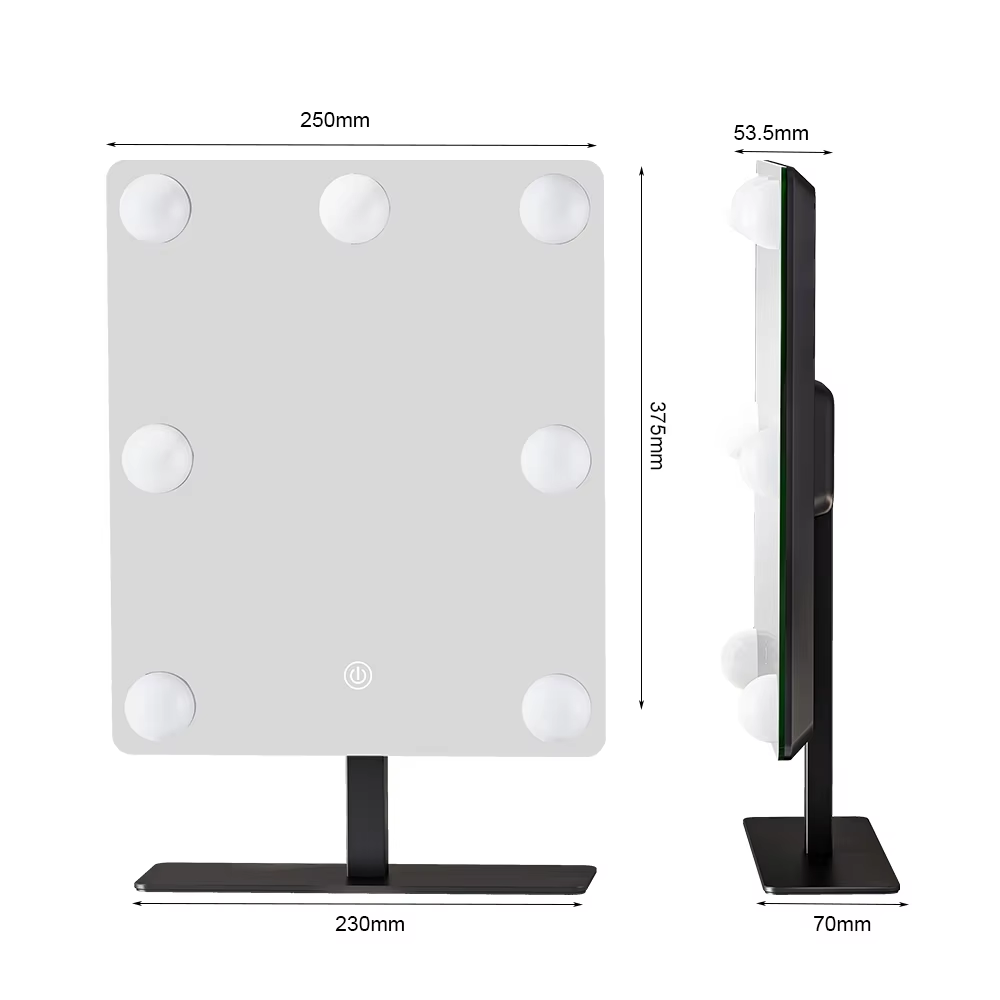
High Color Rendering Index (CRI 90+) for True-to-Life Color Accuracy
Why CRI ≥ 90 Is Non-Negotiable in Professional Makeup Lighting
The Color Rendering Index, or CRI for short, basically tells us how well a light shows colors compared to good old sunshine on a scale from 0 to 100. When it comes to doing makeup professionally, anything below CRI 90 just won't cut it. Lower numbers mess with color perception, making foundations look wrong, contours miss their mark, and eyeshadows shift unexpectedly. With lighting around CRI 80, red tones tend to fade while blue hues get that grayish tint nobody wants. This makes judging skin tones tricky and blending those fine details almost impossible. Some research published in 2025 showed that makeup artists working with mirrors under CRI 90 had about 40% more clients coming back for fixes after problems became obvious in daylight. That's pretty telling evidence about how important proper lighting really is. Regular lights can handle CRI 80 just fine for most things, but makeup mirrors need something much closer to natural light to avoid what we call the "changing room effect" where everything looks perfect indoors but totally falls apart once someone steps outside.
CRI vs. LED Efficiency Trade-Offs: How Top-Tier Makeup Mirrors with Lights Preserve Fidelity Without Compromise
Historically, high-CRI LEDs sacrificed efficiency for color accuracy—but modern professional-grade mirrors overcome this trade-off. Using tri-phosphor coatings and spectrally calibrated diodes, they sustain CRI 90–95 while achieving 80–95 lumens per watt—on par with mainstream LED efficacy.
| Lighting Type | Typical CRI | Efficacy (lm/W) |
|---|---|---|
| Budget LEDs | 70–80 | 90–110 |
| Professional LEDs | 90–95 | 80–95 |
The modest reduction in lumens per watt is more than justified by uncompromised color fidelity. Integrated thermal management further prevents CRI drift during extended use—a critical safeguard in high-volume salon environments where consistent performance across back-to-back sessions is non-negotiable.
Daylight-Simulating Kelvin Temperature (5000K–6500K) for Reliable Application
5500K as the Gold Standard: Neuroscience and Visual Acuity Evidence for Optimal Hue Discrimination
Most professionals in the beauty industry agree that 5500K is basically the gold standard for lighting when doing makeup work. This isn't just tradition talking either—it actually has roots in neuroscience research. The reason? Because this color temperature mimics what we see during midday sun, which activates our eyes' cone cells just right so we can tell colors apart better. When working with makeup, this makes all the difference. Research indicates that artists can spot those tiny differences in foundation shades, how warm a blush looks, and whether contours are sitting properly on the face—all things that get lost when using lights that are too warm (like 3000K) or too cool (anything above 6500K). What matters most at 5500K is that there's no weird tinting happening. No yellow cast making skin look dull or blue tones washing out natural skin tones and blemishes. Sure, anything between 5000K and 6500K will pass for daylight, but nothing beats 5500K for consistency. That's why salons and makeup studios stick with it religiously. After all, nobody wants their carefully applied makeup looking completely different once they step outside into real sunlight.
Shadow-Free Illumination via Engineered Ring Light or Perimeter Lighting
Optical Geometry Explained: How 360° Diffused Lighting Eliminates Cast Shadows in Makeup Mirrors with Lights
The kind of harsh directional lighting we see in many bathrooms casts really misleading shadows underneath eyebrows, down the sides of noses, and right under the jaw area. These shadows mess with how skin textures look, hide little flaws, and make it hard to see where foundation blends properly. That's why professional makeup mirrors actually work better for applying cosmetics correctly. They use some clever optical design principles. Basically, they have LED lights placed all around the edges of the mirror in a circular pattern. When turned on, these lights shine outward towards the face from every direction at once. The effect? A full 360 degree illumination that cancels out those pesky shadow areas making our faces look uneven when we apply makeup.
When diffusion filters or those micro prismatic lenses get put into action, they basically take that harsh direct light and spread it out into something much softer and more evenly distributed across the surface. This helps cut down on annoying glare problems while still keeping most of the original brightness intact. Some tests run in cosmetic studios back in 2023 found that these systems reduced facial shadows by about 98 percent compared to regular single point lighting setups. What we end up with is this really balanced lighting effect that actually shows what the skin looks like underneath all the makeup stuff. It makes those tiny details visible too, like how pores appear and where products blend together. This kind of accurate representation matters a lot when trying to match foundations properly, do good contouring work, or handle any detailed application tasks. Traditional vanity lights mounted on top just don't compare here. The specially designed perimeter lighting systems instead mimic how natural daylight spreads out in all directions, which creates a much more realistic lighting environment for professionals working with cosmetics.
Intelligent, Workflow-Optimized Controls for Consistent Professional Use
Dimmable Brightness and CCT Memory: Why Pro-Grade Makeup Mirrors with Lights Remember Your Settings
Getting consistent results matters a lot in professional makeup work, and that's where high quality mirrors really shine thanks to their smart, personalized controls. Better models come with adjustable brightness levels measured in lux units plus memory functions that remember exactly how bright and warm the light should be for different tasks. Think about setting it to around 5500K at 500 lux when applying foundation, or bumping it up to 6000K at 700 lux for detailed eyeliner work. Regular mirrors force makeup artists to constantly tweak settings between sessions, wasting precious minutes each day. But these advanced mirrors save time because they maintain the same lighting conditions whether working with multiple clients throughout the day or during photoshoots. A busy artist seeing eight clients might gain back about 15 minutes daily that would otherwise go into adjusting lights. And beyond saving time, there's something else important here too. When colors look the same from one job to another, shadows fall predictably, and contrasts remain consistent, clients know they can trust what they see in the mirror. That kind of reliability builds confidence in both the artist and the final product.
FAQ
Why is CRI 90+ important for makeup lighting?
CRI 90+ ensures accurate color representation, which is crucial for makeup artists to ensure that colors appear true, preventing mismatched foundations and altered tones that can be misleading.
What benefits do daylight-simulating Kelvin temperatures provide?
Daylight-simulating Kelvin temperatures (5000K-6500K) mimic natural sunlight, making it easier for artists to differentiate colors accurately, ensuring makeup appears consistent under various lighting conditions.
How do perimeter lighting systems help in makeup application?
Perimeter lighting provides 360-degree diffused illumination, eliminating shadows and enhancing the visibility of fine details, allowing for precise application of makeup products.
Are there advantages to using intelligent controls on makeup mirrors?
Intelligent controls allow for consistent lighting settings across various tasks, saving time and ensuring reliable results, boosting client confidence in makeup applications.