
 EN
EN

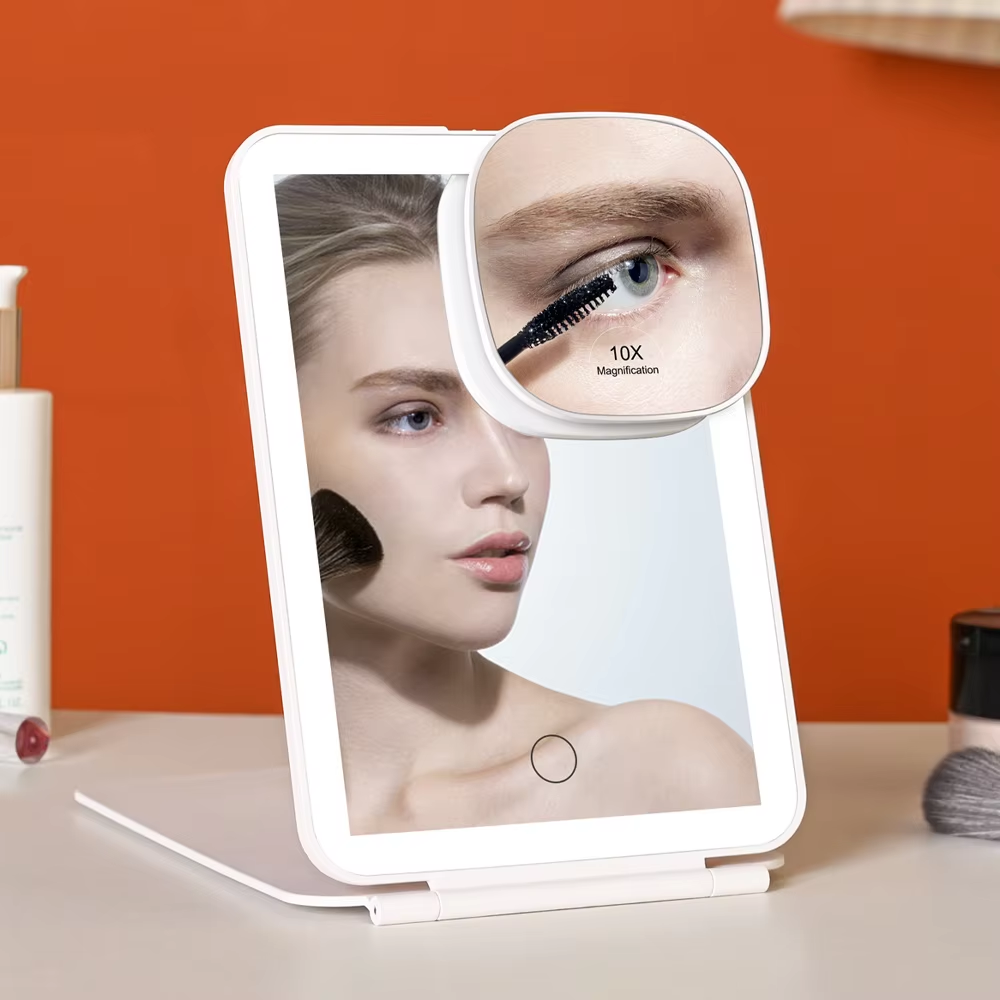
Why Lighting Quality in a Makeup Mirror with Lights Determines Skin Tone Accuracy
The precision of makeup application hinges on lighting that accurately reveals skin tone nuances. Suboptimal illumination distorts undertones and depth, leading to mismatched foundation or overlooked imperfections.
Color Temperature (Kelvin): How 4500K-5500K Mimics Daylight for Balanced Undertone Assessment
Light in the 4500K to 5500K range does a pretty good job of mimicking natural daylight, bringing out those subtle pinkish tones when it's cool or the golden glow during warm lighting conditions without adding any strange color casts. What makes this range so special is how it cancels out color biases, which helps people find the right foundation match. This matters a lot for folks with olive complexions or neutral undertones since getting the shade wrong happens all the time. Standard mirrors with fixed temperatures tend to make skin look either too warm or too cool, changing how colors appear on the face. That's why adjustable Kelvin settings are becoming popular these days. They allow individuals to tweak the lighting according to what they need at the moment, whether they're applying makeup in different rooms or dealing with varying light sources throughout the day.
CRI 90+ Is Essential: Why High Color Rendering Index Prevents Melanin Misinterpretation Across Fitzpatrick Types III-VI
Lighting with a Color Rendering Index (CRI) over 90 cuts down on shadows and color issues quite significantly when compared to regular lighting options. For people with medium to darker skin tones in the Fitzpatrick scale range III to VI, this really matters. Lower quality lighting tends to wash out the natural glow of melanin and can lead to makeup looking either too pale or way too intense. When using high CRI lighting, makeup products actually work as intended because they interact properly with different skin pigments. Blushes, bronzers, and concealers will blend much better across all skin tones without those annoying patchy effects that often happen under poor lighting conditions.
Matching a Makeup Mirror with Lights to Your Skin’s Undertone and Depth
Cool vs. Warm Light Effects: Why Adjustable Kelvin Settings Outperform Fixed-Temperature Mirrors
The temperature of light really changes how our skin looks underneath it. When we talk about cool lighting above 5000K, it brings out those blue tones which can make redness stand out on people with rosacea issues. At the same time, these cool lights tend to wash away the warmth in olive or golden skin tones. On the flip side, when lights are too warm below around 3500K, they throw in all sorts of yellow and orange colors that actually make cool pink or porcelain complexions look dull and tired. Most bathroom mirrors have fixed temperatures, so folks end up stuck with whatever lighting is installed there day after day. That's why adjustable Kelvin settings matter so much. They let us tweak the light exactly how we need it. Want to even out those golden undertones? Switch to a cooler setting. Dealing with reddish skin tones? Go for something warmer instead. The right setup stops those annoying foundation mismatch problems that happen so often under regular single temperature lights. According to some research from Cosmetic Science Review last year, about three quarters of people notice their makeup doesn't match properly under such conditions. For anyone serious about getting their makeup right, look for mirrors with lights covering at least 3000K to 6000K range. This wide spectrum replicates what happens naturally outside during different times of day, giving a much better idea of how makeup will actually look in real life situations.
Optimal Illumination Design: Eliminating Shadows and Glare for True-to-Life Application
Perimeter and Ring Lighting Compared: Uniformity Benefits for Deeper Skin Tones (Fitzpatrick IV-VI)
The way a makeup mirror is lit makes all the difference when it comes to seeing those subtle changes in darker skin tones. Ring lights go around the glass but tend to make things look off because they create bright spots right in the middle, casting weird shadows on cheeks and jaws. This is especially frustrating for people with Fitzpatrick skin types IV through VI since their melanin-rich complexions just soak up so much light. Perimeter lighting takes a different approach by placing LEDs along the edges of the mirror instead. These lights spread out in a softer way, creating even coverage without harsh reflections while still showing what's really going on with skin tones across those tricky facial curves. Olive and deep brown complexions benefit greatly from this full circle lighting effect, which stops foundation from looking patchy between the jaw and neck area. The best mirrors actually mix frosted LED panels with settings that let users adjust brightness levels. This combination keeps skin looking natural instead of grayish, no matter what kind of lighting conditions someone finds themselves in during their makeup routine.
Key Features That Make a Makeup Mirror with Lights Truly Inclusive and Functional
Dimmable Brightness + Multi-White Light Modes: Enabling Real-Time, Context-Aware Makeup Evaluation
Getting accurate color matching across different skin tones means looking for mirrors with adjustable brightness levels between 300 and 1000 lux plus several lighting options. The ability to dim the lights helps recreate actual situations we encounter daily, from romantic dinners under candles to office spaces lit by fluorescent tubes something most people don't think about when applying makeup at their dressing table. Mirrors with multi white settings covering temperatures from around 3000K to 6000K really matter for figuring out undertones. Warmer lighting shows how products work on those with golden or yellowish undertones, whereas cooler light tends to highlight issues for folks with pink or olive complexions. Without this kind of flexibility, there's always that awkward moment when foundation looks perfect at home but suddenly doesn't match anywhere else. People with deeper skin tones especially need these adjustable features because standard mirrors can make skin look too ashy or completely wash out the natural flush in cheeks.
Non-Glare Surface, Adjustable Angle, and Stable Base: Ergonomic Essentials for Consistent Use
When it comes to getting things right while applying makeup, three key design elements make a big difference: glass that doesn't glare, arms that move almost completely around, and heavy bottoms that keep everything stable. The special coating on the glass helps eliminate those annoying bright spots that mess with how textures look, making it much easier to see if makeup blends properly on darker complexions where problems tend to hide better. The adjustable parts let people work comfortably no matter their height or seating position, which matters a lot for detailed tasks such as drawing fine lines along the eyes. And don't forget about stability either! Those heavier bases stop the whole setup from tipping over accidentally, something really important for folks who might struggle with balance. Put them all together and most people notice an improvement in their results. According to some research from last year, around 8 out of 10 users said they made fewer mistakes when working with tools that had all three of these features included.
Frequently Asked Questions
Why is the Color Temperature important in a makeup mirror?
Color Temperature is crucial because it affects the appearance of skin tones under different lighting conditions. The right range (4500K-5500K) can mimic natural daylight, thus helping in accurate makeup application.
What is CRI and why does it matter?
CRI stands for Color Rendering Index, which measures how accurately lights show colors compared to natural light. A CRI over 90 is essential for rendering true skin tones, especially for those with darker complexions.
How do adjustable Kelvin settings benefit makeup application?
Adjustable Kelvin settings allow users to change the lighting temperature to suit their skin undertone and depth, reducing the likelihood of foundation mismatches and improving how makeup appears in various environments.
What are the benefits of perimeter lighting in makeup mirrors?
Perimeter lighting minimizes shadows and glare, providing uniform illumination across facial contours, particularly benefiting users with darker skin tones.
Why are dimmable brightness and multi-white light modes important?
These features provide flexibility in lighting conditions, allowing users to simulate different real-world scenarios, leading to more accurate makeup application and color matching.
What are the ergonomic essentials in makeup mirrors?
Non-glare surfaces, adjustable angles, and stable bases are ergonomic features that improve user comfort and consistency during makeup application.
Table of Contents
- Why Lighting Quality in a Makeup Mirror with Lights Determines Skin Tone Accuracy
- Optimal Illumination Design: Eliminating Shadows and Glare for True-to-Life Application
- Key Features That Make a Makeup Mirror with Lights Truly Inclusive and Functional
-
Frequently Asked Questions
- Why is the Color Temperature important in a makeup mirror?
- What is CRI and why does it matter?
- How do adjustable Kelvin settings benefit makeup application?
- What are the benefits of perimeter lighting in makeup mirrors?
- Why are dimmable brightness and multi-white light modes important?
- What are the ergonomic essentials in makeup mirrors?