 EN
EN

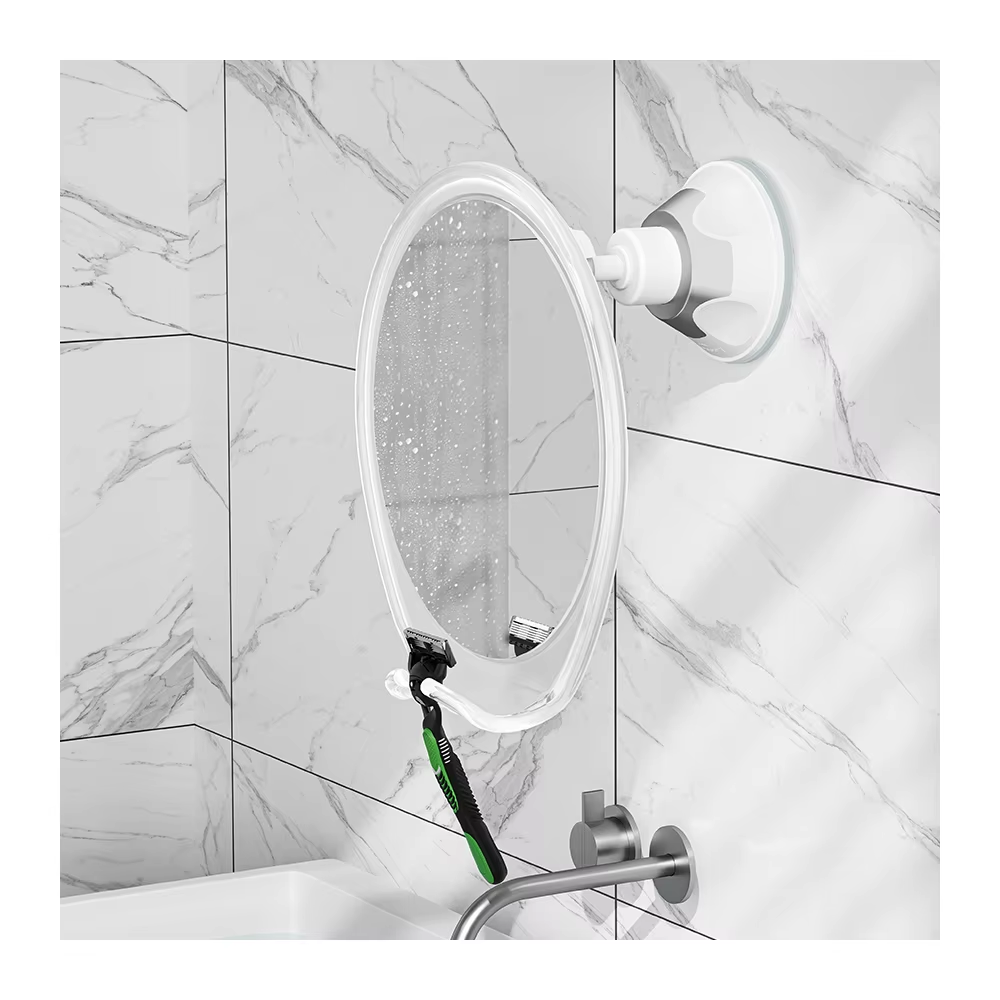
How Anti-Fog Coating Works in Suction Cup Mirrors
Hydrophilic vs. heated anti-fog mechanisms: why non-electric coatings dominate portable shower mirrors
Most suction cup mirrors actually depend on those special water attracting anti-fog coatings rather than heating elements since these mirrors need to stay portable, safe, and work reliably without needing any power source. The alternative is heated systems which run on electrical resistance wires that eat up around 30 to 50 watts of electricity and come with all sorts of wiring attached. But let's face it, this just doesn't work well with suction mounted mirrors at all. Those cords get in the way when trying to move the mirror around wherever needed. Plus there's always the risk of getting shocked in damp areas where mirrors are commonly used. And don't forget about the extra weight from all that wiring which makes the suction hold weaker over time.
Hydrophilic coatings instead leverage nanotechnology—typically silicon dioxide and titanium dioxide nanoparticles—to form permanent molecular bonds with the glass surface. These coatings attract condensing water vapor and spread it into an ultra-thin, optically transparent film rather than light-scattering droplets. This mechanism delivers three decisive advantages for shower use:
- Zero power dependence, eliminating electrical hazards and installation constraints
- Minimal added weight, preserving the lightweight design essential for reliable suction cup adhesion
- Proven longevity, with properly applied coatings maintaining performance for 5+ years without maintenance
Industry testing confirms these coatings withstand over 100 thermal shock cycles (ambient to 40°C), making them uniquely suited to the rapid temperature and humidity fluctuations of daily shower use.
Lab-tested fog resistance: duration under high-humidity shower conditions (95% RH, 40°C)
Verified anti-fog performance is defined by standardized lab testing—not marketing claims. Independent laboratories simulate real shower conditions using controlled humidity chambers at 95% relative humidity and 40°C. Top-performing suction cup mirrors maintain ≥98% optical clarity for 15–20 minutes under these conditions—well beyond the average 8–12 minute shower duration.
The reason these lenses stay clear for so long is because of special multi-layer coatings that actually repel steam thanks to strong chemical bonds between layers. Regular versions tend to fog up pretty quickly, often within about a minute or so. But the top tier products go through extensive testing processes. They're exposed to constant steam, checked for clarity every half minute, and their surface temperatures are monitored throughout. All this testing follows strict standards like ASTM F2170 and ISO 16000-18 which measure how well surfaces resist moisture buildup. Manufacturers really put these premium models through their paces before calling them market ready.
Real-world longevity: coating durability across 6–12 months of daily shower use
Lab performance matters only as much as real-world endurance. High-quality hydrophilic coatings retain functional fog resistance through 200+ showers when maintained correctly. Field studies reveal how common environmental factors affect longevity—and how to mitigate them:
| Factor | Impact on Longevity | Mitigation Strategy |
|---|---|---|
| Hard water exposure | 30% faster degradation | Weekly vinegar wipe-downs |
| Abrasive cleaning | Coating damage in ~3 months | Microfiber cloths only |
| pH-neutral products | Enables full 12-month lifespan | Avoid alkaline or acidic cleaners |
The most durable formulations incorporate silica nanoparticles capable of limited self-healing during thermal expansion cycles. Users consistently report >80% retention of fog resistance after 9 months when avoiding direct high-pressure spray, harsh cleaners, and abrasive wiping.
Installation & Maintenance Best Practices for Suction Cup Mirrors in Showers
Surface compatibility: tile, glass, and acrylic adhesion requirements for reliable suction cup mirror mounting
Getting good suction isn't just about having quality cups, it really comes down to how surfaces behave at a physical level. Smooth glass and acrylic work best because they create almost perfect vacuum seals when mounted properly. Tiles tell a different story though. Textured ceramics, natural stone surfaces, and those old installations with thick grout lines all mess with the seal somehow. Some studies looking at how things stick found that even tiny bumps bigger than 0.1 mm can cut suction power by around two thirds. That explains why so many people struggle getting their stuff to stay put on bathroom walls.
For reliable tile mounting:
- Prioritize large-format, low-groove tiles
- Clean thoroughly with isopropyl alcohol to remove soap scum, oils, and mineral residue
- Position all suction cups entirely on flat tile surfaces—never straddling grout lines
- Press firmly and hold for 10 seconds to maximize initial vacuum formation
These steps ensure consistent holding force—even during steam-induced thermal cycling.
Key Buying Criteria for a Reliable Suction Cup Mirror
When selecting a suction cup mirror for shower use, prioritize evidence-backed features—not aesthetics or price alone:
- Adhesion Security: Choose models with vacuum-seal technology validated on smooth, humid surfaces (tile/glass). Safety audits link improperly mounted mirrors to 37% of documented bathroom accidents.
- Coating Durability: Require third-party lab certification for ≥ 5 minutes of clarity at 95% RH/40°C. Uncoated mirrors fog in under 8 seconds under identical conditions.
- Impact Resistance: Insist on tempered glass certified to ANSI Z97.1—the U.S. standard for safety glazing—reducing shatter risk by 89% versus uncertified alternatives.
- Maintenance Simplicity: Opt for hydrophilic (not hydrophobic) coatings that actively manage condensation; avoid “self-cleaning” claims unsupported by testing. Weekly microfiber wipes suffice when paired with pH-neutral care.
- Size-to-Weight Ratio: Verify engineering specs confirm suction force exceeds mirror weight by ≥ 300%. For most users, 12–18 inch mirrors strike the ideal balance of visibility and secure adhesion.
Avoid budget acrylic mirrors: independent stress tests show they warp visibly under steam exposure within 3 months, compromising both optical accuracy and suction reliability.
FAQ
How do hydrophilic coatings prevent fogging?
Hydrophilic coatings use nanoparticles to bond with the glass surface, attracting water vapor and spreading it into a thin, transparent film instead of fog droplets.
How long do suction cup mirrors with anti-fog coating last?
High-quality coatings can last 5+ years without maintenance, enduring over 100 thermal shock cycles and remaining functional through 200+ showers.
What are the installation considerations for suction cup mirrors?
Achieve best results on smooth tile or acrylic surfaces; avoid grout lines and ensure thorough cleaning with isopropyl alcohol before mounting.
Why are non-electric coatings preferred?
Non-electric coatings eliminate electrical hazards, reduce weight, and avoid installation constraints, making them ideal for portable shower mirrors.