
 EN
EN

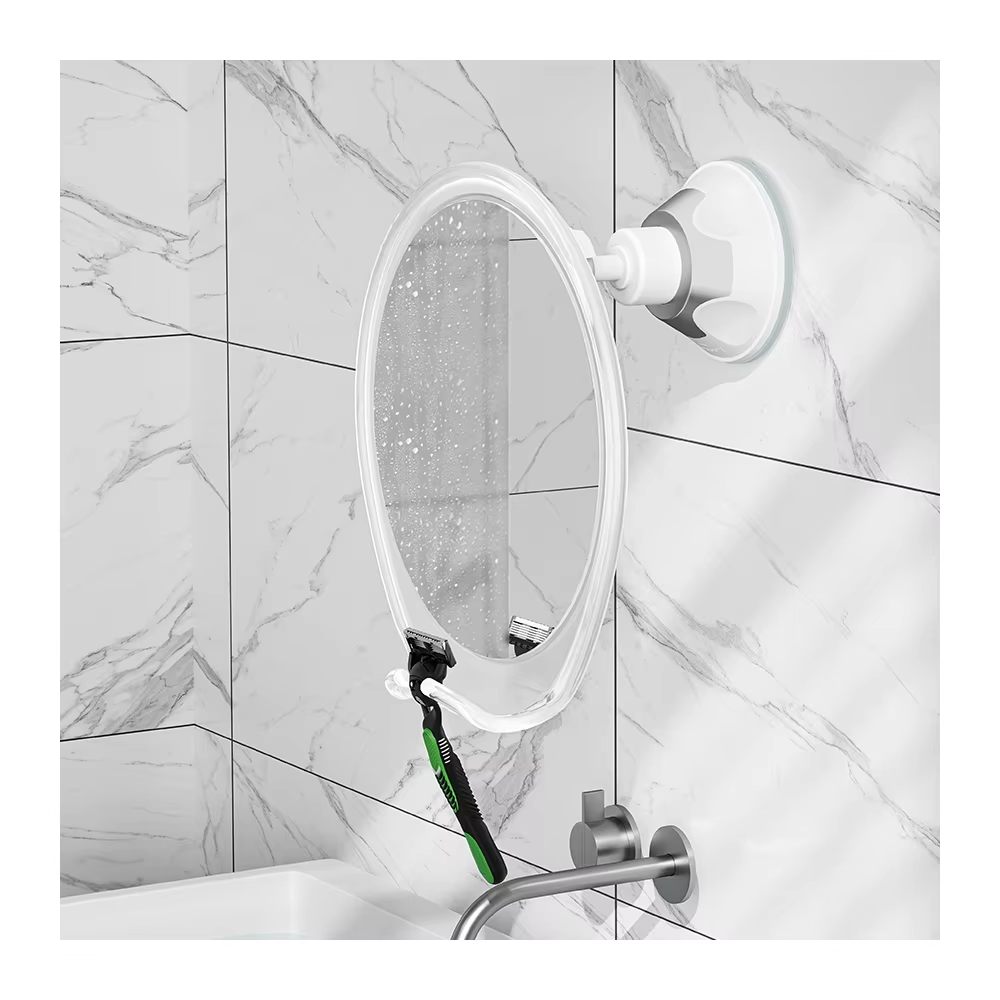
Standard Magnification Tiers for Suction Cup Mirrors
1x-3x: Natural Vision with Reliable Adhesion and Minimal Distortion
These mirrors give pretty accurate reflections which work great for everyday stuff like applying makeup or checking skin condition. The ones with less than 3x zoom stick to smooth surfaces about 96% of the time, which beats most other options out there. They achieve this because their curves aren't too deep, so the suction spreads out nicely without warping what we see. According to some research from 2023 in the Optical Engineering Journal, these models have less than 5% image distortion. That means they manage to keep things looking clear while still showing enough area and staying stable over months of regular use.
5x-7x: Targeted Detail for Precision Grooming Tasks
This level works great for detailed jobs like shaping eyebrows or checking skin blemishes, giving an amazingly clear look at pores and hair follicles. But there's a catch. The lenses curve so steeply that they cut down the viewing area by around 60 to 70 percent. Plus, even tiny movements get magnified, so users need to keep their heads really still within about eight inches of the target area to prevent eye fatigue. While the special aspheric design helps fix those pesky edge distortions, it comes at a cost. The thicker glass makes these lenses heavier by about 15 to 20% according to some recent research from 2024. And because of this extra thickness, they don't stick well to rough or uneven surfaces either. For most people, these are probably better suited for quick, stationary tasks rather than anything requiring extended use or movement around different angles.
10x+: Limited-Use Applications Where Field of View and Stability Are Compromised
Ultra-high magnification introduces critical trade-offs:
- Field of view shrinks to just 2-3 inches, requiring near-perfect head stabilization
- Edge distortion exceeds 25%, creating false contours that misrepresent skin texture
-
Suction reliability drops by over 40% due to concentrated weight and leverage on the mount
Practical applications are limited to brief, targeted actions—like contact lens insertion—on flawlessly smooth, dry surfaces. To preserve usability, manufacturers increasingly integrate 10x lenses as secondary flip attachments rather than primary reflective surfaces.
How Lens Engineering Impacts Suction Cup Mirror Performance
Concave, Convex, and Aspheric Lenses: Trade-Offs in Clarity and Mounting Constraints
The shape of a mirror has a big impact on how clear the image looks and how stable it stays mounted. Concave mirrors give good magnification but tend to warp images at the edges, particularly when magnification goes over 3 times. Convex mirrors let us see much wider areas, though they don't really help with close-up details needed for things like grooming tasks. Aspheric lenses work against this kind of distortion because they have curved surfaces that aren't perfectly round, but making them is complicated and expensive. When concave mirrors get too deeply curved, their weight distribution changes so the center moves away from where they attach to whatever holds them up. This creates twisting forces that can break the vacuum seal holding them in place. Aspheric mirrors stay flatter overall, which keeps them balanced better while still delivering sharp images, something manufacturers need to consider when balancing quality against budget constraints.
Why 3x Is the Practical Threshold for Distortion-Free Use on Flexible Suction Mounts
Going beyond 3x magnification puts real strain on both the optical components and how well things stick together. When lenses get deeper curves, they become thicker and heavier, which shifts the bulk away from the edges. This creates leverage points that break down suction seals, especially when there are changes in moisture levels or temperature swings. Tests done independently found that mirrors rated above 3x had around 40 percent more problems sticking properly during normal day-to-day usage according to research published in the Journal of Adhesion Science back in 2022. Color fringing gets worse too, along with distortions at the edges, so trying to do detailed work becomes less precise and actually makes users tired faster. For most practical purposes, 3x seems to be the sweet spot where clear images, comfortable handling, and dependable grip all come together nicely.
Mounting Realities: How Suction Cup Stability Limits Effective Magnification
The way suction sticks work depends largely on air pressure differences and how well they actually touch whatever surface they're attached to. This makes them pretty vulnerable when environmental conditions change around them. Take humidity for instance - studies show that in normal bathroom environments, moisture levels alone can cut down stickiness by about 40% according to research from the Journal of Adhesion Science back in 2022. Then there's the issue of temperature changes causing materials to expand or contract, which just messes up the seal even more. When looking at these problems through magnifying lenses becomes interesting too. A basic 5 times magnifier will make small shakes look five times worse than they really are. Go beyond 10 times magnification though, and those tiny movements suddenly become something else entirely - almost like watching waves crash against rocks instead of just ripples in a pond.
The weight issue really makes things harder. When we go for higher power optics, we need thicker glass and more complicated curves, which adds a lot of extra mass very quickly. Most standard suction systems can handle around 1 to 5 pounds before they start struggling. But look at those reinforced 10x models? They often push past what these mechanisms can manage. And don't forget about those tiny surface flaws either. A barely noticeable variation in tile texture is enough to wreck a vacuum seal when there's actual weight involved. If someone wants something that works day after day without constant adjustments, they'll find themselves stuck somewhere between 3x and 5x magnification. That sweet spot where the improved vision actually justifies all the hassle of dealing with heavier equipment and tricky setups.
Innovative Solutions: Dual-Zone and Adjustable-Focus Suction Cup Mirrors
Integrated 1x + 5x Designs for Seamless Transition Between Overview and Detail
The dual zone design in suction cup mirrors solves a big problem for people who need both regular vision and close up details at the same time. Most of these mirrors split the reflective area into two parts one part shows things as they really are (about 1x magnification) and another section gives around 5 times zoom for seeing small details. No more switching between different mirrors or trying to balance wobbly single lens ones during important tasks. The curved shape of the magnified section helps reduce those annoying distortions we all hate. Plus, the base is made with special engineering so weight gets spread out properly, keeping the suction strong even when things get shaky. When working on something detailed, users just look from one area to another naturally, which keeps their whole process going smoothly without making eyes tired. Some top quality models come with what's called edge to edge optical bonding these days. This fancy tech means there are no gaps between lenses where focus jumps around, plus it makes long sessions much more comfortable overall.
FAQ Section
What is the best magnification for daily use?
1x-3x magnification is best for daily use due to its reliable adhesion and minimal distortion, making it perfect for applying makeup or skin checks.
Why are higher magnifications not suitable for prolonged use?
Higher magnifications, like 10x, reduce field of view, cause more distortions, and often have compromised suction reliability, making them unsuitable for prolonged usage.
How do mirror lens designs affect suction stability?
Concave designs may cause distortion, while aspheric designs, although expensive, provide better clarity without compromising suction stability.
Why is a dual-zone mirror beneficial?
Dual-zone mirrors allow users to see both standard and magnified views in a single mirror, easing transitions from broad sight to detail-focused tasks.