
 EN
EN

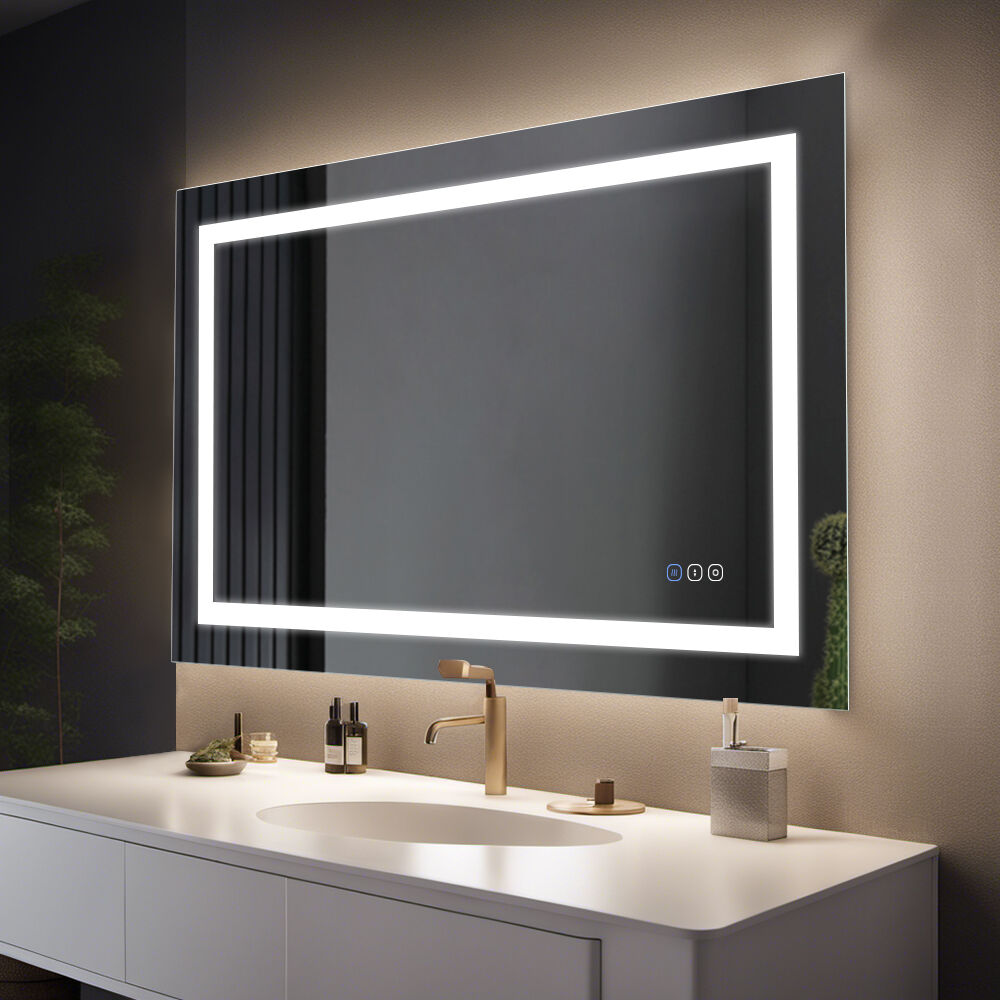
Why Adjustable Brightness Matters in a Mirror with Lights
Supporting Precision Grooming and Adaptive Ambiance
When adjustable brightness gets added to a regular mirror with lights, it changes everything from just a simple reflector surface to something much more useful for getting ready. The bright setting, around 800 lux or so, really shows off skin textures and tiny hair details. This makes all the difference when someone wants perfect makeup application or needs to trim facial hair precisely. Switching down to about 300 lux creates this nice relaxing vibe similar to what people experience at spas, great for nighttime skin care routines. Having these two different modes means there's no longer a need for multiple types of lights in the bathroom. Installation becomes easier and takes up less room too, which is super important when renovating commercial bathrooms where every inch counts. Just one easy control lets anyone move back and forth between clear lighting needed for tasks and softer illumination that matches whatever mood they're in at the moment.
Aligning with Circadian Rhythms Through Dimmable LED Technology
LED lighting built into mirrors does much more than look good—it actually helps our bodies function better too. The cooler, bright white light around 5000 to 6500K really wakes us up in the mornings, whereas those warm golden tones between 2700 and 3000K create a cozy vibe at night that lets our bodies know it's time to wind down. Research from Harvard back in 2012 showed how adjusting light levels affects melatonin production, which means better sleep and more energy during the day. Today's smart mirrors take advantage of this knowledge with settings that change colors as the day progresses. These gradual shifts match our natural body clock, making those early morning routines easier on the eyes and helping signal to our system when it's time to relax after dark.
| Time of Day | Recommended Brightness | Color Temperature | Biological Impact |
|---|---|---|---|
| Morning | High (80–100%) | 5000–6500K (Cool White) | Boosts cortisol, enhances alertness |
| Evening | Low (10–30%) | 2700–3000K (Warm White) | Stimulates melatonin, prepares for sleep |
Table based on circadian lighting principles from Harvard Medical School (2012)
Key Adjustable Brightness Features to Look for in a Mirror with Lights
Dimming Range (10–100%) and Color Temperature Control (2700K–6500K)
Real adaptability comes down to having two main features working together: dimming that covers the whole spectrum and color temperature adjustments across a wide range. With dimming from 10 to 100 percent, there's plenty of flexibility between creating a gentle background light and getting bright enough for specific tasks. The color temperature can be adjusted from 2700K to 6500K, allowing people to set the right mood based on what time it is and what needs doing. Warm lights around 2700-3500K help create a relaxing atmosphere in the evenings, while those cooler daylight settings between 5000K and 6500K actually make it easier to concentrate on detailed work. Studies have found that when lighting can be customized like this, eye strain drops by about 76% during activities such as grooming. That makes these features pretty much mandatory for mirrors designed with performance in mind.
Smart Presets and Multi-Mode Lighting for Daily Routine Flexibility
The latest smart mirrors aren't just about turning knobs anymore. They come equipped with AI that lets users tap into pre-set lighting options with ease. Think Morning Mode at full brightness with cool white light, or Evening Mode dimmed down to warm tones. Some models let people set as many as seven different settings that match their body clock rhythms throughout the day. These mirrors also have sensors that detect when someone walks in, making them adjust brightness automatically. The real magic happens in places like bathrooms though. Bathrooms get all sorts of weird lighting conditions from morning sun to evening gloom, plus steam after showers messes everything up. Having lights that adapt on their own makes such spaces much more functional without needing constant tweaking.
Reliable Brightness Control Methods for Mirrors with Lights
Touch Sensors vs. Infrared: Performance in Humid Bathroom Environments
Most mirrors today use touch sensors because they're so easy to operate with just a simple swipe or tap. But there's a problem when moisture builds up on them - sometimes the sensor gets confused and either registers touches it shouldn't or stops working altogether. That's where infrared controls come in handy as an alternative solution. They work great even when humidity levels reach around 85%, according to tests done last year on bathroom appliances. Of course, infrared isn't perfect either. It might accidentally turn something on if someone moves too fast near the mirror. If reliability is really important, look for touch panels rated IP44 or better that are properly sealed against water damage. Some smart manufacturers combine both technologies in one system. These hybrid setups provide smooth lighting adjustments from 10% all the way up to full brightness without any annoying glitches, which makes all the difference when trying to shave closely or apply makeup precisely.
Emerging Voice and App Integration for Hands-Free Adjustment
Smart mirrors that work with voice commands and mobile apps have become part of mainstream smart homes through Wi-Fi and Bluetooth connections. People can ask them things like "lower the brightness to about 40%" or "activate evening mode" without ever touching the mirror surface. This comes in really handy when someone's hands are wet from washing, covered in soap, or busy holding something else, which helps keep things cleaner overall and just makes life easier. The accompanying apps take this even further, allowing people to create personalized lighting settings they can call up whenever needed. Morning setups often include around 65% brightness with cooler light at 5000K to help wake up the brain, whereas night time settings typically drop to about 20% with warmer tones. These kinds of systems save most people roughly two thirds of the time they used to spend adjusting lights manually, making those morning routines and nighttime transitions much smoother day after day.
FAQ
What is the ideal brightness for grooming and makeup application?
The ideal brightness for grooming and makeup application is typically around 800 lux, which highlights skin textures and tiny hair details effectively.
How do adjustable mirrors support my circadian rhythm?
Adjustable mirrors support circadian rhythm by using LED technology to modify color temperature and brightness according to the time of day, which influences melatonin production and overall alertness.
What are the benefits of using touch sensors versus infrared controls in mirrors with lights?
Touch sensors offer ease of use, but can have issues with humidity. Infrared controls work well in humid conditions, avoiding performance issues such as unintended operation.