
 EN
EN

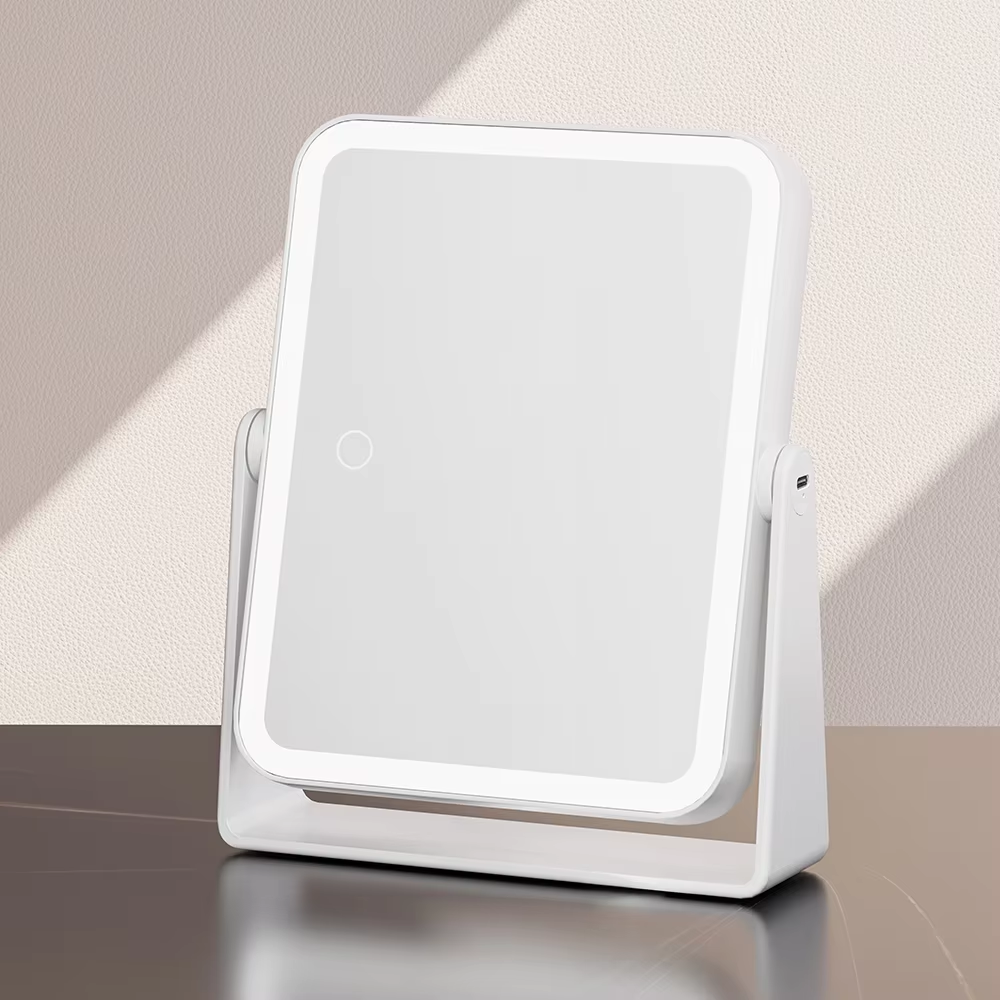
Why Magnification + Lighting Matters in a Makeup Mirror with Lights
How LED lighting quality (CRI ≥90, 5000K color temperature) complements magnification for true-to-life application
Good lighting makes all the difference when it comes to magnification, turning what's just a visual help into something much more precise. When lights have a CRI rating above 90, colors look pretty much how they do outside on a sunny day, which matters a lot for things like picking out the right foundation shade or mixing eyeshadows properly. Combine this with lighting at around 5000K color temperature, which mimics that nice midday sun we're all familiar with, and suddenly skin tones become visible in their true form. Textures show up better too, along with those little blemishes regular bulbs tend to hide. Just having magnification isn't enough really. Without proper lighting conditions, there's always a chance someone might apply too much product, end up with uneven coverage, or pick completely wrong colors. The combination works wonders though, giving professionals and enthusiasts alike a realistic, almost medical level view of skin condition. This turns what was once guesswork into something reliable and consistent across applications.
The visual trade-offs: When higher magnification (10x–15x) increases precision but reduces field of view and depth perception
Strong magnification (10x–15x) delivers exceptional detail for micro-tasks like eyeliner sharpness, brow shaping, or spot concealing—where millimeter-level control matters most. But physics imposes real limits:
- Narrowed field of view forces constant repositioning to see adjacent areas
- Compressed depth perception makes judging distances difficult (e.g., mascara wand proximity)
- Increased distortion beyond 10x can warp facial contours and proportions
| Magnification Level | Best For | Limitations |
|---|---|---|
| 10x–15x | Lashes, spot corrections, fine brow work | 3–4 inch visible area; requires steady, close positioning |
| 5x–7x | Full-face blending, skincare assessment | Balanced detail with minimal distortion and usable depth perception |
Because ultra-high magnification sacrifices context and spatial awareness, it’s impractical for full-face application. The most effective mirrors pair high-magnification zones with lower-magnification options—enabling seamless transitions between precision and perspective.
Matching Magnification Levels to Your Routine and Vision Needs
Selecting the optimal magnification for your makeup mirror with lights directly impacts application accuracy, comfort, and long-term usability. Understanding how different tiers align with specific tasks—and physiological needs—ensures practical, frustration-free results.
2x–5x: Balanced clarity for daily makeup, skincare, and aging eyes — ideal for most users
The magnification in this range feels pretty natural while still giving good visibility across different distances. People find it works great when applying makeup foundations, placing blush correctly, doing their daily skincare stuff like washing faces or putting on serums, plus small grooming jobs around the house. Those past 40 who start noticing trouble seeing things close up will appreciate how 5 times magnification helps them see details better without making their eyes tired or confused. Most folks looking for something they can use every day end up going with this level because it strikes just the right balance between being clear enough and comfortable to look through for extended periods.
10x: Targeted use for brows, lashes, and fine corrections — not recommended for prolonged or full-face application
When working at 10x magnification, all sorts of tiny features come into view that would otherwise go unnoticed. We're talking about single brow hairs, spaces between lashes, skin texture patterns, and those little spots that need covering up. But there's a catch. The viewing area gets really tight, and everything seems flat because of how shallow the depth of field becomes. This makes keeping steady hands much trickier, especially when trying to apply something like eyeliner. Many people find themselves getting dizzy after spending too long under such intense magnification. The problem? Without seeing the bigger picture, judging distances properly just isn't possible. That's why most professionals stick to 10x only for short bursts of specific tasks like tweezing stray hairs or refining eyeliner edges. Once that detail work is done, they usually jump back down to around 5x magnification for anything that requires looking at larger areas of the face.
Key Design Features That Maximize Utility of a Makeup Mirror with Lights
Dual-sided vs. multi-magnification mirrors: Pros, cons, and real-world usability
Dual sided mirrors let users switch easily between regular viewing (1x) and magnified options usually around 5x or 10x which works great in small areas or when someone needs a quick look. Some models come with multiple magnifications like 1x/5x/10x all in one device, though these take up more space on the counter and need careful picking of lenses. The really high powered ones from 10x to 15x do give doctors style detail but come at a cost since they make it harder to see what's going on around the edges and mess with how deep things appear when looking at larger areas. Most people find that 5x power is just right for everyday stuff like applying makeup or checking skin condition because it gives clear enough detail without making everything look strange or distorted.
Adjustable brightness, dimmable LEDs, and glare-free diffusion for consistent magnified viewing
Getting accurate magnification really depends on good lighting that cuts down on shadows and doesn't create those annoying hot spots or glare issues. When shopping around, go for dimmable LED options with at least a CRI rating of 90 plus something close to 5000K color temp since this helps mimic actual daylight in different settings. The ability to adjust brightness levels makes all the difference when trying to recreate various lighting situations - think about how things look during gentle evening glow versus harsh noon sunlight. Frosted glass or edge lit diffusers work wonders too because they spread the light more evenly without making everything look flat or washed out. A well designed lighting setup maintains true colors and keeps visuals consistent no matter what magnification level we're working at. That means makeup foundations will actually match skin tones properly in everyday conditions instead of only looking right under studio lights.
Top-Rated Makeup Mirrors with Lights and Reliable Magnification (2024 Picks)
The best makeup mirrors on the market this year really get what users need. They combine reliable magnification with good quality lighting that makes all the difference when applying makeup. Most high-end models come with a main mirror surface at 5x magnification. This works great for everyday tasks like blending foundation, checking skin condition, and helping folks who might have trouble seeing well as they age. Many also include either removable or built-in 10x magnification sections specifically for detailed work on eyebrows and lashes. Almost all these mirrors are rechargeable now, which is super convenient. They typically last between 2 to 5 weeks without needing a charge, and the lighting stays pretty consistent throughout with color rendering index ratings around 95 or better, so colors look accurate even under different lighting conditions.
Top-performing options include vanity mirrors with:
- Tri-mode brightness controls (daylight, evening, candlelight)
- Glare-free diffusion technology that preserves clarity across all magnification settings
- Proximity-sensor activation that illuminates automatically as you approach
Small dual sided travel mirrors with 1x and 5x magnification are still a hit among travelers who value portability. However, these compact mirrors do have limitations because their smaller reflective area means users need to position them carefully to see what they want. For folks shopping around, going for USB rechargeable versions makes sense, especially those with adjustable LED lighting and anti fog treatment. This matters quite a bit in bathrooms where moisture builds up fast. Traditional plugged in mirrors can be risky there since water and electricity don't mix well, plus regular glass tends to get cloudy when steam rises after showers.
FAQ
What is the ideal CRI and color temperature for a makeup mirror with lights?
The ideal color rendering index (CRI) is above 90 and color temperature is around 5000K to mimic natural daylight, which helps in true-to-life color application.
Why is 10x magnification not recommended for full-face application?
10x magnification provides excessive detail and compressed depth perception, making it challenging for judging distances, which is not suitable for full-face applications.
What kind of lighting should be used in makeup mirrors?
Dimmable LEDs with a CRI rating of at least 90 and a color temperature around 5000K are recommended for consistent and accurate lighting that mimics daylight.
What are the benefits of a dual-sided makeup mirror?
Dual-sided mirrors allow users to easily switch between regular and magnified views, which is practical for various makeup applications and detailed work.
How often do rechargeable makeup mirrors need to be charged?
Most rechargeable makeup mirrors typically last between 2 to 5 weeks on a single charge, depending on usage frequency and intensity.
Table of Contents
- Why Magnification + Lighting Matters in a Makeup Mirror with Lights
- Matching Magnification Levels to Your Routine and Vision Needs
- Key Design Features That Maximize Utility of a Makeup Mirror with Lights
- Top-Rated Makeup Mirrors with Lights and Reliable Magnification (2024 Picks)
-
FAQ
- What is the ideal CRI and color temperature for a makeup mirror with lights?
- Why is 10x magnification not recommended for full-face application?
- What kind of lighting should be used in makeup mirrors?
- What are the benefits of a dual-sided makeup mirror?
- How often do rechargeable makeup mirrors need to be charged?