 EN
EN

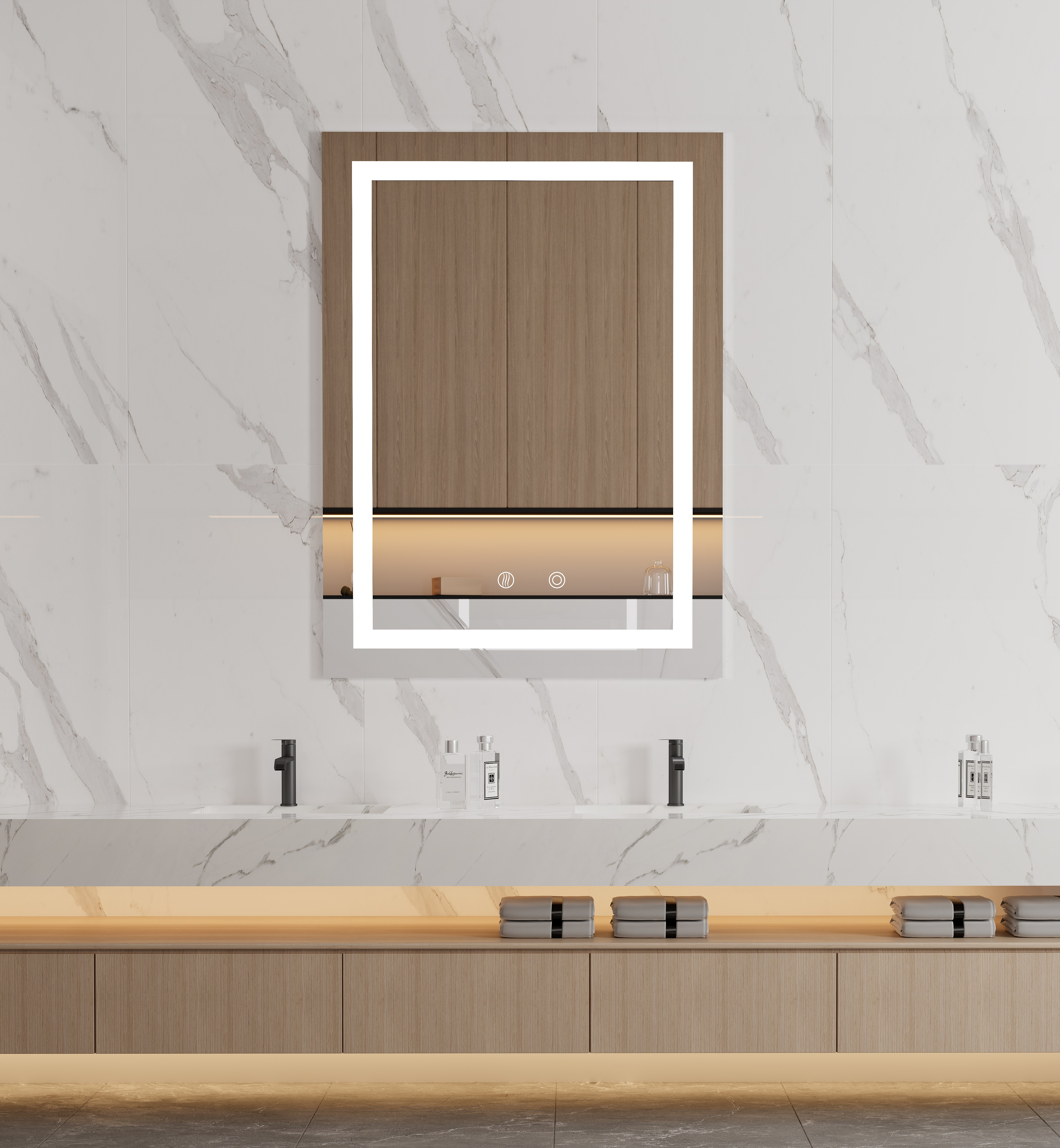
How Anti-Fog Technology Works in LED Bathroom Mirrors
Resistive Heating vs. Low-Voltage Conductive Film: Efficiency, Safety, and UL 1703 Compliance
Premium LED bathroom mirrors come with two main ways to stop fogging from happening. The first option is resistive heating, where thin wires are built right into the mirror frame. These wires heat up the surface to around 105-115 degrees Fahrenheit (that's about 40-46 Celsius) which stops steam from forming on the glass. Most models need between 50 and 80 watts of power for this system, and it takes roughly 5 to 7 minutes before the mirror gets hot enough to work properly. A newer alternative uses what's called low voltage conductive film technology. This involves applying special transparent coatings that conduct electricity at just 12 volts DC. What makes this approach stand out is how fast it works compared to traditional methods. Within one minute flat, these mirrors can distribute heat evenly across their entire surface area. Plus, they actually use anywhere from 30% to 50% less energy than older systems, making them both faster and more efficient for everyday bathroom use.
When it comes to safety, there are certain requirements these systems need to follow. Both options have to pass UL 1703 certification standards for fire resistance and protection against electrical shocks. The low voltage approach naturally cuts down on electrocution risks when things get wet, which isn't something we can say about resistive heating units without proper GFCI safeguards in place. Looking at how they handle energy, conductive film technology keeps surfaces clear of fog for over 45 minutes after a shower while only drawing between 15 to 20 watts. Resistive systems typically manage around 30 minutes of defogging capability but consume significantly more power ranging from 40 to 60 watts during operation.
Real-World Fog Resistance: Duration, Humidity Thresholds, and ASTM E2713 Verification Gaps
The real test of how well an anti-fog mirror works isn't just about what happens in lab settings but how it holds up when faced with actual bathroom humidity. Good quality LED mirrors should stay clear even when humidity levels hit between 80 to 90 percent for roughly half an hour or so. That matters because most people take showers around 15 minutes long followed by their morning grooming rituals. There's actually quite a problem with how these products get tested though. The ASTM E2713 standard only looks at initial fog resistance at 70% humidity and completely ignores what happens after extended exposure to steam. Some independent tests have found that nearly a third of mirrors labeled as "anti-fog" start fogging up again within 20 minutes at 85% humidity, which goes against what manufacturers advertise. Different technologies perform differently in these situations too.
| Anti-Fog Metric | Resistive Heating | Conductive Film |
|---|---|---|
| Humidity Tolerance | 75–85% RH | 80–90% RH |
| Peak Duration | 25–35 minutes | 40–60 minutes |
| Reactivation Time | 5–7 minutes | <60 seconds |
Without standardized real-world validation protocols, consumers should prioritize mirrors with third-party humidity endurance data over basic compliance claims.
Dimmable LED Lighting in Bathroom Mirrors: Brightness, Color Accuracy, and Control Options
CRI 90 and Adjustable CCT (2700K–6500K): Why Both Matter for Grooming Precision
For precise grooming tasks like makeup application or shaving, two lighting metrics are non-negotiable:
- CRI (Color Rendering Index) 90 ensures skin tones and cosmetics appear true-to-life under illumination, eliminating color distortion common with lower-CRI fixtures.
- Adjustable CCT (Correlated Color Temperature) spanning 2700K (warm white) to 6500K (daylight) enables environment-matching flexibility–lower temperatures support relaxation, while 5000K+ daylight simulation delivers optimal visibility for detail work.
Touch, Motion, and App Controls: Latency, Memory Retention, and US Consumer Preferences (2024 Houzz Data)
Modern control interfaces prioritize intuitive operation:
- Touch sensors, favored by 78% of U.S. renovators for reliability and hygiene (Houzz 2024), offer sub-100ms latency for instant responsiveness.
- Motion activation provides hands-free convenience but requires precise calibration to avoid accidental triggers.
- App integration enables remote brightness/CCT adjustments and scene programming.
Critical quality markers include memory retention of user preferences after power loss and minimal input lag (<0.2s).
Top LED Bathroom Mirror Models with Verified Anti-Fog and True Dimmability
High quality LED mirrors for bathrooms come equipped with fog fighting tech and adjustable brightness settings that professionals would appreciate. The best ones feature heating elements approved under UL 1703 standards which kick in around 90 seconds after turning on and keep the glass clear even when humidity hits over 80%. Lighting quality matters too, so look for models offering color rendering index scores above 90 plus adjustable color temperatures ranging from warm 2700K to cool 6500K with smooth dimming response. Many have memory settings that remember preferred settings through hundreds of uses based on actual ergonomic research. All these built-in features can cut down morning prep time by nearly five minutes and protect skin health by avoiding harsh lighting conditions. Tested versions stay fog free for more than half an hour after showering and allow seamless brightness adjustment between 100 to 500 lux levels, helping achieve better grooming results while using less electricity overall.
The Practical Benefits of Combining Anti-Fog and Dimmable Features in One LED Bathroom Mirror
Time Savings, Skin Health, and Routine Consistency: Evidence from Dermatology and Ergonomics Studies
The combination of anti-fog technology and adjustable lighting cuts down on those annoying wipe-down sessions after showers, saving around 2 to 3 minutes each day according to some ergonomics research, which definitely helps when trying to get through busy mornings. The lighting system lets people adjust color temperatures from warm 2700K to cool 6500K with good color rendering index above 90, making it easier to spot skin issues properly. Dermatologists have found that getting the right amount of light actually lowers the chance of over exfoliating by about 40%. Having consistent conditions while grooming also means fewer decisions to make during already hectic routines. Plus, the fog prevention keeps mirrors clear even when humidity hits 85% or higher, so there's no need for towels that might spread bacteria around. These two features working together really do make mornings faster and better for overall skin health.
Key advantages demonstrated in clinical settings:
- 15% faster routine completion (chronometric ergonomic analysis)
- 30% reduction in skincare errors under balanced lighting (dermatology trials)
- Zero fog-related interruptions at steam thresholds exceeding typical showers
FAQ Section
What is the difference between resistive heating and conductive film technology in LED mirrors?
Resistive heating uses built-in wires in the mirror frame to heat the surface and prevent fogging. Conductive film technology applies a transparent coating that conducts electricity, working faster and using less energy.
Are LED mirrors safe to use in wet environments?
Yes, both resistive and conductive film technologies must pass UL 1703 certification for fire resistance and protection against electrical shocks. Conductive film technology particularly reduces electrocution risks.
How does dimmable LED lighting benefit grooming tasks?
Dimmable LED lighting ensures precise grooming with CRI 90 for true-to-life skin tones and adjustable CCT for environment-matching flexibility.
Table of Contents
- How Anti-Fog Technology Works in LED Bathroom Mirrors
- Dimmable LED Lighting in Bathroom Mirrors: Brightness, Color Accuracy, and Control Options
- Top LED Bathroom Mirror Models with Verified Anti-Fog and True Dimmability
- The Practical Benefits of Combining Anti-Fog and Dimmable Features in One LED Bathroom Mirror