
 EN
EN

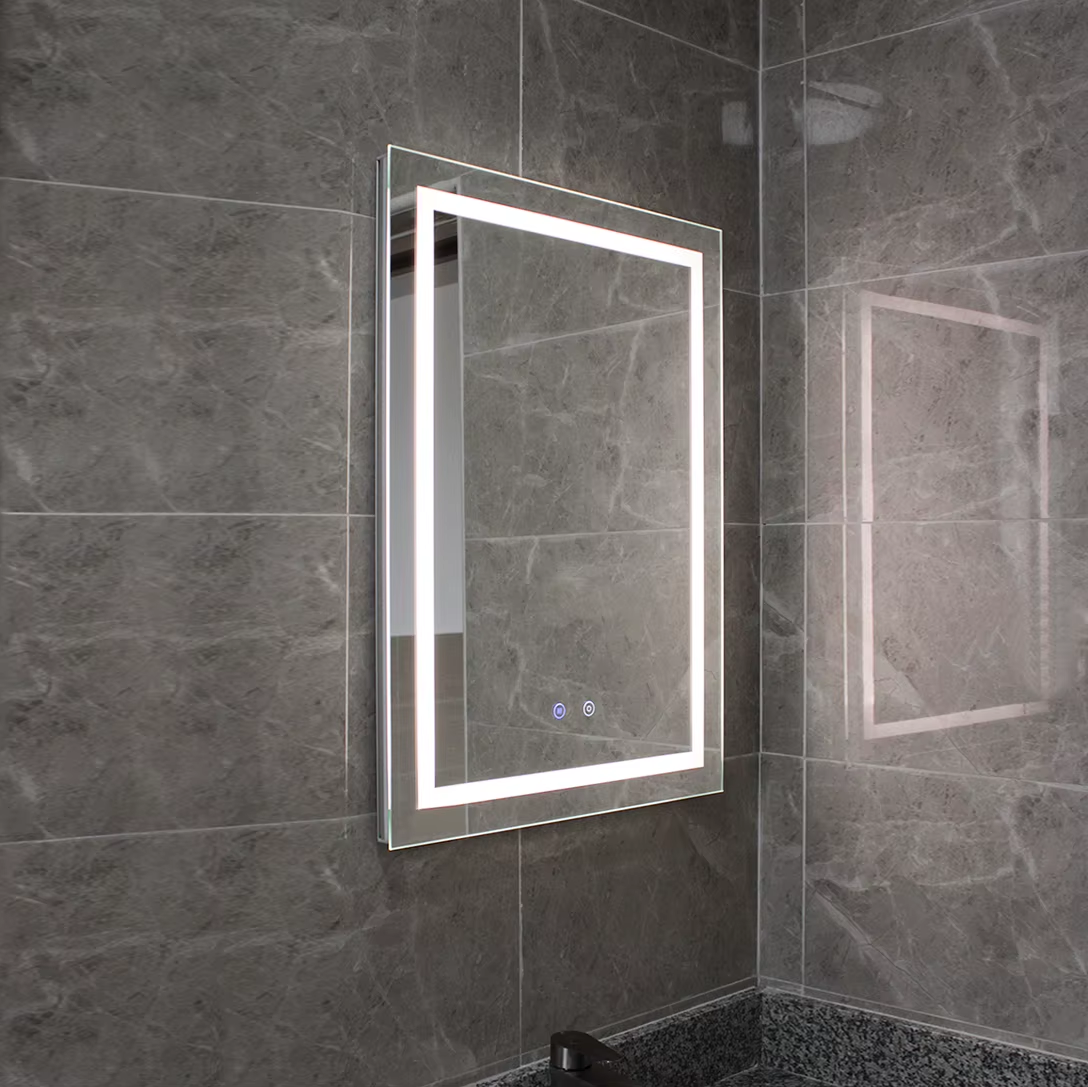
What Defines a True Compact Mirror with a Slim Profile?
Slim Profile vs. Compact Size: Clarifying Depth, Footprint, and Portability
When we talk about compact mirrors, what people usually mean is how thin they are, typically something less than 20mm deep. Compact size generally refers to how much floor space they take up. Getting good at saving space means getting both right. Take a round mirror that's 30cm across for example. It might not take up much room on a counter, but if it sticks out too far because it's deeper than 15mm, it becomes a problem. Really thin mirrors, say anything below 10mm, can actually fit between books on a shelf or sit flat against a wall without sticking out. The super slim ones at 5mm or less? Those just slip right into bags. Some research from the Home & Bath Design Institute shows that around 78% of folks care more about mirror depth than width when putting them away in drawers or vanities. Makes sense really, especially in tight bathroom spaces or when packing for travel where every millimeter counts.
Frameless, Edge-Clamped, and Ultra-Slim Framed Designs: Impact on Storage Efficiency
New design approaches are making mirrors both bigger and thinner at the same time. Frameless models can get down to just 3 to 8 mm thick thanks to their polished edges and special laminated backing that gets rid of those bulky frames altogether. For even slimmer options, edge clamped mirrors use tiny corner brackets so small they're almost hard to see, only adding about 1 or 2 mm extra depth. Some ultra slim framed versions go further still with metal or plastic borders under 5 mm wide. These often come with magnetic attachments too, letting people easily swap out different decorative elements. When compared against older style mirrors that were typically 15 to 30 mm thick, modern designs cut down on depth by around two thirds to three quarters. This makes all the difference when trying to fit mirrors into tight spaces like the narrow gaps between kitchen cabinets and walls. Recent improvements in how mirrors are reinforced structurally mean even large 70 cm wide mirrors can stay under 10 mm thick while still meeting safety standards and lasting a long time.
Top Compact Mirror Applications: Maximizing Space in Small Bathrooms and Vanities
Mounting Strategies That Minimize Effective Footprint (Recessed, Tilt, and Wall-Clearance Solutions)
When installed recessed, these compact mirrors fit right into wall cavities, which cuts down on how deep they stick out compared to regular surface mounts by around 60 to maybe even 80 percent. The tilt feature allows mirrors to lean back from walls at angles between 15 and 30 degrees, so there's about half as much space needed behind them without sacrificing what people can see. Some wall clearance models come with super thin frames, thinner than a dime actually, that sit completely flat against the wall surface. This creates a seamless look especially helpful in small rooms measuring less than twenty square feet. In tight bathroom setups with narrow countertops, combining tilting capability with mirror edges that don't protrude gets rid of most of those annoying metal parts sticking out from the wall. Makes all the difference when trying to work with barely any room to spare, like when clearance is only about six inches or less.
Real-World Example: Upgrading a 4.8 sq. ft. Half-Bath with a 13mm-Depth Compact Mirror
In a small bathroom measuring 54 inches by 20 inches, swapping out the old 4 inch deep mirror for a sleek frameless model just 13mm thick freed up around 38% more usable space. The new mirror was held in place with recessed clips that left a tiny 0.3 inch gap behind it, which helps manage moisture buildup over time. This setup solved the problem of people bumping into the 22 inch swinging door and still made room for a built-in tissue holder. After installation, there was noticeably more light bouncing around the room - about 15% increase in reflection, something that really matters in bathrooms without windows. Plus, the mirror met the required 30 inch clearance standards set by ADA regulations, something traditional mirrors often miss. These kinds of smart adjustments show just how much functionality we can squeeze out of tiny bathrooms without tearing anything apart.
Portable and Travel-Friendly Compact Mirrors: Slim Design Meets On-the-Go Utility
Foldable, Magnetic, and Dual-Mount Compact Mirrors for Limited Storage Environments
These foldable compact mirrors really shrink down when not in use, cutting storage space needs by more than half compared to regular framed mirrors. A lot come with protective covers that also work as handy stands, so people can prop them upright on countertops instead of mounting them on walls. Great for small bathrooms or when packing for trips where every inch counts. Some models have magnetic attachments too, which makes them pretty versatile. The magnifying lenses stick on securely but pop off quickly when extra space is needed. There are even dual mount options now combining suction cups for temporary placement with stable base stands. This means travelers don't need to carry around several different mirrors anymore, which saves both money and room in already crowded bags.
The travel-friendly mirrors on the market today are all about being super lightweight, some of the best ones clocking in at less than 8 ounces. What really stands out is how they fold down so small they practically disappear in a toiletry bag yet still give the same size reflection as regular mirrors. People who move around a lot find this incredibly helpful when dealing with those tiny spaces we all know too well airline bathroom stalls and hotel rooms where every inch counts. The newer versions even come with built-in USB rechargeable LED lights now, which makes it way easier to see things up close without making the mirror any bigger or bulkier than it already is.
Material and Build Trade-Offs in Slim-Profile Compact Mirrors
When choosing materials for those thin, compact mirrors we see everywhere these days, there's really no perfect solution since manufacturers have to juggle how tough the material is, how heavy it gets, and whether it takes up too much space when stored. Frameless mirror designs do give us the biggest possible reflective surface, which is great for visibility, but they need that extra strong tempered glass to handle impacts without breaking. And this usually means the glass has to be just a bit thicker than regular glass would be. Switching to aluminum frames cuts down on weight quite a lot actually around 40 percent compared to steel according to some research from last year's Materials Journal. But here's the catch aluminum isn't as good at absorbing shocks as those heavier metal options are. For something in between, polymer composites work pretty well. They're not going to last forever if left in damp environments though many users notice their mirrors start turning yellow after several years of constant moisture exposure. So yeah, every choice comes with its own set of pros and cons depending on what matters most for each specific application.
| Feature | Metal Frames | Polymer Frames | Frameless Glass |
|---|---|---|---|
| Avg. Thickness | 8—12mm | 5—8mm | 3—6mm |
| Durability | High impact resistance | Moderate denting | Prone to edge chipping |
| Weight | Heavier (300—400g) | Lightest (150—250g) | Moderate (200—300g) |
| Storage Fit | May require spacing | Wall-flush mounting | Recessed installation |
Framed options typically withstand three times more pressure during travel, while frameless solutions save up to 1.5" of depth in vanity cabinets. For confined spaces like airline toiletry kits, polymer frames deliver the optimal balance of weight, sturdiness, and slimness—making them a preferred choice for high-mobility use cases.
FAQ Section
What does "compact" mean in terms of mirror design?
Compact refers to the mirror's slim profile, often less than 20mm deep, which is designed to save space and enhance portability.
Why are frameless mirrors considered more efficient for storage?
Frameless mirrors are thinner, typically between 3 to 8 mm, because they lack bulky frames, making them ideal for tight spaces.
How does mirror depth affect usability in small bathrooms?
In small bathrooms, mirror depth is crucial as deeper mirrors can protrude and take up valuable space, whereas slim mirrors integrate seamlessly into tight areas.
What materials offer the best balance of durability and weight for mirrors?
Aluminum and polymer composites offer good durability and reduced weight, with polymer frames providing wall-flush mounting.
Table of Contents
-
What Defines a True Compact Mirror with a Slim Profile?
- Slim Profile vs. Compact Size: Clarifying Depth, Footprint, and Portability
- Frameless, Edge-Clamped, and Ultra-Slim Framed Designs: Impact on Storage Efficiency
- Top Compact Mirror Applications: Maximizing Space in Small Bathrooms and Vanities
- Portable and Travel-Friendly Compact Mirrors: Slim Design Meets On-the-Go Utility
- Material and Build Trade-Offs in Slim-Profile Compact Mirrors
- FAQ Section