
 EN
EN

Lighting Performance: Color Accuracy and Adjustable Brightness for Reliable Grooming
4000K–5000K Color Temperature for True-to-Life Reflections
Bathroom vanity mirrors work best with lighting in the 4000K to 5000K range, which closely matches natural daylight conditions. This helps eliminate those pesky yellow or blue tones that can throw off how our skin looks under normal light. When someone wants to check their skin condition or see if they shaved properly, getting the right lighting makes all the difference. Studies indicate that around 4500K gives the clearest view of facial features without causing tired eyes, which is why most professionals recommend this setting for areas where grooming takes place regularly.
CRI ≥90 Ensures Faithful Skin and Makeup Color Rendering
When it comes to LED lighting, getting a Color Rendering Index (CRI) above 90 really makes a difference for true-to-life colors. Mirrors with high CRI ratings show all those little details on skin that regular lights just wash out, like how someone might look with rosacea or after bumping into something and getting a bruise. People who apply makeup know this matters because they end up with foundation that doesn't match when red tones get messed up along with oranges and purples. Some studies published in major dermatology publications suggest that lights rated at least 90 on the CRI scale cut down on color problems around 75% better than what most people have hanging in their bathrooms right now.
Multi-Stage Dimming Supports Task Flexibility and Circadian Comfort
Intelligent dimming systems offer adjustable brightness tiers tailored to specific needs:
- Morning routines: Full brightness reveals fine hairs and pores
- Night wind-down: 25% intensity delivers soft, glare-free ambiance
- Midday touch-ups: 50% maintains visual accuracy with lower energy use
Gradual 10% dimming increments align with natural pupil adjustment–preventing temporary vision impairment after showers. This functionality also supports circadian health: reducing blue-light exposure before bed by 57%, per chronobiology research.
Illumination Design: Front-Lit vs Back-Lit Bathroom Vanity Mirrors
Front-Lit Mirrors Eliminate Shadows for Precision Shaving and Skincare
Vanity mirrors with front lighting place LED strips right along the front edge of the frame so they shine straight onto the face area. The way these mirrors work gets rid of those pesky shadows that form under the chin, around the nose, and above the eyebrows something really important when doing things like shaving close, shaping eyebrows properly, or dealing with spots and blemishes. Regular overhead lights tend to make faces look all patchy and unbalanced because of how the light falls, but front lighting gives off even coverage over different skin textures and facial features. People using these mirrors can actually see what they're doing much better whether it's finding those last few stubborn hairs or spreading makeup or skincare products smoothly without missing patches. This makes a big difference compared to older style indirect lighting where mistakes happen more often.
Back-Lit Mirrors Offer Ambient Glow–But Require Edge Diffusion to Prevent Washout
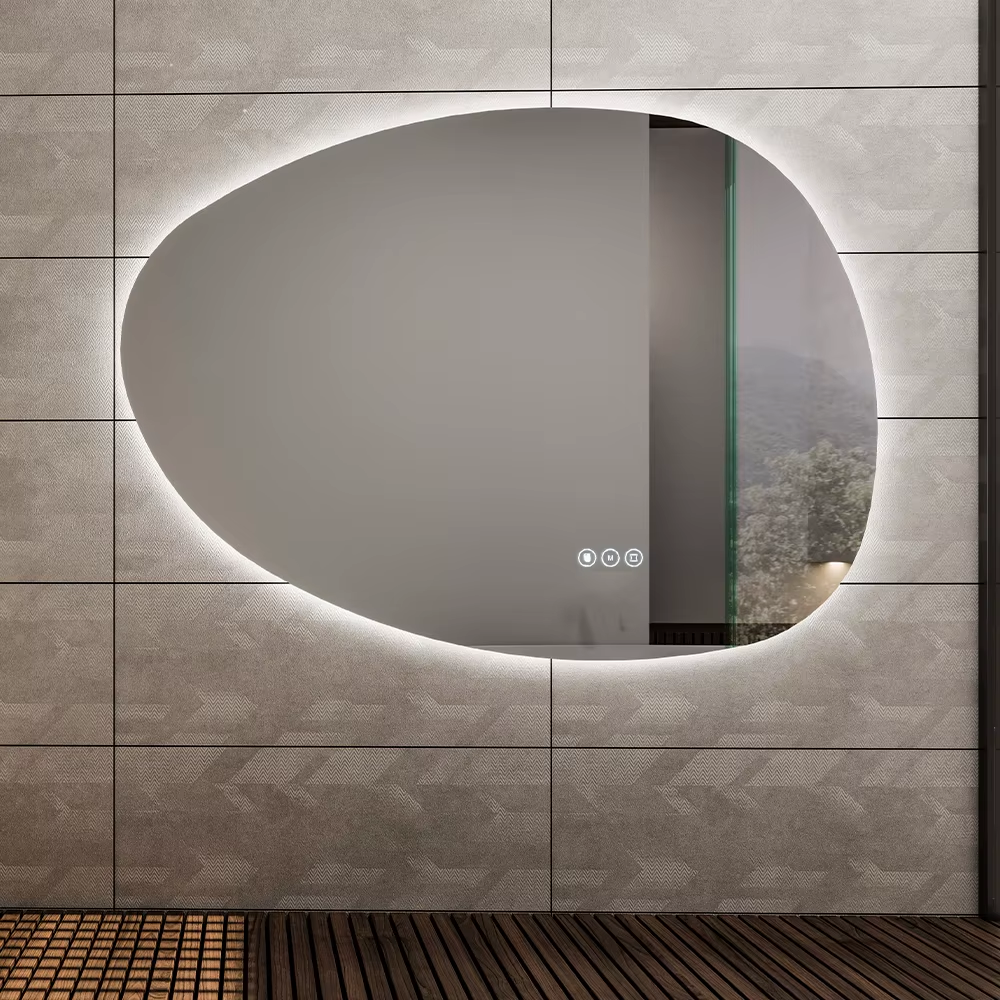
Backlit mirrors have LEDs installed behind the glass surface which creates that nice soft glow around the edges like a halo effect. These are great for setting moods and helping people see in the dark bathroom at night, but there's a catch. If not engineered right, faces can get washed out under the light. The better quality ones usually come with something called frosted diffusers or those fancy micro prismatic lenses on the sides that spread the light more naturally. When there's no diffusion happening, the lighting tends to flatten out facial features making things like pimples or even stubble really hard to spot. Anyone looking for actual functionality should probably go for models that mention edge to edge diffusion specifically in their specs sheets.
Essential Functional Features: Anti-Fog and Magnification for Post-Shower Reliability
Heated Element vs Nano-Coating: Long-Term Fog Resistance in Real-World Use
Most vanity mirrors today come with one of two anti-fog options: either built-in heating elements or special nano coatings. The heated models work by keeping the glass warm enough so moisture doesn't form on the surface at all. They do consume more electricity though, which is why many people still prefer them despite the higher power draw, especially in those really humid bathroom environments where regular mirrors just stay fogged up forever. Nano coated mirrors take a different approach, using special treatments that basically make water roll off instead of sticking. But these coatings wear down over time when someone cleans the mirror too aggressively, and most need to be reapplied somewhere between two and three years later. From what various humidity tests have shown, the heated ones stay completely clear all the time, whereas the nano treated ones tend to leave about 15 to 20 percent fog behind even after just five minutes under steam. If someone wants something that works reliably day after day without needing constant maintenance, going with the heating element option makes sense for most bathroom situations.
10x Magnification at Arm’s Length Enables Eyelash and Razor-Line Precision
Getting just right when it comes to grooming often means having a mirror with around 10 times magnification placed roughly where most people hold their arms out naturally, about 16 to 18 inches away from the face. Mirrors set up this way let users see about three times more detail than regular 5x mirrors do, but they don't distort things like those super powerful 15x+ ones tend to. When sitting at this sweet spot for both distance and magnification level, small details like spaces between lashes or how straight the razor is moving across skin become much easier to spot without needing to bend forward awkwardly. Research suggests folks who use these properly sized mirrors make almost half as many mistakes during their grooming routines compared to those relying on plain old mirrors. Many modern mirrors come with flip mechanisms that save countertop space yet still allow quick switching between normal view and close-up inspection modes. Anyone serious about good grooming should look for models where the actual magnified section measures at least five by five inches though, since smaller areas can be frustrating to work with over time.
Ergonomic Sizing and Placement: Evidence-Based Guidelines for Bathroom Vanity Mirrors
Getting the size right matters a lot when it comes to how well someone can groom themselves and whether they feel comfortable while doing it. If there's just one sink in the bathroom, go for a mirror that's about the same width as the vanity itself. Most folks find something around 20 to 32 inches works pretty well without making the space look chopped up visually. When dealing with two sinks side by side, people usually pick either two individual mirrors each measuring roughly 24 to 30 inches wide placed above their respective sinks with some breathing room between them (around 4 to 6 inches apart), or sometimes opt for one big mirror covering both sinks completely. The key thing is positioning these mirrors so their middle point sits at eye level for most adults, which generally means hanging them somewhere between 60 and 65 inches off the ground. This helps keep neck muscles relaxed instead of cranked forward all day long. Also important? Leave at least five but no more than ten inches between where the mirror starts and the top of the counter surface. That extra space makes room for faucets to work properly, keeps water from splashing onto glass surfaces, and lets everyone see what they're doing regardless of how tall or short they happen to be. Following these guidelines makes morning routines less stressful on the body overall.
FAQ
What is the ideal color temperature for bathroom vanity mirrors?
The ideal color temperature for bathroom vanity mirrors is between 4000K to 5000K, as it closely matches natural daylight conditions.
Why is a high CRI important for LED bathroom mirrors?
A high CRI (Color Rendering Index) above 90 is important for LED mirrors as it ensures faithful skin and makeup color rendering.
How do multi-stage dimming systems benefit bathroom vanity lighting?
Multi-stage dimming systems allow adjustable brightness which supports task flexibility and circadian comfort by aligning with natural pupil adjustments.
What is the difference between front-lit and back-lit vanity mirrors?
Front-lit mirrors eliminate shadows and provide precision for grooming tasks, while back-lit mirrors offer ambient glow but require edge diffusion to prevent washout.
Which anti-fog feature is more reliable, heating elements or nano-coating?
Heating elements are more reliable for long-term fog resistance as they maintain a clear surface, whereas nano-coatings may wear down over time.
Why is 10x magnification beneficial for vanity mirrors?
10x magnification helps in achieving precision in grooming tasks such as eyelash and razor-line application without distortion and comfortably aligns with natural arm’s length.
How should bathroom vanity mirrors be sized and positioned?
Bathroom vanity mirrors should be sized according to the width of the vanity and positioned at eye level, typically between 60 to 65 inches off the ground for ergonomic comfort.
Table of Contents
- Lighting Performance: Color Accuracy and Adjustable Brightness for Reliable Grooming
- Illumination Design: Front-Lit vs Back-Lit Bathroom Vanity Mirrors
- Essential Functional Features: Anti-Fog and Magnification for Post-Shower Reliability
- Ergonomic Sizing and Placement: Evidence-Based Guidelines for Bathroom Vanity Mirrors
-
FAQ
- What is the ideal color temperature for bathroom vanity mirrors?
- Why is a high CRI important for LED bathroom mirrors?
- How do multi-stage dimming systems benefit bathroom vanity lighting?
- What is the difference between front-lit and back-lit vanity mirrors?
- Which anti-fog feature is more reliable, heating elements or nano-coating?
- Why is 10x magnification beneficial for vanity mirrors?
- How should bathroom vanity mirrors be sized and positioned?