
 EN
EN

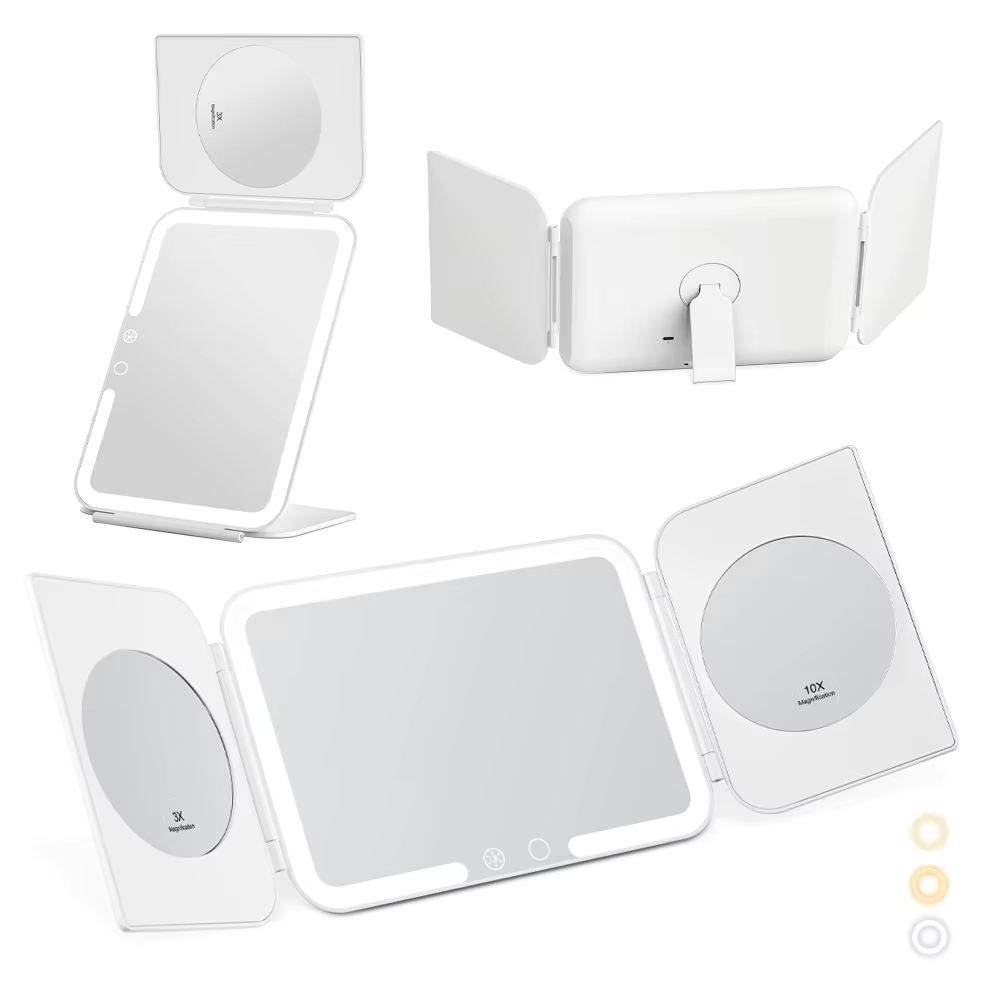
Proportional Sizing Guidelines for a Mirror with Lights
The 60–70% Vanity Width Rule for Balanced Visual Proportion
When picking out a lighted mirror for a small bathroom, aim for something that covers about two thirds to three quarters of the vanity's width. This helps create balance without making the room feel cluttered or leaving the mirror looking too tiny. Take a standard 36 inch vanity for instance most people find that a mirror around 22 to 25 inches works best. That leaves roughly 5 or 6 inches free space on either side which frames the vanity nicely without feeling cramped. The effect makes the bathroom look bigger than it actually is. Plus, when installed properly, the lighting should blend in with everything else instead of fighting against other lights in the room.
Optimal Standard Sizes (24", 30", 36") and Their Impact on Spatial Perception
Standard mirror widths directly influence how spacious a bathroom feels:
| Size | Best For | Spatial Effect | Lighting Consideration |
|---|---|---|---|
| 24" | Single-sink vanities ≤36" | Expands narrow walls | Avoids shadow overlap in tight corners |
| 30" | Compact double vanities | Creates vertical emphasis | Requires centered placement for even illumination |
| 36" | Larger powder rooms | Maximizes light reflection | Needs ≤40W LED to prevent edge dimming |
A 30-inch mirror with lights suits 42-inch vanities particularly well: its reflective surface amplifies natural light through physics-based bounce efficiency, visually “lifting” low ceilings while softening hard boundary lines. Smaller bathrooms benefit most from 24–30 inch widths–larger mirrors reduce functional wall space and disrupt spatial balance.
How Lighting Enhances Space: Choosing the Right Mirror with Lights
LED Backlit vs. Sidelit Mirror with Lights: Depth, Brightness, and Illusion Effects
The way LED mirrors create different space illusions really depends on where the lights are placed. When we talk about backlit mirrors, they basically put light behind the glass which creates this nice soft glow around the edges. This effect makes walls look like they're further back than they actually are, which is great when trying to make small bathrooms feel bigger. Then there are those sidelite mirrors that run along the sides of the mirror frame instead. These give off even lighting across the face area and help cut down on those pesky shadow spots during makeup application or shaving. Most people find that sidelit mirrors with around 500 to 800 lux of light work best for detailed grooming stuff. Backlit ones aren't as strong though, usually sitting somewhere between 75 and 200 lux, but they do create this lovely ambient lighting effect. What's interesting is how backlit mirrors can visually push walls back by about 2 to 4 inches, giving that illusion of extra space. Meanwhile, sidelite models just light up faces properly without causing any harsh reflections or glare issues.
Physics of Light Reflection: Amplifying Natural Light and Softening Boundaries
Mirrors leverage light’s reflection properties to transform cramped bathrooms. They bounce 80–90% of ambient photons, effectively doubling illumination intensity and reducing reliance on overhead fixtures. Positioning a mirror with lights directly opposite windows maximizes natural light diffusion, while angling it 15–30° toward dark corners softens spatial boundaries by lowering contrast.
| Reflection Technique | Illusion Effect | Optimal Positioning |
|---|---|---|
| Window-opposite placement | Doubles natural light | Directly facing light source |
| Angled reflection | Erases shadowed corners | 15–30° from vertical plane |
| Diffused LED backlighting | Creates depth perception | 4–6 inches from wall surface |
This strategic use of reflection expands perceived square footage by 5–10% without physical renovations–and lowers spatial contrast ratios below 3:1 (light to dark), helping walls visually “dissolve” into adjacent areas.
Integrated Installation Best Practices for Mirror with Lights
Vanity-to-Mirror Width Ratio: The 2–4 Inch Narrower Rule for Framing
For balanced aesthetics in small bathrooms, your mirror with lights should be 2–4 inches narrower than the vanity. This framing rule prevents visual overcrowding while ensuring functional clearance for lighting fixtures and accessories. Industry standards confirm this proportion minimizes spatial competition, supporting a more organized and intentional layout.
Light Fixture Width Alignment: The 75% Rule for Uniform Illumination
When installing lights above a mirror, aim to have them span about three quarters of the mirror's width. This setup helps distribute light evenly over the face area, which matters a lot during shaving or makeup application. Plus it cuts down on those annoying bright spots and dark corners around the edges. Lighting experts note that positioning fixtures this way actually makes mirrors look deeper because the whole reflective area stays well lit instead of having uneven patches of brightness.
FAQ
What is the optimal mirror width for a small bathroom vanity?
The optimal mirror width should be about 60-70% of the vanity's width, ensuring it balances the space without making it feel cluttered.
How do I choose between a backlit and sidelite mirror?
Choose a backlit mirror for ambient illumination and space enhancement, while a sidelite mirror is ideal for precise face illumination, reducing shadows during grooming.
What standard mirror sizes enhance bathroom space perception?
Standard sizes such as 24", 30", and 36" can significantly influence space perception by expanding walls, emphasizing vertical lines, or maximizing reflection.
How can I maximize natural light using mirrors?
Position mirrors opposite to windows to double natural light and angle them towards dark corners to soften spatial boundaries.