
 EN
EN

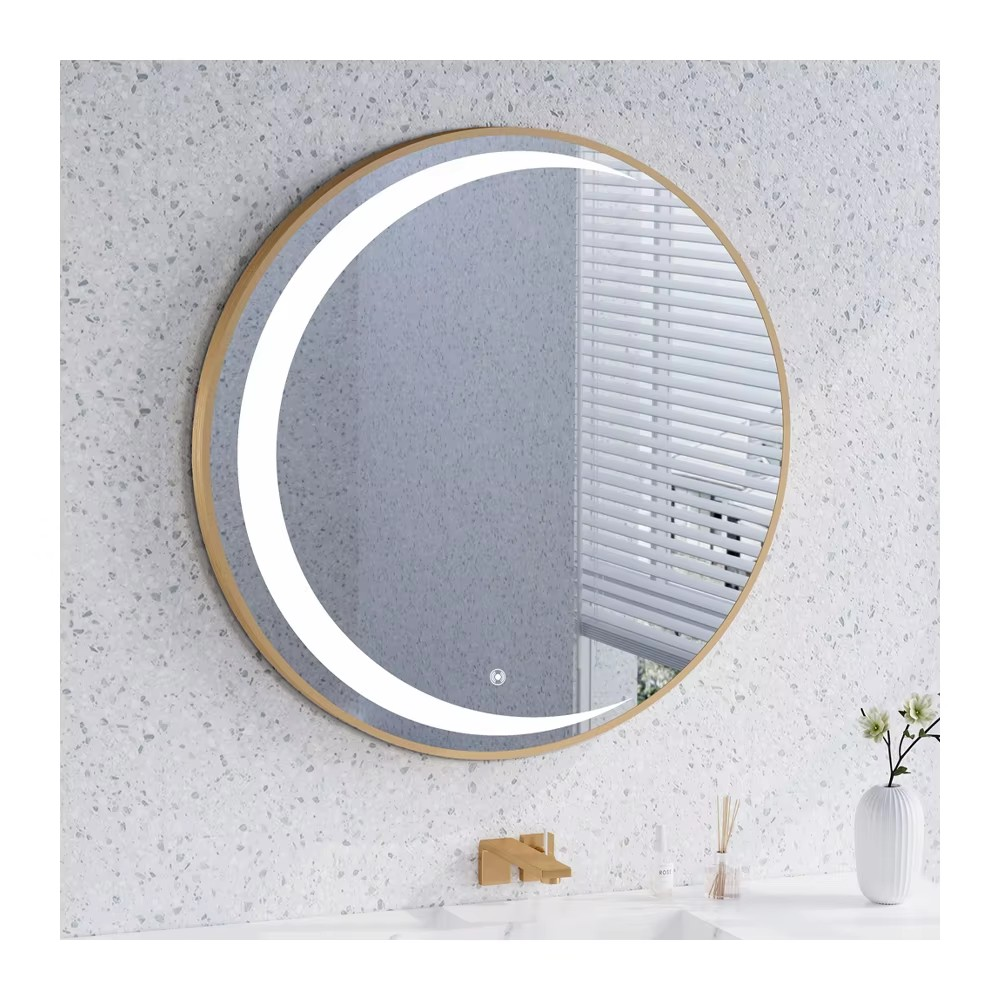
Permanent Wall-Mounted Solutions for Full Length Mirrors
Stud-Based Mounting: Best Practices for Structural Integrity
For maximum safety in permanent installations, anchoring your full length mirror to wall studs is non-negotiable. Studs provide critical structural support by distributing the mirror's weight across the building's framing—far exceeding what drywall or plaster alone can bear. To execute this properly:
- Locate studs using a reliable stud finder (standard spacing is 16–24 inches on center).
- Use heavy-duty mirror brackets or Z-clips secured with 2.5-inch lag screws driven fully into solid wood.
- Reinforce upper mounts with French cleats to resist shear forces—especially important for tall or heavy mirrors.
Mounting solely to drywall poses unacceptable risk; even high-rated anchors rely on substrate integrity that drywall cannot consistently provide. As confirmed in the 2023 Building Safety Report, stud-mounted brackets reliably support up to 50 lbs per point—ensuring long-term stability under daily use and incidental impact.
Anchor Selection by Wall Type: Drywall, Concrete, and Plaster Compatibility
When stud mounting isn't feasible—due to stud location, wall layout, or aesthetic constraints—anchor selection must align precisely with wall composition and mirror weight. The right anchor prevents pull-out, creep, or substrate failure.
| Wall Type | Suitable Anchor | Weight Rating | Notes |
|---|---|---|---|
| Drywall | Toggle bolts or snap toggles | ≦ 70 lbs | Avoid plastic anchors for loads >30 lbs; they lack shear resistance |
| Concrete | Sleeve anchors or wedge bolts | ≧ 100 lbs | Requires carbide-tipped drill bit and proper hole depth |
| Plaster | Hollow-wall anchors | ≦ 50 lbs | Pre-drill carefully to avoid lath damage; reinforce with broad washers over weak areas |
When hanging mirrors, make sure those anchor ratings match the real weight of the whole thing, not just the frame itself. Don't forget to factor in all that extra stuff behind it either - the backing material, mounting hardware, maybe even built-in lights if there are any. According to recent research from the National Safety Council in 2024, nearly two thirds of all mirror accidents happened because people used anchors that couldn't handle the actual load or had simply worn out over time. Plaster walls can be particularly tricky business, especially those old fashioned lath and plaster ones still lurking in many homes. When dealing with these surfaces, go for anchors specifically made for hollow wall applications. And absolutely do yourself a favor by testing how much weight they really hold up before committing to permanent installation.
Non-Permanent Full Length Mirror Mounting Options
Leaning Mirrors with Anti-Tip Safety Straps
A full length mirror leaning against a wall gives people options without damaging walls, which makes it great for apartments or short term setups. But keeping it stable is no small task. Most folks use those anti tip straps made from either nylon or steel to secure the top corners of the mirror to actual wall studs or other solid points in the structure. This stops mirrors from falling forward when someone bumps into them. Good installation keeps the mirror at around 25 degrees angle from vertical. Not only does this look better visually, but it also follows basic principles of physics to keep everyone safe from accidents.
To maximize effectiveness:
- Position the mirror base 6–8 inches from the wall to create a stable triangular footprint.
- Anchor straps only to verified studs or load-rated masonry anchors—not drywall alone.
- Avoid placement in high-traffic zones, stairwells, or near door swings where accidental contact could initiate movement.
This method meets ASTM F2057-23 standards for furniture tip-over prevention when installed correctly—and provides a practical, code-aligned alternative where permanent mounting isn't possible.
Heavy-Duty Adhesive Systems: Weight Limits and Surface Suitability for Full Length Mirrors
Industrial-grade adhesive tapes and liquid adhesives offer a clean, hardware-free mounting option—but only on compatible, well-prepared surfaces. These systems are appropriate for mirrors up to 15 kg (33 lbs) only on smooth, non-porous substrates such as ceramic tile, polished stone, or finished hardwood.
Critical application requirements include:
- Thorough cleaning with 90% isopropyl alcohol (no residue, no silicone-based cleaners).
- Uniform pressure applied for 60 seconds across the entire bond line.
- Full 72-hour cure time before any load is applied—even light leaning.
The way surfaces feel makes a big difference in how well things stick. Tests in labs have found that rough materials like brick, stucco or textured paint can cut bonding strength by around 70%. Size is another factor worth considering. Narrow mirrors under 24 inches work better because gravity doesn't pull as hard on them. For places where temperatures change a lot through seasons (more than 10 degrees Celsius difference), it's wise to think twice before applying adhesives. Those constant temperature changes really wear down the sticky stuff over time.
Critical Safety Considerations for Full Length Mirror Installation
Prioritizing safety is non-negotiable—full length mirrors pose real risks of laceration, blunt trauma, and property damage if improperly installed. A falling mirror can strike with force exceeding 300 ft-lbs in worst-case scenarios, particularly in bedrooms, hallways, or entryways where movement is frequent and unpredictable.
Industry data reveals that 90% of installation failures trace back to two root causes: inadequate weight distribution and anchoring to structurally unsound substrates. To mitigate risk:
- Always identify your wall type first—drywall, plaster, or concrete—and match hardware accordingly.
- Use mounting hardware rated for at least twice the mirror's stated weight. This margin accommodates dynamic forces like accidental bumps, vibrations, or minor seismic activity.
- For mirrors exceeding 40 lbs (18 kg), professional installation is strongly advised—not just for compliance, but because structural verification (e.g., stud mapping, substrate testing) requires experience most homeowners lack.
- After installation, inspect mounting points monthly for loosening, corrosion, or bracket deformation. Immediately address hairline cracks in the mirror surface: they propagate under stress and compromise rigidity long before visible failure occurs.
Matching Hardware Capacity to Full Length Mirror Weight and Dimensions
Step-by-Step Load-Bearing Assessment: From Mirror Specs to Hardware Rating
Begin with precise mirror specifications—weight, height, width, and frame construction—as listed on packaging, spec sheets, or manufacturer documentation. Do not estimate. Then follow this assessment sequence:
- Calculate required load capacity: Multiply the mirror's weight by 1.5 to account for safety margin and dynamic forces (e.g., a 19 kg mirror requires ≧28.5 kg capacity).
- Match to wall limitations: Cross-reference with substrate-specific anchor ratings—drywall toggles typically max out at 25 kg per point; concrete wedge anchors reliably support ≧50 kg.
- Verify collective hardware rating: Ensure the combined capacity of all brackets, screws, straps, or adhesives exceeds your calculated threshold—not just individual components.
- Distribute load proportionally: For mirrors wider than 36", use at least three anchor points—top corners plus center—to prevent frame flex and uneven stress. Never rely on single-point mounting for mirrors over 15 kg.
This approach aligns with ANSI/BIFMA X5.9-2022 guidelines for heavy wall-mounted fixtures and ensures hardware selection is rooted in engineering principles—not guesswork.
Frequently Asked Questions (FAQs)
How can I safely mount a full-length mirror in a rental property without causing damage?
Using leaning mirrors with anti-tip safety straps is an excellent option for rental properties. This method avoids permanent fixture to walls, instead using nylon or steel straps to secure mirrors to wall studs.
Is it safe to use adhesive systems for mounting full length mirrors?
Adhesive systems can be safe for mirrors up to 15 kg, as long as they are applied to compatible, well-prepared surfaces like ceramic tiles or polished stones.
What are the most common causes of mirror installation failures?
Most installation failures arise from inadequate weight distribution and anchoring onto structurally unsound substrates, causing mirrors to detach or break.
Table of Contents
- Permanent Wall-Mounted Solutions for Full Length Mirrors
- Non-Permanent Full Length Mirror Mounting Options
- Critical Safety Considerations for Full Length Mirror Installation
-
Matching Hardware Capacity to Full Length Mirror Weight and Dimensions
- Step-by-Step Load-Bearing Assessment: From Mirror Specs to Hardware Rating
- Frequently Asked Questions (FAQs)
- How can I safely mount a full-length mirror in a rental property without causing damage?
- Is it safe to use adhesive systems for mounting full length mirrors?
- What are the most common causes of mirror installation failures?