
 EN
EN

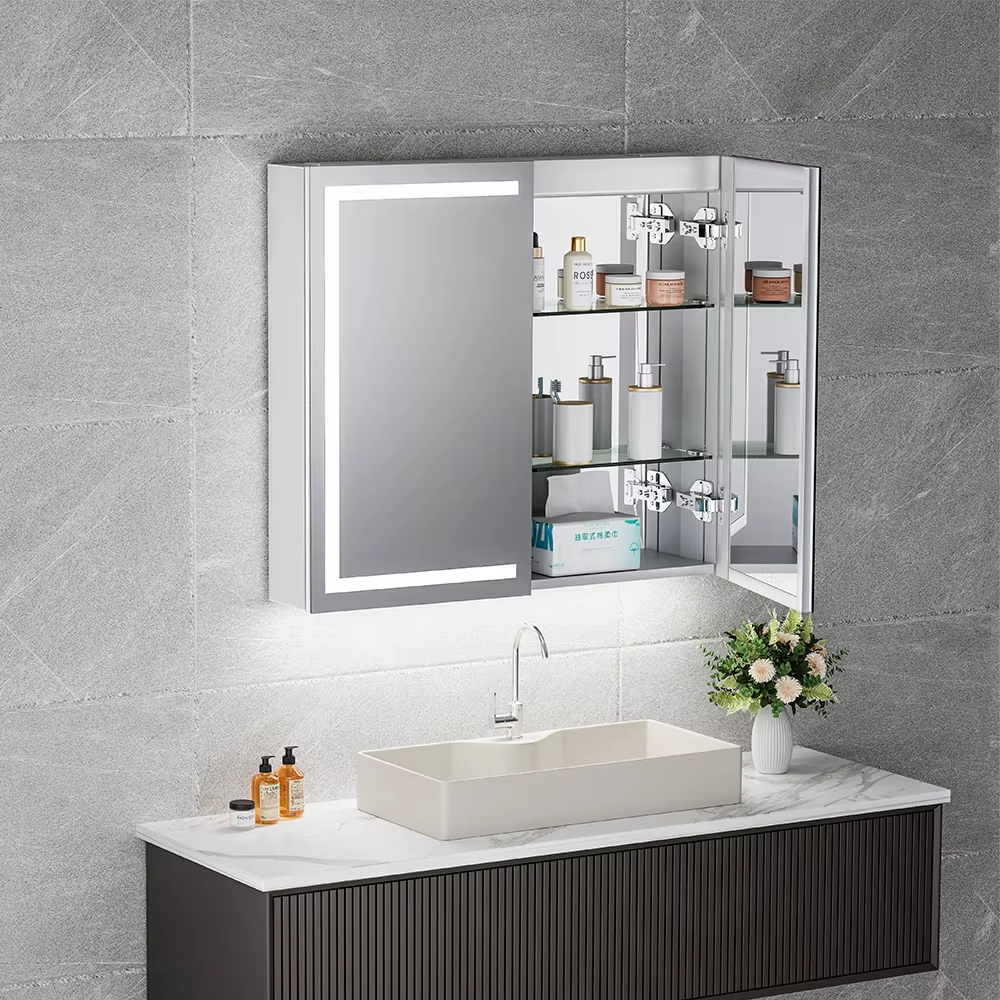
Enhanced Durability: Why Thickened Aluminum Alloy Strengthens Bathroom Mirror and Cabinet Frames
Corrosion Resistance in High-Humidity Bathrooms: ASTM B117 Salt Spray Test Evidence
Materials used in bathrooms need to handle all that moisture without falling apart over time. Thick aluminum alloy works really well because it forms a protective oxide layer on its own that keeps steam and chlorides from getting through. Recent tests following ASTM B117 standards showed that frames made with 2.0mm thick alloy can last over 1,000 hours in salt spray conditions. That's actually three times better than what we see with regular 1.2mm options. What makes this material special is that even if someone accidentally scratches the surface, the underlying metal doesn't start rusting away. Most bathrooms stay above 70% humidity pretty much all day long, so having this kind of proven resistance means mirrors and cabinets will keep looking good and holding up structurally for many years down the road.
Structural Integrity Under Load: 2.0mm vs. 1.2mm Frames Validated by EN 14428 Compliance Data
The thickness of cabinet frames plays a big role in how well they can handle weight, which matters a lot for bathroom storage that needs to hold glass shelves, ceramic items, and all those heavy toiletries people collect over time. According to recent EN 14428 tests from 2024, aluminum alloy frames at 2.0mm thickness can support about 25 kilograms before bending more than half a millimeter. That makes them roughly 40 percent stiffer compared to thinner 1.2mm frames. When put through rigorous testing that mimics actual usage conditions, these thicker frames stayed stable even after opening doors over 10,000 times without any signs of warping or developing cracks under stress. This kind of structural integrity means bathroom cabinets last longer and stay safe in damp environments where many cheaper alternatives tend to fail due to gradual material breakdown over time.
Adaptable Storage: How Adjustable Layer Systems Optimize Bathroom Mirror and Cabinet Functionality
Tool-Free Modular Shelving: 40% Faster Installation and Real-Time Layout Customization
Modular shelving that doesn't need tools is changing how we store stuff in bathrooms thanks to smart design that puts users first. According to industry data, these systems cut down installation time by around 40% compared to traditional fixed shelves since there's no need for drilling or extra hardware. The secret lies in a special clip system that lets people move shelves instantly and quietly, so they can adjust height settings whenever needed for those big bottles or small items. People who actually use these systems tend to rearrange their bathroom setups about three times more frequently than before, making better use of limited vertical space in smaller bathrooms. The shelves themselves are supported by reinforced aluminum brackets capable of holding up to 15 kilograms each without any sagging issues, meaning strong construction works hand in hand with flexible organization options.
User Preference Insights: 73% Prioritize Interior Flexibility in Bathroom Mirror and Cabinet Selection
According to recent studies, around 73 percent of homeowners put interior adjustability at the top of their list when shopping for bathroom mirrors and cabinets. Makes sense really, because modern households just keep changing so much these days. Many families actually experience close to 70% more organization adjustments during those first five years living in a new home. People are clearly moving away from fixed designs toward options they can tweak themselves. The 2023 Bath Industry Report backs this up showing that roughly 82% would shell out extra cash for modular setups. We're seeing something bigger happen here too. These days folks care more about how well something adapts over time rather than just looking good initially. Companies focusing on creating adaptable interiors tend to hold onto customers better, with stats showing a 31% boost in retention rates. That tells me one thing for sure - flexibility inside bathrooms isn't just a passing fad anymore.
Integrated Innovation: Engineering Synergy Between Frame Strength and Interior Adaptability in Bathroom Mirror and Cabinet Design
Case Study: Dual-Feature Integration Drives 32% Higher Post-Purchase Satisfaction
In 2024, researchers followed 550 homes for almost a year and a half to see what happens when people use shelves made with thicker aluminum frames alongside tool-free assembly options. People who bought these combined systems said they were about 32 percent happier after buying them compared to folks stuck with regular old shelving units. The boost in happiness seems to come from having strong structures that last forever plus being able to rearrange things without breaking a sweat. These users also had roughly 22% less problems with moisture damage according to those ASTM tests everyone talks about, and they moved around their shelves nearly three times more often than people with fixed setups. All this flexibility meant spending 40% less time fussing with organization stuff each month, and saving around $110 per year on storage costs too. When asked why they'd buy again, 8 out of 10 customers mentioned both the tough frames and easy customization as top reasons, showing that when components work together well, there's real money saved and convenience gained that no single feature can match alone.
Market Validation: Growing Demand for High-Performance Bathroom Mirror and Cabinet Solutions
The market for high-end bathroom mirrors and cabinets is really taking off these days, mostly because people want their bathroom stuff to last longer and work better, not just look good. What's pushing this trend? Well, first off, folks are spending more money on renovations overall. Second, there's been a big shift away from those flimsy thin metal frames or composite materials towards thicker aluminum alloys that actually hold up over time. And third, more and more products need to fit into smart home systems, which means they need solid mounting points that won't fail after a few years. According to recent industry numbers, customers are willing to pay around 25% extra for bathroom units that combine rust-proof materials with flexible storage options, seeing them as investments rather than quick fixes. Companies that focus on both performance and design see their sales grow about 40% faster compared to competitors who only worry about how things look. These days, if a manufacturer wants to lead in this space, they can't ignore either the structural quality or the adaptability factor anymore.
FAQ
Why is aluminum alloy preferred for bathroom mirror frames?
Aluminum alloy is preferred due to its corrosion resistance and ability to maintain structural integrity in high-humidity environments, such as bathrooms.
How does frame thickness affect bathroom cabinets?
Thicker frames, like 2.0mm versus 1.2mm, provide improved load handling, structural stability, and longevity.
What are the benefits of tool-free modular shelving?
Tool-free modular shelving allows for 40% faster installation and real-time layout customization, improving bathroom storage efficiency.
How do adjustable layer systems work?
Adjustable layer systems use a clip system that allows users to easily move and adjust shelf heights without tools.
What makes integrated innovation important in bathroom cabinet design?
Integrated innovation combines frame strength and interior adaptability, resulting in higher customer satisfaction and reduced storage issues.
Table of Contents
- Enhanced Durability: Why Thickened Aluminum Alloy Strengthens Bathroom Mirror and Cabinet Frames
- Adaptable Storage: How Adjustable Layer Systems Optimize Bathroom Mirror and Cabinet Functionality
- Integrated Innovation: Engineering Synergy Between Frame Strength and Interior Adaptability in Bathroom Mirror and Cabinet Design
- Market Validation: Growing Demand for High-Performance Bathroom Mirror and Cabinet Solutions
- FAQ