 EN
EN

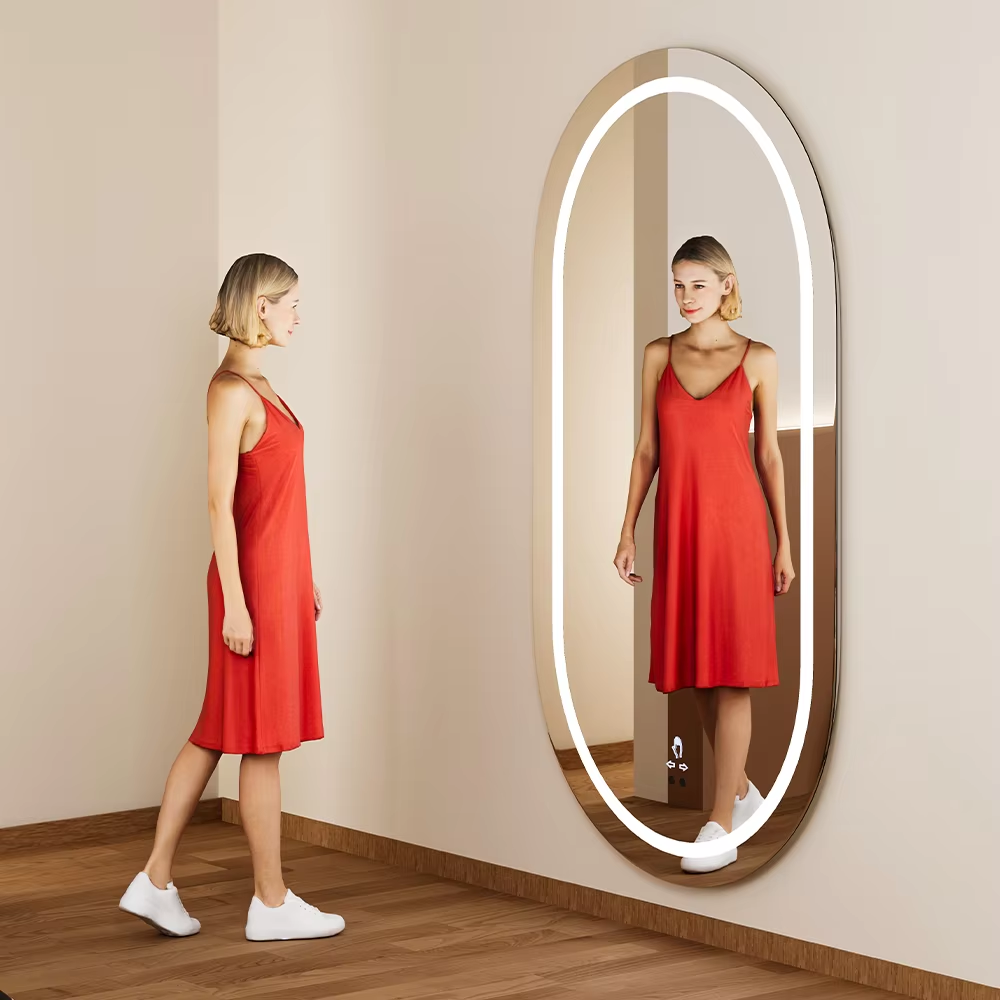
Superior, Shadow-Free Illumination for Precision Grooming
Why traditional mirrors compromise visibility during makeup, shaving, and skincare
Regular mirrors depend entirely on outside light sources like those overhead bathroom lights that tend to create downward shadows on our faces. What happens? Important facial features get hidden from view. When trying to shave, the jawline becomes a blurry mess. Those dark circles underneath the eyes disappear when applying concealer, and all those little skin details just vanish while checking out skincare products. People try to fix this by tilting their head sideways or leaning really close to the mirror, which makes them tired faster and increases mistakes. Studies show that these overhead lights can actually hide around 40 percent of what we need to see when doing detailed grooming work. This means less accuracy and inconsistent results every time.
How integrated LED edge-lighting and diffused optics eliminate harsh shadows and glare
LED mirrors today fix this problem by mounting lights around the edges so they shine straight out from the mirror surface, giving even lighting without favoring any particular direction. Better quality versions come with special diffusers that spread the light around more naturally, getting rid of those annoying bright spots, harsh reflections, and odd color shifts. They still keep the Color Rendering Index above 90 though, which means skin looks real and products appear just how they should. What we get then is good lighting everywhere important without shadows messing things up:
- No neck or chin shadows during precision shaving
- Zero under-eye darkness when applying concealer or serum
- Even brightness for detecting pores, dry patches, or post-treatment redness
This medical-grade optical environment supports flawless execution—day or night—without requiring supplemental lamps or repositioning.
Energy Efficiency and Measurable Long-Term Cost Savings
Comparing power consumption: LED mirror (8W) vs. traditional vanity lighting (45–75W)
Traditional vanity lighting usually involves several incandescent or halogen bulbs, each consuming between 45 and 75 watts. When all these are running together, the whole setup can draw well over 150 watts of power. On the other hand, modern LED mirrors generally use no more than 8 watts maximum. If someone uses their mirror lighting for half an hour every day, they'll consume around 27.4 kilowatt hours per year with old fashioned bulbs versus only about 1.5 kWh with LED technology. That's actually a drop of more than 90% in energy use. What's really nice about this improvement is that it still provides plenty of light intensity (at least 500 lux when measured 30 centimeters away) which makes all those close up tasks possible without any loss in quality whether applying eyeliner or getting clean shaves along razor thin lines.
Lifecycle cost analysis: 50,000-hour LED lifespan reduces replacement and electricity costs by up to 70%
LED modules deliver 50,000 hours of operation—25–50× longer than standard incandescent (1,000 hrs) or halogen (2,000 hrs) bulbs. That eliminates not only frequent replacements but also labor, ladder rentals, and disposal costs. Combined with ultra-low energy draw, the cumulative savings are substantial:
| Cost Factor | Traditional Lighting | LED Mirror | Reduction |
|---|---|---|---|
| Annual Energy Cost* | $16.40 | $0.90 | 95% |
| 10-Year Bulb Replacements | 15–50 units | 0 units | 100% |
| Total 10-Year Savings | — | — | Up to 70% |
*Based on $0.12/kWh and 30-min daily use
Independent lifecycle analyses confirm LED mirrors typically achieve full ROI within 2–3 years—making them a financially strategic upgrade, not just an aesthetic one.
Smart Functionalities: Anti-Fog, Touch Control, and Seamless Integration
How low-voltage heated backing prevents fogging—solving a top usability pain point in humid bathrooms
Low voltage heating elements built into mirrors keep surfaces warm enough to stay just above the dew point, so condensation never really gets a chance to form. No need for those temporary anti fog sprays or tedious wiping anymore. The system kicks in automatically thanks to internal humidity sensors, clearing up the glass almost instantly when steam hits it. According to last year's Bathroom Innovation Report, these smart mirrors cut down on fog problems during grooming routines by about 92%. That makes all the difference when getting ready for shaving or checking skin condition after a shower.
Capacitive touch interfaces and Bluetooth/motion-sensor features enhancing daily convenience
Capacitive touch controls replace mechanical switches—enabling silent, fingerprint-resistant adjustment of brightness and color temperature. Advanced models extend functionality with:
- Motion-activated illumination for safe, hands-free nighttime use
- Bluetooth 5.0 integration for syncing with smart home platforms (e.g., Apple HomeKit, Google Home) or audio devices
- Optional voice control compatibility (via Alexa or Google Assistant)
These features support adaptive routines—such as dimming to 2700K warm light for evening wind-down or boosting to 5000K daylight mode for morning makeup—without cluttering countertops or walls with extra hardware.
Health-Centric Design: Circadian Lighting and Visual Wellbeing
Tunable white LED technology (2700K–6500K) supporting natural circadian rhythm and task-specific clarity
Tunable white LED systems can produce light that ranges from warm amber at around 2700K to cool daylight at about 6500K. This range mimics how sunlight changes throughout the day, which helps regulate melatonin levels and supports better sleep patterns. People tend to feel more awake during mornings when using the cooler 5000-6500K settings because it boosts alertness and improves vision clarity. Switching to warmer tones between 2700-3500K in the evenings makes it easier to wind down and prepare for sleep. The 5000K setting works really well for tasks like grooming since it shows all the small details while still being gentle on the eyes. Research published last year found that these adjustable lights cut down visual tiredness by almost 40% compared to regular fixed color temperature options. So what does this mean? Wellness focused lighting isn't just some fancy idea anymore. It actually works and makes sense for everyday routines.
FAQ
What makes LED mirrors different from regular mirrors?
LED mirrors are equipped with edge-lighting that ensures even, shadow-free illumination, enhancing visibility during grooming tasks.
How do LED mirrors contribute to energy efficiency?
LED mirrors consume significantly less power than traditional lighting, reducing energy use by more than 90% while still providing ample brightness.
What smart features do LED mirrors offer?
They include anti-fog technology, touch controls, motion sensors, Bluetooth integration, and voice control compatibility for enhanced convenience.
How does tunable white LED technology support circadian rhythms?
It allows the adjustment of color temperature to mimic natural sunlight, aiding in healthier sleep patterns and improved alertness.