
 EN
EN

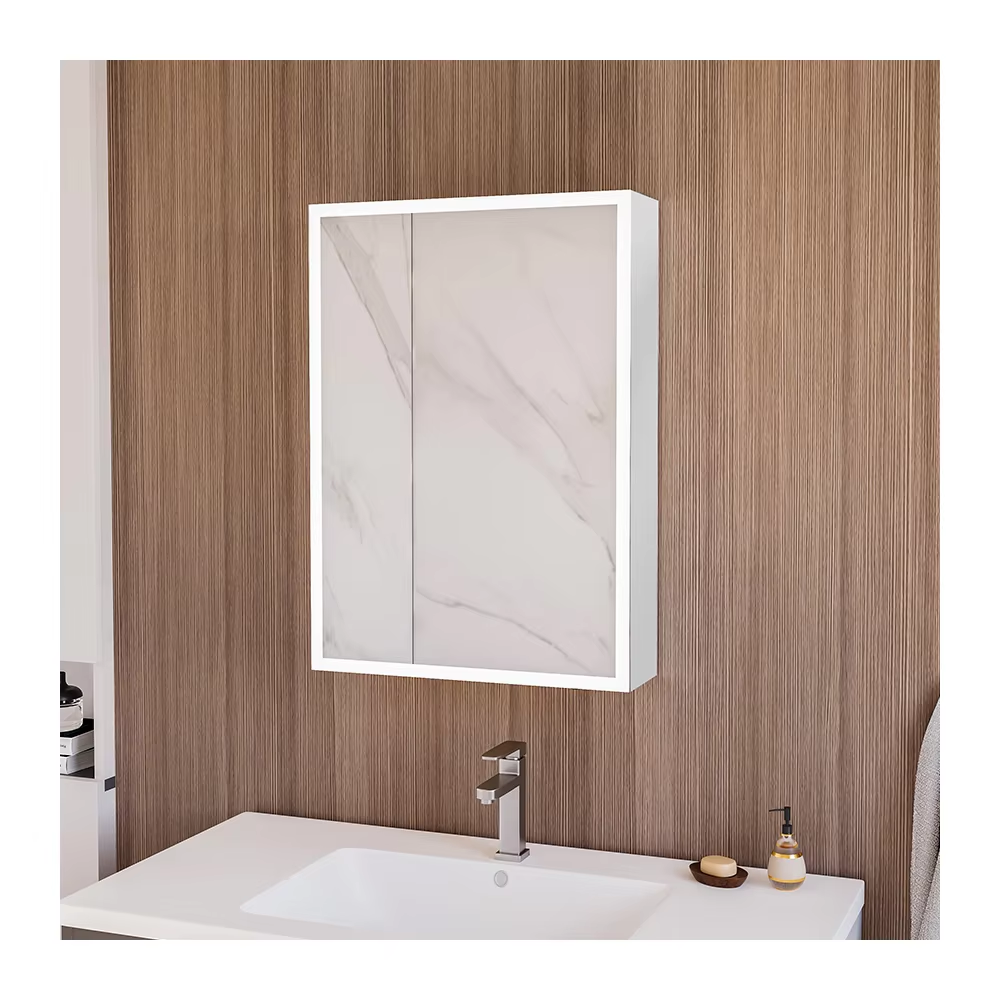
Understanding LED Mirror Lifespan: What 50,000 Hours Really Means
When manufacturers advertise a 50,000-hour lifespan for LED mirrors, they’re referencing the industry-standard L70 metric—the point at which light output declines to 70% of its initial brightness. This isn’t failure, but a measurable threshold of noticeable dimming aligned with IES LM-80 and TM-21 testing protocols.
Real-World Usage vs. Lab Ratings: Why Actual Lifespan Varies
The ratings we see in labs are based on perfect conditions: around 25 degrees Celsius temperature, steady power supply, and absolutely no moisture in the air. But real bathrooms tell a different story. Steam from showers, constant temperature changes, and occasional power dips all work together to make lights lose their brightness faster than expected. Research indicates that just being exposed to steam can cut down how long lights stay bright by about a quarter to almost a third compared to those lab numbers. For commercial spaces where lights run over 12 hours each day, they might hit that point where they're only putting out 70% of their original light output in less than eight years. That's roughly half as long as what most homes experience with lights running 4 to 5 hours per day.
Heat Dissipation and Driver Quality: The Two Biggest Lifespan Killers
Heat is the primary enemy of LED longevity: every 10°C rise above optimal junction temperature can cut expected life in half. Driver failure accounts for over 60% of premature mirror failures—often due to inadequate surge protection or thermal stress. High-performance models mitigate both risks through:
- Aluminum or copper heat sinks, engineered to maintain junction temperatures below 85°C
- UL-certified drivers with 4kV surge immunity and active thermal regulation
- Open-loop chassis designs that promote passive airflow around LEDs and drivers
Prioritizing verified thermal management and industrial-grade drivers—not just headline wattage or lumens—is what separates mirrors that deliver on the 50,000-hour promise from those that don’t.
Energy Efficiency in LED Mirrors: Measuring True kWh Savings
Wattage, Luminous Efficacy (lm/W), and Annual Energy Cost Comparison
True efficiency depends on three interlinked factors: actual power draw (watts), luminous efficacy (lm/W), and usage patterns. Unlike incandescent bulbs—which convert only ~10% of energy into visible light—high-quality LED mirrors achieve >95% electro-optical conversion. That difference translates directly to cost and carbon savings:
| Lighting Type | Avg. Wattage | Annual Energy Cost* | Lifespan |
|---|---|---|---|
| Incandescent | 60−100W | $18−$30 | 1,000h |
| LED Mirror | 3−30W | $1−$9 | 50,000h |
*Based on 4 hours/day use at $0.15/kWh (U.S. Energy Information Administration, 2024).
Premium LED mirrors using high-bin chips achieve 100−150 lm/W—triple the efficacy of older generations. Replacing a single 60W incandescent fixture with a 12W LED mirror saves approximately 175 kWh annually, enough to power a modern refrigerator for over two months.
Why Low Heat Output and Dimmable Drivers Enhance Efficiency and Safety
Minimal heat generation (surface temps ≤35°C) reflects efficient photon conversion—not wasted infrared radiation. That reduces energy loss and prevents thermal degradation of driver capacitors, a leading cause of early failure.
Dimmable drivers compound these benefits. By enabling precise 10−100% output control, they let users match illumination to task—cutting energy use up to 40% during low-light routines like nighttime navigation. This adaptive efficiency also eases grid demand during peak hours without compromising safety or visual comfort.
Key Selection Criteria for a High-Performance LED Mirror
LED Chip Grade (e.g., Epistar, Samsung), IP Rating, and Thermal Design Verification
The foundation of lasting performance lies in the quality of components used throughout the system. When it comes to LED technology, premium brands like Epistar, Samsung, and Osram stand out from the crowd. These manufacturers produce chips that generate over 130 lumens per watt while maintaining their brightness far longer than cheaper knockoffs on the market. For installations where moisture is a concern, look for products rated at least IP65. This means they can withstand dust accumulation completely and handle splashes from water jets without damage. Such protection becomes particularly important in bathrooms where steam builds up regularly during showers and baths, making these ratings not just technical specs but actual requirements for safe, functional lighting solutions.
Getting thermal design right matters just as much. When we look at third party tested aluminum heat sinks, they tend to bring down operating temps around 30 to maybe even 40 percent. That fights off what causes most LEDs to degrade over time. The Ponemon Institute study from last year showed something pretty shocking too. They found that when thermal management isn't good enough, components wear out about 70% faster than normal. So here's some practical advice for anyone working on this stuff: don't settle for marketing materials claiming great results. Ask specifically for those independent thermal testing reports instead. These will show if the product actually holds up when put through its paces in real world conditions.
Certifications, Warranties, and Brand Trust: Signals of Real LED Mirror Reliability
Getting certified through standards like UL, CE, and RoHS isn't just good marketing stuff—it's actual evidence that products meet important safety requirements. Take UL certification for instance. To get this mark, manufacturers must go through hundreds of different safety checks. We're talking about things like making sure electrical components won't short out when exposed to water, testing how well materials resist dampness, and verifying that devices shut down properly under heavy loads. These tests matter a lot especially in places where there's lots of moisture around, like bathrooms where accidents can happen easily. Then there's the CE mark which basically means the product follows all those European Union rules about health and environment protection. And don't forget RoHS either. This one ensures dangerous chemicals such as lead and mercury aren't hiding in the materials used during manufacturing processes.
When a product comes with at least a 3 year warranty, it usually means the engineers behind it actually believe in what they built, not just some marketing department trying to sell stuff. The truth is, how long something is covered isn't as important as whether the company will actually honor that promise when things go wrong. Look for companies that have good records with technical support, maintain service centers right here in the US, and make their claims process clear from day one. Manufacturers who've been around for over a decade in the architectural lighting space tend to handle problems quicker, get replacements out faster, and keep updating firmware for those smart models too. This kind of track record really cuts down on wasted time and headaches down the road for anyone serious about long term ownership.
FAQ
What does the L70 metric mean for LED mirrors?
The L70 metric indicates the point at which an LED light's output decreases to 70% of its initial brightness, not a failure but a threshold of noticeable dimming.
Why does the actual lifespan of LED mirrors vary from lab ratings?
Lab ratings are based on ideal conditions, while real-world factors like steam, power fluctuations, and temperature changes cause LED mirrors to diminish in brightness faster.
How can heat dissipation affect the lifespan of LED mirrors?
Excessive heat can significantly reduce the lifespan of LED mirrors. Proper heat sinks and UL-certified drivers help maintain optimal temperatures and extend lifespan.
What factors contribute to the energy efficiency of LED mirrors?
Luminous efficacy, actual wattage, and usage patterns determine energy efficiency. High-quality LED mirrors achieve >95% electro-optical conversion, leading to cost and carbon savings.
What should be considered when selecting a high-performance LED mirror?
Consider the LED chip grade, IP rating for moisture resistance, and verified thermal design. Premium brands' chips and proper testing ensure durability and performance.
Which certifications and warranties indicate reliable LED mirrors?
Certifications like UL, CE, and RoHS indicate compliance with safety standards. A warranty signals the manufacturer's belief in their product's quality and reliability.
Table of Contents
- Understanding LED Mirror Lifespan: What 50,000 Hours Really Means
- Energy Efficiency in LED Mirrors: Measuring True kWh Savings
- Key Selection Criteria for a High-Performance LED Mirror
- Certifications, Warranties, and Brand Trust: Signals of Real LED Mirror Reliability
-
FAQ
- What does the L70 metric mean for LED mirrors?
- Why does the actual lifespan of LED mirrors vary from lab ratings?
- How can heat dissipation affect the lifespan of LED mirrors?
- What factors contribute to the energy efficiency of LED mirrors?
- What should be considered when selecting a high-performance LED mirror?
- Which certifications and warranties indicate reliable LED mirrors?