
 EN
EN

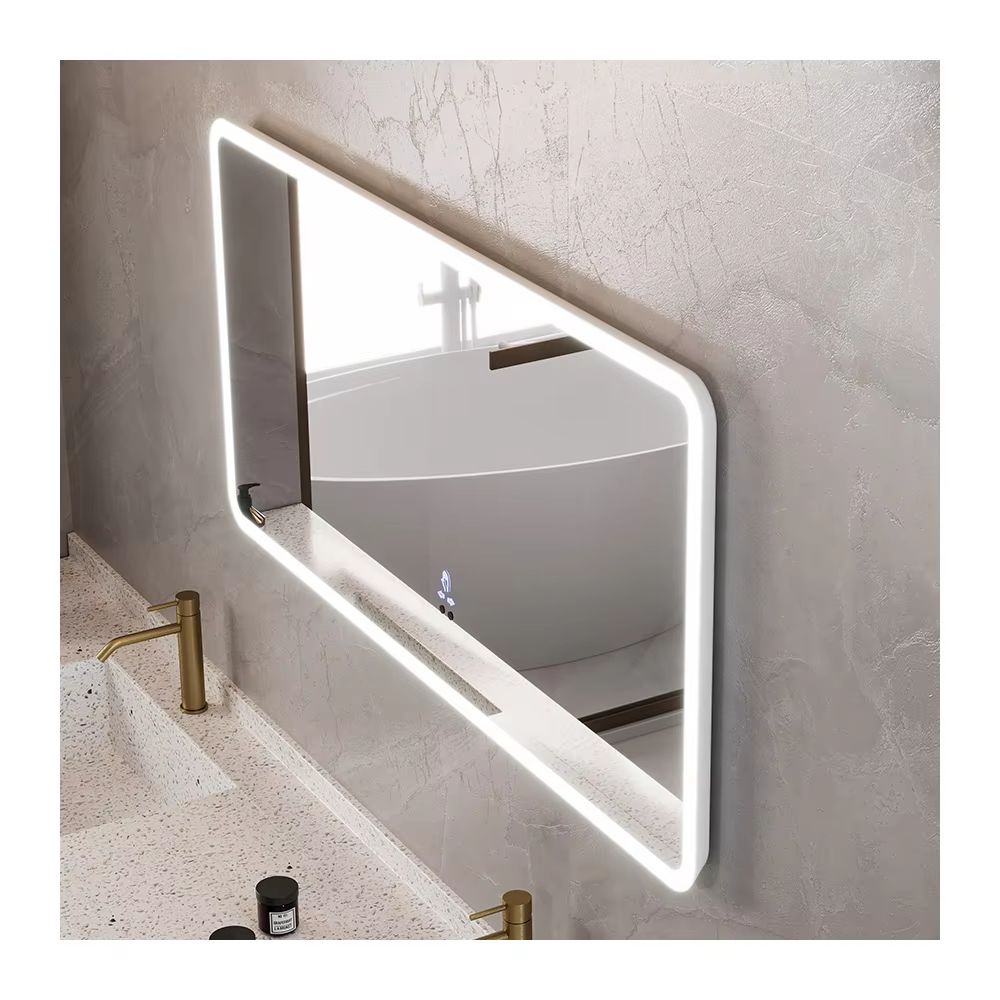
Why High-CRI LED Lighting Is Essential for Accurate Outfit Assessment
CRI >90 and Strong R9: Ensuring True-to-Life Fabric Colors and Skin Tone Fidelity
When shopping for an LED dressing mirror, getting accurate colors matters a lot if we want to see how clothes really look. Mirrors with a Color Rendering Index over 90 show fabrics as they actually are, which becomes super important when looking at details like fabric texture, patterns, and color tones. What most people don't realize is that good color accuracy needs both high CRI ratings and decent R9 scores (the red saturation measure). Anything below 50 on that scale starts messing with how skin tones look and makes rich colors in materials such as silk, wool, or deep red fabrics appear off. According to the Illuminating Engineering Society, bad red rendering can make red colors look up to 40% different than they should be. That kind of distortion leads to wrong judgments about color matching and overall outfit appearance. When putting together outfits where small color differences matter so much, having proper light quality just isn't optional anymore.
The Pitfalls of Low-CRI Lighting: Color Shifts in Common Garments (Denim, Wool, Silk)
Sub-80 CRI lighting fundamentally distorts garment perception by omitting key wavelengths across the visible spectrum. Under such LEDs:
- Navy denim appears washed-out and grayish
- Emerald wool shifts toward muddy olive
- Blush silk loses delicate pink undertones
The problem comes down to incomplete spectral power distribution rather than simply looking too dim or warm. According to data from the U.S. Department of Commerce back in 2023, about two thirds of all clothing returns happen because colors don't match when people wear them outside the store. That makes checking outfits under lights with a CRI rating above 90 not something we can skip over but actually pretty essential groundwork work. Standard light bulbs just don't cut it compared to those high quality CRI LED options out there these days. These special LEDs mimic natural daylight much better across their whole spectrum, so what customers see reflected in mirrors during try-ons actually matches closer to how clothes look throughout daily life situations.
Optimal Color Temperature Range (2700K–4000K) for Reliable Clothing Evaluation
2700K vs. 4000K: How Warm Light Reveals Texture While Cool Light Exposes Hue Accuracy
The warm glow of 2700K lighting really brings out the texture in fabrics and makes them look more three dimensional. Woven tweeds, those cable knit sweaters, even linen weaves all seem to pop more when lit this way. Colors also take on a warmer cast, which is great for seeing how they'll look in evening light or inside at home where the lighting tends to be softer. On the flip side, 4000K lighting shows off colors in a different way. Blues, greens, and purples become much clearer and more saturated, so there's less chance of picking out clothes that don't match properly once we step outside into daylight. Try putting outfits together under both types of lighting to see how they react differently. For instance, a charcoal blazer might look sharp and precise under cooler light but blend better with other pieces in warmer conditions. That's why having a dressing mirror that switches between these lighting modes is so helpful. It lets us check if our outfit choices actually work across different environments before heading out the door.
The 3500K Standard: Why It’s the Preferred Setting for Year-Round Dressing Mirror Use
3500K hits just the right spot between warm and neutral lighting, giving people accurate results when evaluating outfits throughout the seasons. Unlike 2700K which casts everything in an overly yellow hue that hides cooler tones in fabrics, or 4000K that makes everything look flat and lifeless, 3500K keeps things looking natural. Summer clothes stay fresh looking without causing glare issues, while winter wool garments maintain their rich colors without getting lost in shadows. Most homes and offices already have lighting around this range, so it's no surprise that many high quality mirrors are made using this color temperature as their baseline. People who switch to 3500K often find themselves spending less time wondering if those dark blue pants actually match anything else in their closet since the lighting shows what they really look like in everyday situations.
Uniform Vertical Illuminance (150–300 Lux) Eliminates Shadows and Enhances Detail Clarity
Face-Level Lux Consistency: Preventing Chin Shadows and Preserving Sleeve/Seam Visibility
Uniform vertical illuminance—measured at face height between 150–300 lux—is essential for eliminating shadows that distort fit, proportion, and detail. Below 150 lux, chin shadows obscure collar alignment and neckline definition; above 300 lux, glare washes out subtle textures and creates false highlights. Within this range:
- 150 lux maintains clarity of sleeve stitching and seam placement
- 250 lux fully resolves fabric reliefs, weave patterns, and construction details
The standard actually follows the same lighting guidelines found in those fancy retail fitting rooms and high-end fashion studios according to ANSI/IES RP-27-22 standards. When environments maintain consistent lighting conditions, people get better visual feedback when trying on clothes or evaluating fabric quality. What matters most isn't just how bright the lights are but how evenly they spread throughout the space. If there are patches of darkness here and there, it messes with how we perceive depth and makes colors look duller than they really are. Good quality LED setups make sure light hits all surfaces vertically without hotspots or shadows. This lets customers see what their outfit will truly look like outside the store instead of being misled by bad lighting choices that warp appearances.
Adjustable Brightness and Color Temperature for Context-Aware Outfit Checking
Daylight Simulation (5000K/300 lux) vs. Evening Mode (2700K/180 lux): Matching Real-World Lighting Conditions
Dressing mirrors with advanced features have moved past those basic on/off switches to include smart lighting options that adapt to different situations. The daylight setting simulates around 5000K with about 300 lux of light, similar to what we see outside during midday hours. This helps people see exactly what colors their clothes will look like when they're out and about, showing off real fabric colors, contrasts between materials, and even if seams stand out too much for daytime occasions. Then there's the evening option which drops down to roughly 2700K and 180 lux, creating something closer to the warm glow from old fashioned bulbs or dimmed LEDs inside houses. This lets folks check how their outfits appear in softer, warmer light conditions typical of dinner parties or just hanging out at home where lights tend to be turned down a bit.
About two thirds of all clothing color mistakes happen because people judge colors in different lighting conditions than where they'll actually wear them, according to research from the Journal of Textile Science & Engineering back in 2022. Our system works around this problem by creating a 150 lux difference that matches how our eyes naturally adjust when moving between spaces. At the same time, it shifts temperatures just enough so colors stay true to each other. Imagine trying on a coral colored shirt only to find it looks almost invisible next to a peach sweater in store lighting. With our technology, shoppers can test outfits in various lighting situations before buying. This means no more unpleasant surprises at fitting rooms and greater confidence about what combinations will really work together in real life settings.
FAQ Section
What is CRI and why does it matter?
CRI stands for Color Rendering Index, which measures the ability of a light source to reveal colors of objects accurately in comparison to a natural light source. A CRI over 90 is essential for accurate color assessment in dressing mirrors.
Why is R9 important in LED lighting?
The R9 value measures red saturation which is crucial for accurate rendering of reds, contributing to more realistic skin tones and fabric colors.
What are the drawbacks of low-CRI lighting?
Low-CRI lighting can distort colors, leading to mismatches in outfits and inaccurate portrayal of garment details.
How does color temperature affect clothing evaluation?
Color temperatures between 2700K–4000K affect how textures and hues appear, impacting outfit coordination in different lighting conditions.
What is the optimal lux range for dressing mirrors?
A uniform vertical illuminance of 150–300 lux is ideal to avoid shadows and maintain clarity in outfit details.
Table of Contents
- Why High-CRI LED Lighting Is Essential for Accurate Outfit Assessment
- Optimal Color Temperature Range (2700K–4000K) for Reliable Clothing Evaluation
- Uniform Vertical Illuminance (150–300 Lux) Eliminates Shadows and Enhances Detail Clarity
- Adjustable Brightness and Color Temperature for Context-Aware Outfit Checking
- FAQ Section