
 EN
EN

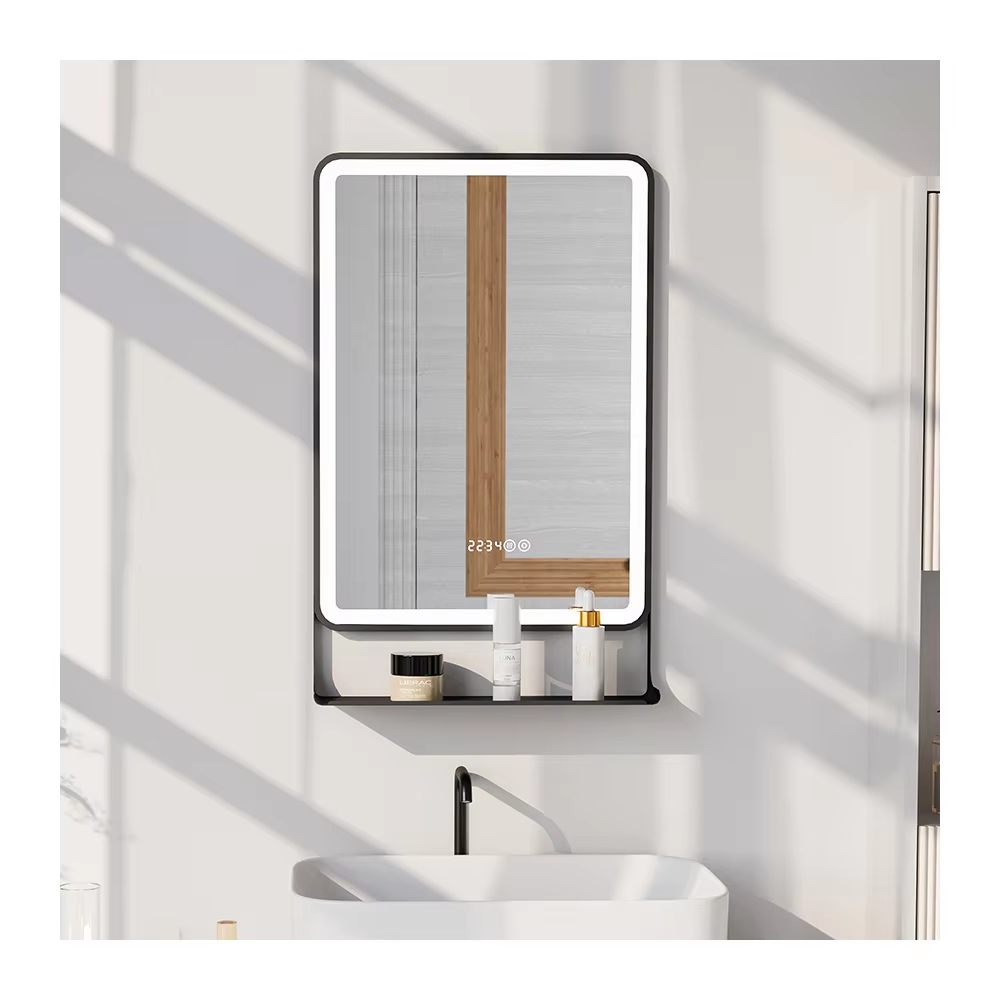
Standard Bathroom Mirror Sizes for Common Vanity Configurations
Single-Sink vs. Double-Sink Vanities: Recommended Mirror Width Ranges (24"–48")
For single-sink vanities, bathroom mirrors typically span 24"–36" wide. Double-sink configurations require wider coverage—either a single 48" mirror or two separate 24"–30" mirrors spaced 5"–10" apart. This prevents visual crowding while maintaining functionality for multiple users. The mirror should frame the sink area without extending beyond vanity edges.
Industry Benchmark: 72% of U.S. standard vanities (30"–60") pair best with 26"–44" wide bathroom mirrors
Most standard vanities align with mirror widths 4"–6" narrower than the countertop—a proportional approach validated by fixture industry standards and observed in 72% of typical bathroom layouts. For precise matching, use this sizing guide:
| Vanity Width | Mirror Width Range | Configuration Tip |
|---|---|---|
| 30" | 24"–26" | Ideal for single users |
| 48" | 42"–44" | Modern single-sink optimization |
| 60" | 56" or 2x 24"–26" | Dual-sink flexibility |
Proportional Sizing Rules for Bathroom Mirrors
The 2–4 Inch Narrower Rule: Aligning bathroom mirror width precisely with vanity footprint
Most professionals recommend going with a mirror that's about 2 to 4 inches smaller than the vanity itself across the width. This gives the vanity a nice frame effect without making the mirror look too big for the space. There's actually some good practical reasons behind this sizing too. Leaving that extra space makes it easier to install those wall lights on either side, plus there's room for towel racks or maybe even some storage units next to the mirror area. The reflection stays centered where it should be and everything works together functionally as well. When we talk about bathrooms, getting this right really makes a difference in how the whole space feels when someone walks in.
- A 30" vanity pairs best with a 26"–28" mirror
- A 48" vanity suits a 44"–46" mirror
- A 60" vanity aligns with a 56"–58" mirror
This margin supports both aesthetic cohesion and daily usability—no awkward gaps or cramped sightlines.
Quick-Reference Sizing Chart: Optimal bathroom mirror dimensions by vanity size (30" to 72")
Use this table to match mirror dimensions with common vanity widths. Height follows ergonomic best practices—centered at 57"–60" from the floor for universal eye-level access—and scales proportionally with width:
| Vanity Width | Mirror Width Range | Mirror Height Range |
|---|---|---|
| 30" | 26–28" | 28–32" |
| 36" | 32–34" | 30–34" |
| 48" | 44–46" | 32–36" |
| 60" | 56–58" | 34–38" |
| 72" | 68–70" | 36–40" |
Larger vanities (60"+) offer greater height flexibility—up to 40"—as long as the 2–4" width reduction is maintained and ceiling clearance permits. For non-standard spaces, start by subtracting 4" from vanity width, then adjust height based on vertical proportions and user needs.
Height, Placement, and Ergonomic Guidelines for Bathroom Mirrors
Ideal height range (30"–34") and vertical centering at 57"–60" from floor for universal eye-level usability
Getting the mirror placed right makes a big difference for everyone who uses it day to day. Most people find that hanging mirrors around 30 to 34 inches tall works well when they're positioned so the center sits roughly between 57 and 60 inches off the ground. This height generally matches where most adults look when standing but still leaves room for folks sitting down or kids to see themselves properly. Leave about 4 to 6 inches space between the bottom of the mirror and the counter top. This helps avoid water splashing onto the glass and gives enough room to check out haircuts or apply makeup without bumping heads. When installing mirrors with lights, remember to put the switches somewhere accessible, ideally no higher than 48 inches from the floor. Many bathroom designers follow these basics because they create functional spaces where mirrors aren't just decorative items anymore but actually serve multiple people comfortably.
FAQ
What is the standard height for hanging a bathroom mirror from the floor?
The center of the bathroom mirror should be placed between 57" and 60" from the floor, which typically aligns with the average adult's eye level.
Why should bathroom mirrors be narrower than the vanity?
Mirrors narrower by 2 to 4 inches provide space for lighting fixtures, towel racks, and maintain aesthetic balance without overcrowding.
Can I use a single large mirror for double-sink vanities?
Yes, a single large mirror, typically around 48" wide, can be utilized for double-sink vanities, ensuring it frames both sink areas effectively.