 EN
EN

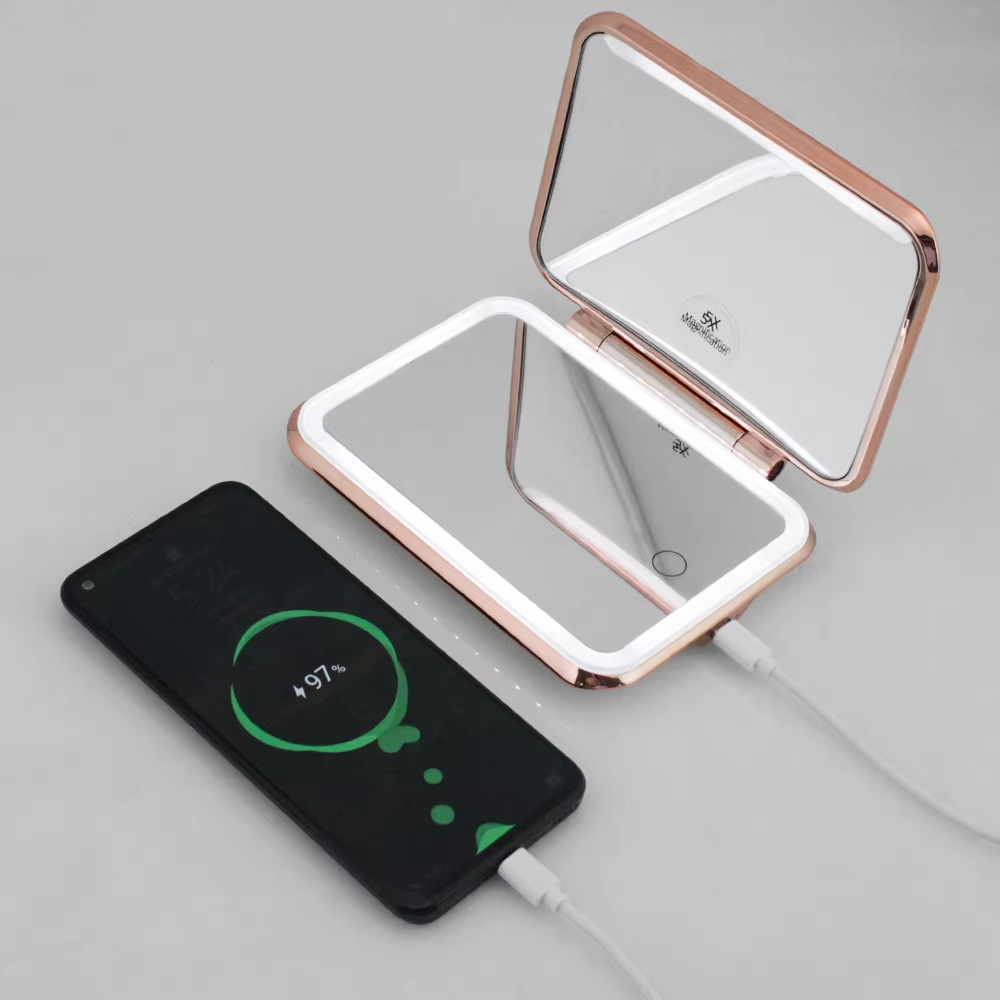
Precise, Adjustable Lighting for Flawless Application
A high-quality makeup mirror relies on precise, adjustable lighting to eliminate shadows and ensure accurate color representation—directly reducing errors like uneven blending or mismatched foundation. This is non-negotiable for both professionals and everyday users.
Natural-Light Simulation with Warm/Cool/Neutral Color Temperature Control
Getting accurate natural light simulation means having adjustable color temps. Warm tones around 2700-3000K work great for those evening looks, while cooler settings at about 4000-5000K mimic typical office lighting. And then there's the neutral range from 5500 to 6500K that really captures that midday sun feel. When people can test their makeup under these different lighting scenarios, they avoid those frustrating situations where colors look completely wrong later on. According to some recent research from Beauty Tech Insights last year, nearly 8 out of 10 pro makeup artists report making fewer mistakes with color matching when their mirrors have this kind of adjustment feature. Look for systems that come with easy to use dials or touch panels so switching between these settings happens smoothly without creating unwanted glare or harsh shadows during application.
High CRI (≥90), Dimmable LEDs, and Low-Heat Engineering for Professional Accuracy
Getting a Color Rendering Index (CRI) of at least 90 really makes colors look their best, which matters a lot when trying to see those subtle differences in makeup shades like blush tones or concealer matches. When combined with dimmable LED lights that let users adjust brightness levels for morning skincare routines or detailed makeup application, plus low heat technology that keeps faces comfortable even after long sessions, things get much better. A study from Dermatology Journal last year showed that these cooler LED lights cut down on skin irritation problems by about half compared to regular light bulbs. All these elements together make makeup application feel less tiring and more like what professionals would do, allowing for better contouring results, smoother blends across facial features, and accurate eyeliner lines without straining eyes too much during the process.
Optical Performance: Magnification, Clarity, and Glass Quality
Targeted Magnification Ranges (2x–15x) and Their Ideal Use Cases for Makeup Mirror Tasks
Magnification should align with your beauty goals:
- 2x–5x: Best for broad-stroke tasks like foundation blending and cheek color placement—preserves natural perspective and minimizes distortion.
- 5x–10x: Ideal for detail-oriented work such as eyebrow shaping, eyeliner application, and concealer precision.
- 10x–15x: Reserved for ultra-fine tasks including lash extension placement, blemish correction, or pore inspection.
Per optical engineering standards, larger-diameter lenses at higher magnifications maintain brightness and resolution—ensuring accurate color and texture perception during critical application steps.
Distortion-Free Optical Glass vs. Acrylic: Why Material Choice Defines Long-Term Reliability
Optical-grade glass outperforms acrylic across three foundational criteria:
- Zero distortion: Preserves facial proportions without warping—vital for symmetry checks and contour accuracy.
- Surface durability: Resists scratches five times more effectively than acrylic, per ASTM D1044 abrasion testing.
- Light transmission: Delivers 99% clarity versus acrylic’s 92%, ensuring faithful color reflection over time.
Acrylic degrades with UV exposure—yellowing and clouding within months—and scratches easily, eroding color accuracy and sharpness. Glass remains optically stable for decades, making it the only material trusted by dermatologists and makeup educators for consistent, professional results.
Ergonomic Design and Adaptive Mounting for Daily Versatility
Full-Range Adjustability: Swivel, Extendable Arms, Foldability, and Wall-Mount Options
Good makeup mirrors need to work with different bodies, spaces, and daily habits. Many models come with swivel bases that rotate all around, great when multiple people share a vanity or want to check angles from every direction. The extendable arms usually stretch between about 12 to 18 inches long, so users can bring the mirror closer for detailed work or step back to see their whole face at once. Some mirrors fold down flat which saves precious counter real estate, something anyone with a small bathroom knows is gold. Wall mounted versions take up no counter space at all and can be positioned just right whether sitting down or standing up. All these features together help maintain better posture while applying makeup, cutting down on that annoying neck pain after spending too long in front of the mirror getting ready.
Key ergonomic benefits include:
- Dynamic positioning—switch effortlessly between macro detail work (e.g., lash styling) and broad-view application
- Personalized height matching—eliminate hunching or overreaching regardless of stature
- Space optimization—via foldable bases or wall-mounted configurations
- Shared usability—smooth swivel mechanisms accommodate multiple users in one space
This adaptability transforms static vanity tools into responsive, inclusive systems—designed for diverse bodies, homes, and lifestyles.
Smart Integration and User-Centric Features in Modern Makeup Mirrors
Modern makeup mirrors aren't just for looking at yourself anymore. They actually bring smart tech right into bathroom routines these days. The touchscreen lets people tweak the lights quickly without any hassle, adjusting brightness and warmth as needed. Want to change something but busy with makeup tools? No problem. Just speak up and the mirror listens, so folks can keep working on their face without dropping anything. Some models even have AR stuff going on where they show how different makeup would look instantly, letting customers try out colors and styles without wasting actual products first. There are also sensors built in that check skin moisture, texture changes, and color differences throughout the day, giving advice about what products might work best based on what's happening with the skin. Most connect via Bluetooth to an app where all this info gets stored, reminders get set for when touch ups are needed, and customized beauty tips come through over time. All these bells and whistles pack into something small enough to fit on most vanities while still matching the decor, making them pretty impressive little devices despite taking up minimal room.
FAQs
-
What is the benefit of having adjustable lighting in makeup mirrors?
Adjustable lighting in makeup mirrors allows users to simulate different lighting conditions, from warm to cool to neutral, which helps in achieving accurate color representation and avoids mistakes in makeup application under varied lighting situations.
-
Why is a high CRI and dimmable LED important for a makeup mirror?
A high Color Rendering Index (CRI) of 90 or above ensures that the colors appear true to life, which is crucial for makeup application. Dimmable LEDs provide flexibility to adjust brightness as needed for different tasks or times of the day.
-
How do magnification settings affect makeup mirror usage?
Different magnification levels serve various purposes: lower levels (2x-5x) are suitable for general makeup application, mid levels (5x-10x) are ideal for detailed tasks like eyeliner application, and higher levels (10x-15x) are used for precision tasks such as lash application or examining pores.
-
What material is best for the long-term reliability of makeup mirrors?
Optical-grade glass is preferred over acrylic because it offers zero distortion, better surface durability, and superior light transmission, sustaining quality and reliability over time.
-
How does smart technology enhance the function of makeup mirrors?
Smart technology in makeup mirrors allows for touch-free adjustments, voice control, augmented reality for makeup trials, and skin analysis, making them more interactive and beneficial in everyday beauty routines.