
 EN
EN

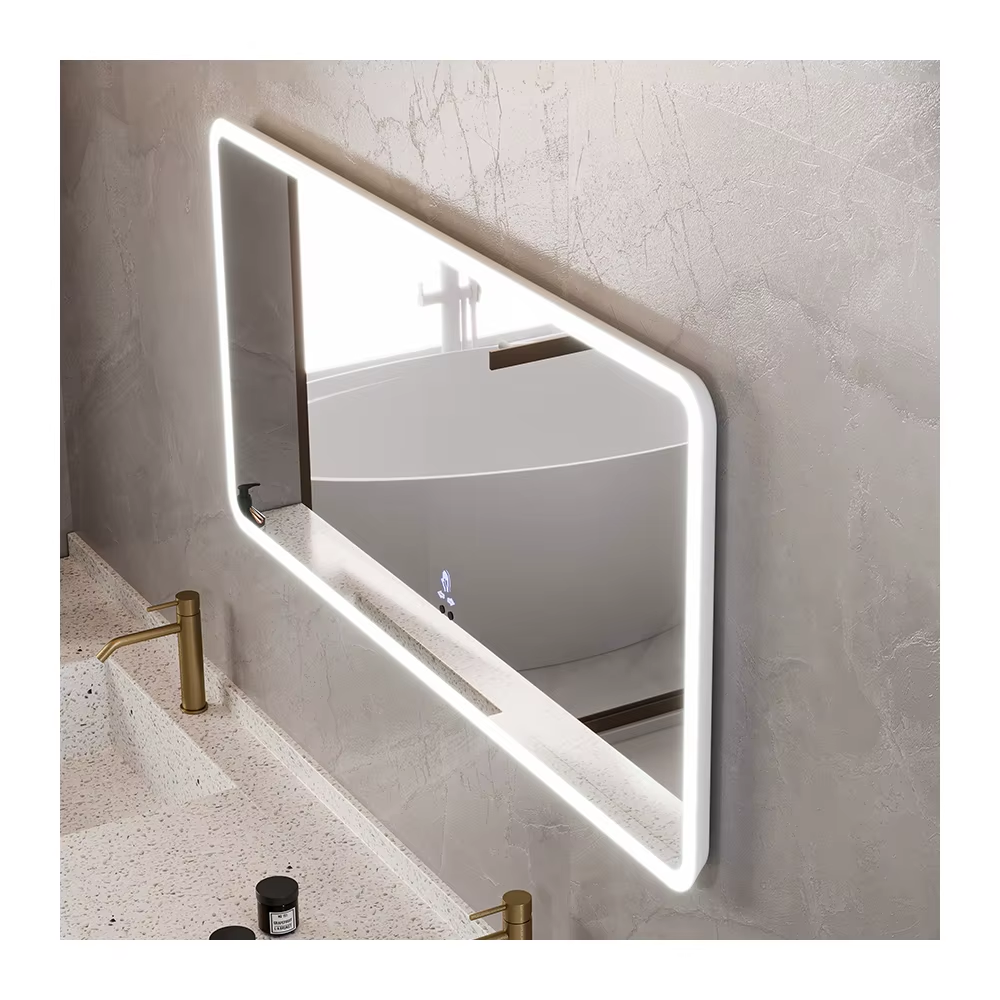
Strategic Placement of Bath Mirrors to Visually Expand Small Bathrooms
Above-Sink vs. Wall-to-Wall: Balancing Proportion and Perception
When it comes time to pick out a bathroom mirror, size matters way more than looks alone. The standard above sink models that are usually around 24 to 36 inches wide work fine for brushing teeth and applying makeup, but they don't really do much to make the room look bigger. Wall to wall mirrors tell another story entirely. These big mirrors reflect light all over the place, creating this cool infinity effect where small bathrooms suddenly seem much roomier. According to some recent data from ASID in their 2023 report, spaces can appear as much as 30 percent larger with these installations. But getting the proportions right is absolutely essential. Put too large a mirror over a skinny vanity and it just looks awkward. On the flip side, if the full wall unit isn't big enough, people end up seeing strange gaps in their reflections. To keep things looking balanced, match the mirror width with whatever sink fixtures are installed and leave about four to six inches of bare wall space on both sides. This frames the mirror nicely without making the whole bathroom feel cramped.
Vertical, Corner, and Recessed Mounting for Unused-Space Utilization
Strategic mounting unlocks overlooked spatial potential:
- Vertical installations draw the eye upward, counteracting low-ceiling claustrophobia—especially effective in bathrooms with 7–8 ft. ceilings.
- Corner placements, particularly at a 45-degree angle between two windows or light sources, transform dead zones into dynamic light-refracting assets—creating perceived depth by reflecting adjacent walls.
- Recessed mounting embeds the mirror within the wall cavity, saving 3–5 inches of precious depth versus surface-mounted alternatives. This approach also enables seamless integration of LED lighting, eliminating protruding fixtures that encroach on usable airspace.
These techniques work through well-documented perceptual principles: vertical emphasis elongates form; angled corner reflections multiply spatial cues; and recessed execution removes visual “objecthood,” allowing the mirror to function as an extension of the architecture itself.
Space-Optimized Bath Mirror Designs: Frameless, Compact, and Shape-Smart
Frameless Bath Mirrors for Clean Lines and Seamless Spatial Flow
Frameless mirrors take away those annoying visual borders completely. The edges just blend right into the wall surface, so what we see isn't really a mirror at all but part of the room itself. This flat, continuous look makes even cramped bathrooms seem bigger and more put together. They work great with modern floating vanities and those cool vessel sinks people love these days. Bold backsplash tiles? No problem either since the mirror doesn't fight for space or attention. Cleaning becomes much easier too because there's no frame where water gets trapped or dust builds up over time. That matters a lot in steamy bathroom environments where regular mirrors would get fogged up constantly. Most professional kitchen and bath designers recommend frameless options when trying to maximize limited space in small bathrooms according to the National Kitchen & Bath Association report from 2022.
Round, Oval, and Angled Mirrors for Tight Corners and Narrow Walls
When standard rectangular formats don't fit, geometric alternatives deliver both function and finesse:
| Shape | Ideal Placement | Spatial Benefit |
|---|---|---|
| Round | Above corner sinks | Softens hard angles, adds visual rhythm |
| Oval | Between door and window | Optimizes vertical space on narrow walls |
| Angled | Sloped ceilings/walls | Conforms to unconventional architecture |
Oval shaped mirrors work wonders on skinny walls because they stretch them out visually without making things look bulky. The pointed ends at each side help take some of the heft away from the wall space. When dealing with angled ceilings or walls that don't run straight, angled mirrors become really useful tools for interior designers. They turn what might seem like problems into cool design features instead. For spaces where there just isn't room for one big mirror, putting together several smaller ones creates interesting reflective areas that wouldn't otherwise exist. These different shapes bring personality to rooms while working within limited space constraints, sometimes actually making cramped areas feel better than before.
Multi-Functional Bath Mirrors with Integrated Storage and Lighting
Mirror Cabinets: Combining Reflective Surface and Concealed Storage
Mirror cabinets rank high on our list of smart storage hacks for small bathrooms. These clever units combine the basic mirror function with hidden compartments underneath, so counters stay clutter free without needing those bulky standalone cabinets or exposed shelves that take up precious floor space. The wall mounted versions save all that valuable real estate against the wall, and there are also slim depth models available now (some as thin as 5 inches) that fit right into narrow corners where nothing else would go. Soft closing hinges mean no more slamming doors or annoying creaks over time. Some designs actually have mirrored backs inside the cabinet itself, which makes the whole bathroom feel brighter. Most come with adjustable shelves too, great for storing those longer items like hair straighteners or big bottles of shampoo. Just remember to pick one that matches your bathroom's style and size properly. Get the colors and proportions right, and these cabinets disappear into the background but still give tons of extra storage when needed.
LED-Integrated Bath Mirrors for Task Lighting Without Fixture Clutter
Mirrors with built-in LED lights combine task lighting and reflection all in one sleek package. The edge lighting or backlight options give off even light that cuts down on shadows, which is great for getting ready in the morning. No more fighting with those big wall sconces or trying to fit ceiling lights when space is tight. According to the US Department of Energy data from 2023, these LED bulbs can last around 50 thousand hours. Some models even let users adjust brightness or change colors between 3000K and 5000K, helping people stay in sync with their body clocks. Most have IP44 ratings so they work well in damp bathrooms, plus many come with anti-fog tech that keeps things clear after a hot shower. Putting the lighting right into the mirror itself makes wiring simpler, installation easier, and keeps walls looking clean. Lighting experts at IES often suggest these as smart choices for modern bathrooms.
FAQ
What are the benefits of using wall-to-wall mirrors in small bathrooms?
Wall-to-wall mirrors can make spaces appear up to 30% larger by reflecting light and creating an infinity effect, making small bathrooms look roomier.
How do frameless mirrors benefit bathroom design?
Frameless mirrors blend into the wall, creating a seamless look that avoids visual distraction, making small spaces appear larger and easier to maintain.
What types of mirrors are best for unconventional spaces?
Round, oval, and angled mirrors are ideal for tight corners, narrow walls, and sloped ceilings, providing both aesthetic charm and functionality.
What are the advantages of LED-integrated mirrors?
LED-integrated mirrors provide task lighting without clutter, last long, and often include features like adjustable brightness and anti-fog technology, making them ideal for modern bathrooms.