
 EN
EN

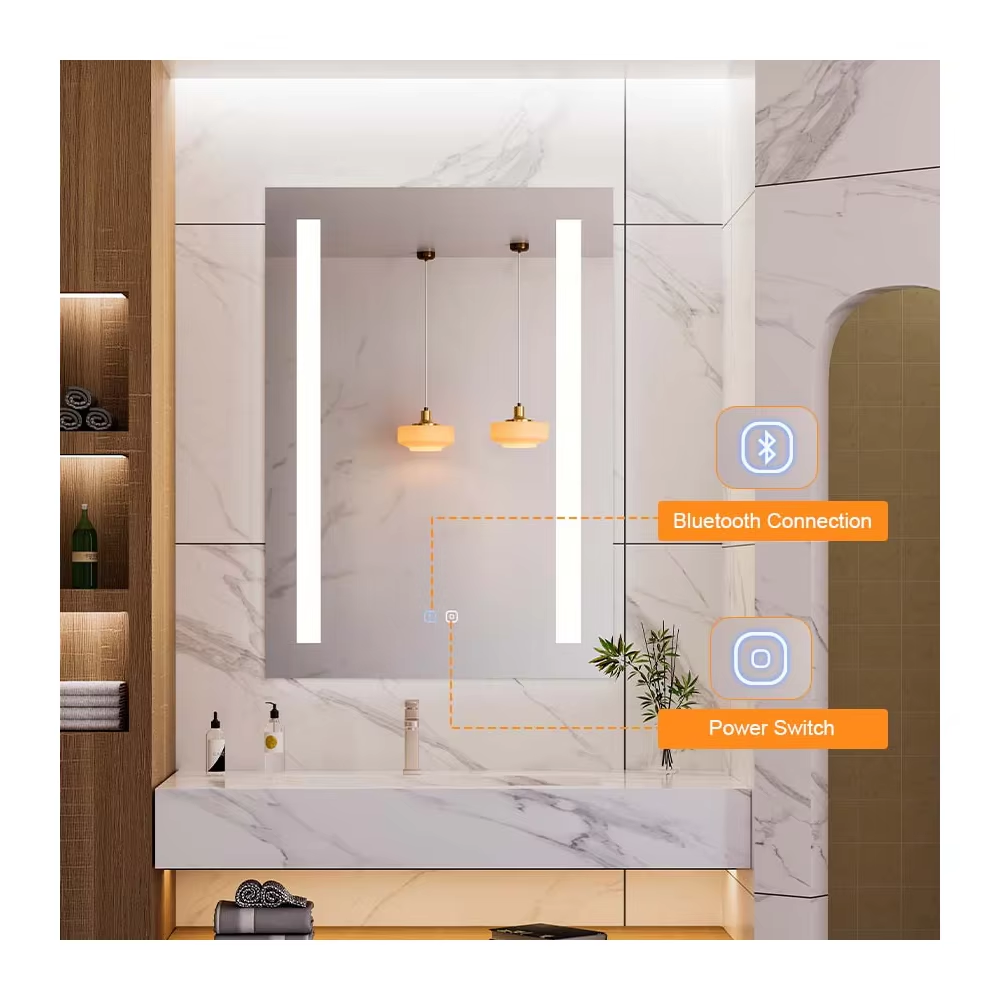
Proportional Sizing: Aligning Bathroom Mirrors with Vanity Dimensions
Optimal Width Ratios: Why Two-Thirds and Slightly Narrower Mirror Widths Enhance Visual Balance
Getting the mirror width just right makes all the difference when it comes to avoiding a cramped or lopsided look in bathroom spaces. Most designers suggest going with mirrors that cover about two-thirds of the vanity surface area. Think something like a 24 inch mirror sitting above a 36 inch vanity unit. Another good option is picking out a mirror that's roughly 2 to 4 inches shorter than the vanity itself. For instance, placing a 32 inch mirror over a 36 inch vanity leaves enough room around the edges for installing wall sconces, adding decorative tiles, or even mounting some storage solutions without drawing attention away from the main vanity piece. Big mirrors can actually make small vanities feel too crowded, whereas smaller mirrors tend to break up the visual flow and don't serve their functional purpose as well either.
Height Placement Guidelines: Positioning the Mirror Bottom Edge Relative to Faucet or Sink Midpoint
The height of bathroom mirrors matters quite a bit for how they work and look in the space. A good rule of thumb is to place the bottom of the mirror about 5 to 6 inches above where the sink sits or right above the faucet base. This helps keep water from splashing onto the glass surface and makes sure people see themselves properly without straining their necks. When dealing with a typical sink that stands around 34 inches tall, aim for positioning the mirror so its bottom edge rests roughly 39 to 40 inches off the ground. If the room has higher ceilings though, there's some flexibility to raise the mirror up a little, just remember to leave that same 5 to 6 inch gap between the mirror and whatever fixtures are below it. Double sinks require special attention too. Make certain both mirrors sit at exactly the same height on either side. Getting this right ensures everything looks balanced visually and works well practically when someone needs to use either side of the vanity.
Design Harmony: Matching Bathroom Mirror Shape and Style to Vanity Aesthetics
Achieving visual cohesion between vanity and mirror transforms functional spaces into intentional design statements. Mirror shape influences spatial perception and stylistic resonance—selecting complementary forms prevents visual discord while reinforcing the room’s character.
Modern & Minimalist Vanities: Clean-Line Rectangular and Frameless Bathroom Mirrors
Rectangular mirrors really work well with minimalist vanities because they match that clean geometric look. They fit right in with straight lines of cabinetry and those modern drawer fronts without handles, creating a continuous line of sight across the room. Frameless mirror options take this even further since there's nothing interrupting the view. The lack of frames makes spaces feel bigger as light bounces around seamlessly. When installing one, it generally looks best if the mirror is about 2/3 to 3/4 the size of the vanity itself. This keeps things looking balanced while highlighting that clean, clutter-free style so many people love in today's bathrooms.
Vintage, Nordic, and Organic Vanities: Round, Oval, and Arched Bathroom Mirrors for Softened Contrast
Curved mirrors really work wonders when paired with those angular vanities found in vintage spaces, Nordic designs, or anything with an organic feel. When placed over ornate cabinetry, arched mirror frames bring in that classic elegance nobody seems to tire of. Oval-shaped mirrors just naturally blend with wooden elements or rattan furniture, creating a seamless look. Round mirrors are great for those boxy Nordic style vanities, bringing some softness to hard lines and creating visual harmony with their gentle curves. There's actually something quite practical about these round shapes too. They spread light around better than square or rectangular mirrors do, which makes rooms with neutral color schemes feel warmer and more inviting. For bathrooms with two sinks, getting matching round mirrors creates balance without feeling forced or overly symmetrical.
Material and Finish Coordination: Unifying Bathroom Mirrors with Vanity Hardware and Surfaces
Metallic Finish Consistency: Brushed Gold, Matte Black, and Polished Nickel Across Mirrors, Faucets, and Vanity Handles
When designing bathrooms, it makes sense to match mirror frames with the same finish as faucets and cabinet hardware. Getting those metal details right really ties everything together visually. Brushed gold brings warmth into a space, matte black creates that sleek modern look people want nowadays, and polished nickel works well if someone wants something in between traditional and contemporary styles. According to industry reports, around three-quarters of interior designers stick with matching finishes throughout their bathroom projects because this approach just looks better overall and keeps the design story consistent without creating visual clutter. Contemporary bathrooms often feature matte black mirrors paired with similar colored handles since they go so well together. Brushed gold tends to work particularly nicely with older-style vanities, whereas polished nickel has that classic touch that never goes out of fashion.
Natural Material Pairings: Wood-Framed Bathroom Mirrors with Warm-Tone Vanities; Rattan Accents in Coastal and Boho Bathrooms
Wood-framed mirrors work really well with warm-colored vanities such as walnut or oak and create that feeling of natural harmony throughout the room. For those going for a beachy vibe or something more bohemian, rattan-framed mirrors bring in some nice texture without taking over the whole space. People seem to care about this stuff too. According to recent surveys, around 8 out of 10 homeowners prefer natural materials because they think these items last longer and feel more genuine somehow. Teak and bamboo mirrors look great against earthy-toned vanities, whereas lighter rattan frames pair nicely with white or sage green cabinets. When it comes to keeping things lasting though, don't put untreated wood anywhere close to water sources like sinks. Better safe than sorry here, so go for wood that's been properly sealed and treated to resist moisture damage.
FAQ
What is the recommended width for a bathroom mirror?
Designers usually recommend choosing a mirror that covers two-thirds of the vanity's surface area. Alternatively, a mirror that is 2 to 4 inches narrower than the vanity is another good option.
How should I position the height of the bathroom mirror?
Position the bottom of the mirror about 5 to 6 inches above the sink or faucet base. This keeps water splashes off the mirror and ensures visibility without neck strain.
What types of mirrors work with minimalist bathroom styles?
Rectangular and frameless mirrors complement minimalist vanities with their clean geometric lines. Mirrors that are 2/3 to 3/4 the size of the vanity work best in such settings.
How should metallic finishes be coordinated in bathroom design?
Metallic finishes like brushed gold, matte black, and polished nickel should be consistent across mirrors, faucets, and vanity handles. This creates visual cohesion and prevents clutter.
What natural materials are popular for bathroom mirrors?
Wood-framed mirrors, especially in warm tones like walnut or oak, work well with similar colored vanities. Rattan accents are ideal for coastal and bohemian styles.