
 EN
EN

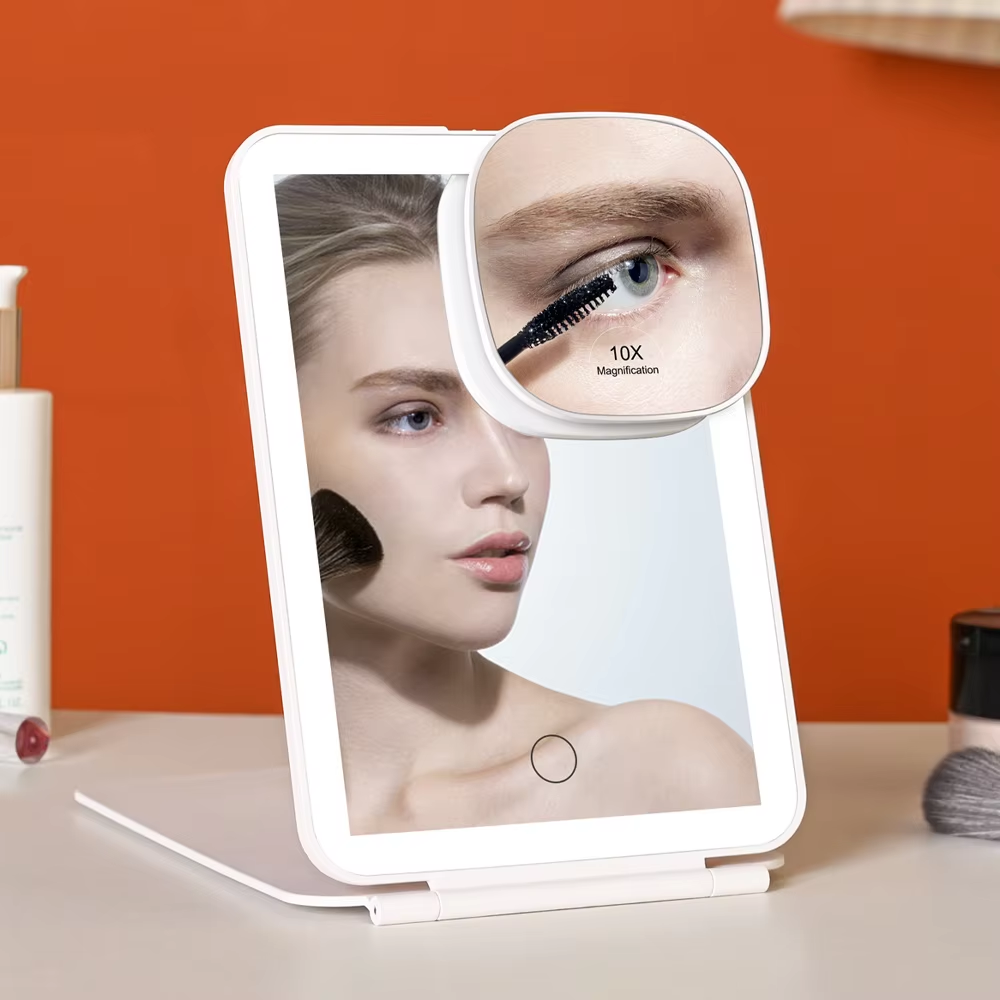
Understanding Magnification Levels in a Makeup Mirror
2x–5x Magnification: Ideal for Foundation, Blending, and Everyday Precision
Makeup mirrors with 2 to 5 times magnification show those little skin textures and pores without making everything look too zoomed in. This makes them great for applying foundation properly, blending contours smoothly, and fixing small issues during daily makeup routines. People can actually see where coverage isn't even, or if there are patches missing before they finish putting on makeup. Some studies published in the Journal of Cosmetic Dermatology found that when using 5x magnification, folks get better at spotting symmetry problems around 40 percent more than regular mirrors do. That matters a lot for placing blush correctly and getting clean lines around lips. These mirrors strike a good balance between showing enough detail to catch tiny flaws but not so much that it becomes stressful looking at every bump and pore.
10x Magnification: Clinical-Grade Detail for Eyeliner, Eyebrows, and Tweezing
When doing detailed work such as winged eyeliner, microblading, or tweezing, 10x magnification gives professionals the kind of clear view that dermatologists get during examinations. With this level of magnification, practitioners can see each lash strand, notice tiny textures on skin surfaces, and track how pigments spread across the area. According to a survey from 2022 in the Professional Beauty Today magazine, around three quarters of certified makeup artists actually use between 7x and 10x magnification when working on eyebrows. This practice cuts down mistakes during applications by about half. Although it's probably too strong for looking at entire faces at once, the tight focus area allows for super sharp lines and takes away the uncertainty factor when working on those tricky spots where precision matters most.
Real-World Accuracy Gains from Using a Magnifying Makeup Mirror
Detecting Skin Texture and Imperfections Before Application
Looking through a magnifying mirror reveals all sorts of tiny skin issues we normally miss at regular size view dry spots, those little bumps forming on the nose, and how our skin texture changes across different areas. Knowing what's going on lets us get ready better avoid putting too much powder in creased areas but still cover up any red spots or dark marks properly. Most professional skincare experts (around 72%) actually check out pores closely when helping clients prep their skin because it makes such a difference in how makeup behaves throughout the day. It stops foundation from sinking into wrinkles or peeling off by mid afternoon. Spotting problems before applying anything saves tons of time fixing things later which just ruins the whole look anyway.
Achieving Symmetry and Sharp Definition: Lips, Wings, and Microblading
Getting precision right requires good visibility, and magnification between 5 and 10 times makes all the difference. Winged eyeliner becomes much easier when tiny inconsistencies in brushwork become visible, allowing quick fixes so both eyes match up nicely. Many microblading professionals actually need these close-up views to place individual brow hairs at about 45 degrees consistently, which helps create brows that look natural rather than artificial. The detail matters especially around the cupid's bow area where people report getting roughly 40 percent crisper lines because they can see those little wisps of color that would otherwise go unnoticed. And let's not forget gradients on lips either - having this level of clarity stops folks from applying too much product in certain spots, keeping the overall look dimensional instead of flat.
Magnifying vs. Standard (1x) Makeup Mirror: Functional Differences and Evidence-Based Benefits
Regular mirrors show what we see normally but miss those tiny details that really count when applying makeup. Think about it: fine lines around the eyes, random hairs sticking out, or patches where color isn't spread evenly all get hidden from view. Magnifying mirrors (usually between 2x and 10x power) turn this whole process around. What makes them special isn't just making things bigger on the surface. They actually expose problems before anyone else notices them. According to a study published in Beauty Tech Journal last year, around three quarters of people who tried these found their eyeliner wings looked straighter and lips were more symmetrical when working with magnified images. And here's something practical too. When someone applies foundation or draws eyebrows while looking through a magnifier, they catch those little blending issues right away instead of discovering them later. Standard mirrors often result in too much product applied, smudges happening, or one side looking different from the other simply because small mistakes go unnoticed at first glance. So let's be clear. Good quality magnifying mirrors aren't fancy extras for vanity purposes. They serve as essential tools for anyone serious about getting makeup right, combining real world experience with actual scientific principles behind cosmetics.
FAQ
What magnification is best for daily makeup?
Magnifications of 2 to 5 times are best for daily use as they provide a clear view for applying foundation and blending without overwhelming detail.
Why do professionals prefer 10x magnification?
10x magnification provides clinical-grade detail, essential for precise tasks like eyeliner and tweezing.
Can beginners use magnifying mirrors?
Yes, beginners can benefit from these mirrors to improve precision and catch small details early on.