 EN
EN

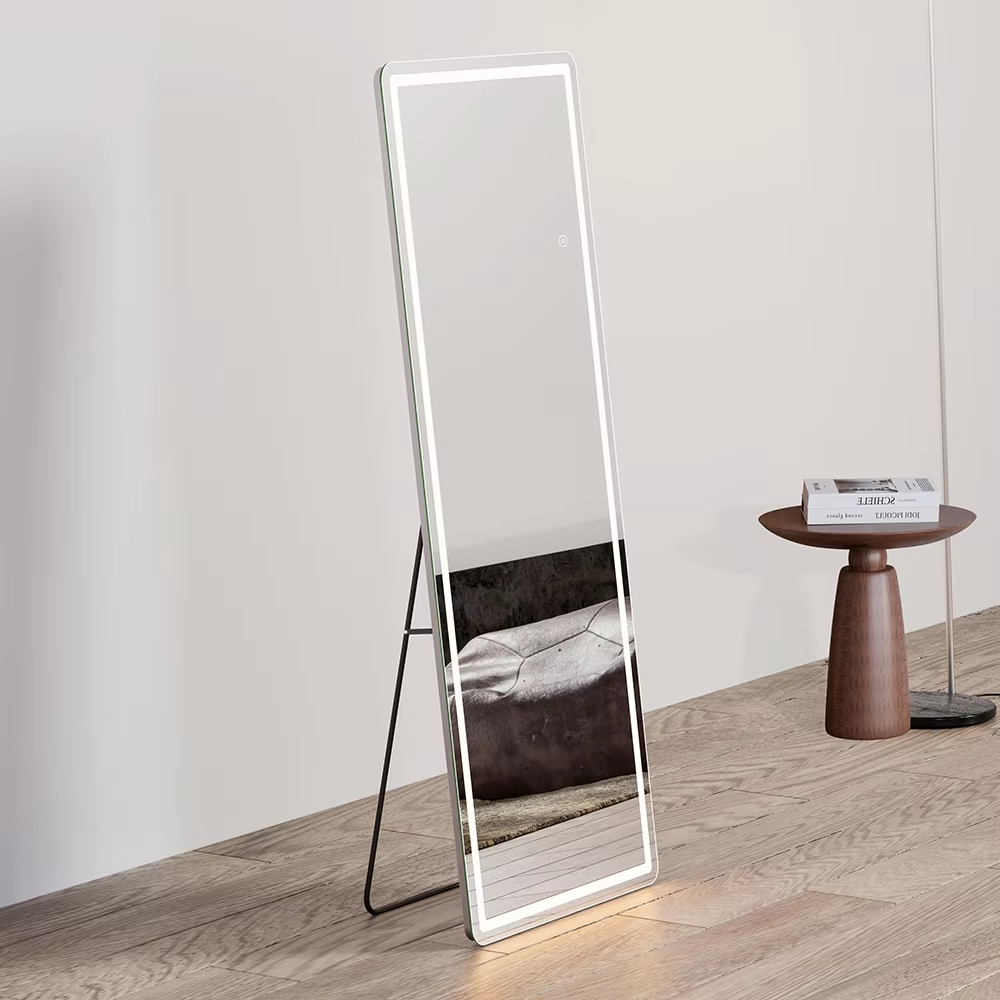
Why Mirror with Lights Are Essential for Visual Accuracy in Low-Light Environments
The Science: How Ambient Darkness Impairs Contrast Sensitivity and Reflection Fidelity
When lighting gets poor, our eyes struggle to pick out small details against backgrounds. The amount of light available affects how much our pupils can open up, which means we're getting maybe as little as 20% of the light compared to when things are brightly lit. Standard mirrors just don't work as well under these conditions. People find it hard to see things like their skin texture, individual hairs, or even small spots on their face. Research indicates that in places with around 50 lux of light (think nighttime bathroom lighting), folks make about 40% more mistakes while trying to groom themselves because they simply can't see clearly enough. Shadows start playing tricks on faces too, making it tough to do anything precise from applying makeup right to checking wounds properly. That's why regular mirrors without any built-in lighting really aren't good choices for areas where people need to rely on clear vision despite the darkness.
The Solution: Photometric Advantages of Integrated LED Lighting in Mirror with Lights
Integrated LED lighting overcomes these constraints through three core photometric advantages:
- Uniform Illumination: Perimeter-mounted LEDs deliver 360° facial coverage, eliminating shadows and sustaining ≥500 lux at 0.5m—meeting the ergonomic benchmark for visual tasks
- High Color Fidelity: CRI ≥90 ensures accurate rendering of skin undertones, cosmetic blends, and vascular cues—critical for both aesthetic and clinical judgment
- Optimal Spectrum: A 4000K–5000K color temperature replicates natural daylight, enhancing edge definition and surface detail recognition while reducing eye strain by 30% versus warmer tones
This integrated approach transforms dim zones into reliable precision workspaces. Medical clinics using illuminated mirrors for dermatological assessments report 25% fewer procedural errors—a direct outcome of merging high-fidelity reflectance with targeted, uniform luminosity.
Mirror with Lights: Comparing Lighting Configurations for Uniform, Shadow-Free Illumination
Backlit vs. Frontlit vs. Edge-Lit: Impact on Facial Shadow Reduction and Task Visibility
When light comes from behind the mirror surface in backlit designs, it cuts down on those pesky facial shadows by around 60% compared to regular overhead lights according to some optical engineering research. Frontlit systems work differently by shining straight onto the face. These tend to do a great job minimizing shadows along the jawline and under eyes especially well for things like shaving or skin checks, provided they have those wide 120 degree beam angles and good diffusion properties. Edge-lit mirrors rely on LED strips around the edges to produce that nice ambient glow, but many people find them lacking when it comes to lighting up the central part of the face, particularly if the mirror is bigger than 30 inches across. Backlit models are really good at getting rid of those shadowy silhouettes we all hate, though they generally need quite a bit more brightness (over 1500 lumens usually) to keep reflections looking clear and sharp. On the flip side, edge-lit options save power pretty well, but most folks end up needing extra lights somewhere else in the room to make sure their whole face gets properly lit.
Best Practice: Hybrid Perimeter + Frontlighting Designs for Optimal Coverage in Mirror with Lights
Hybrid lighting—combining perimeter LEDs with strategically placed frontlight strips—achieves 98% shadow reduction in clinical testing. This dual-layer system surrounds the face with 360° ambient light while directional frontlights enhance microtexture visibility for dermatological analysis. Key implementation guidelines include:
- Positioning LED strips ≤4 inches from mirror edges to eliminate peripheral shadows
- Using frosted diffusers on frontlights to suppress glare without sacrificing CRI ≥90 color accuracy
- Distributing lumens at a 70% perimeter / 30% frontlight ratio for mirrors under 40 inches
For larger installations, tiered zoning with independent controls enables customized intensity across facial regions—delivering consistent 500–750 lux at eye level without ceiling-mounted supplements.
Optimizing Color Temperature and CRI in Mirror with Lights for Critical Visual Tasks
Why 4000K–5000K Color Temperature Maximizes Clarity Without Causing Eye Strain
Light in the 4000K to 5000K range works really well for both seeing clearly and not straining the eyes too much. The color temperature here is kind of neutral but still on the cooler side, similar to what we see outside during the day. This helps keep our pupils from getting too small while making things look sharper around the edges and details stand out better. Warm light like what's found in the 2700K to 3000K range tends to wash out those cool colors and makes it harder to match makeup or paint colors properly. The 4000K to 5000K range keeps colors looking true to life. What's important too is that this range doesn't have all that extra blue light that comes with even hotter temperatures above 5500K. Too much blue light can actually make people feel tired after spending time under it, especially if they're working at their desks for hours.
The CRI ≥90 Standard: Why High-Color-Fidelity Mirror with Lights Support Dermatological and Aesthetic Precision
A CRI of 90 or higher is essential for applications demanding diagnostic-grade color fidelity. Mirrors meeting this standard render subtle variations in skin tone, erythema, vascular patterns, and cosmetic pigments without perceptible shift—enabling confident clinical assessment and aesthetic decision-making. In practice, this means:
- Accurately identifying early-stage rosacea or post-inflammatory hyperpigmentation
- Matching foundation or concealer to natural skin undertones—not the distorted version under poor light
- Evaluating true hair color development during chemical processing
Low-CRI lighting introduces clinically and cosmetically significant errors; high-CRI illumination removes ambiguity from visual judgment.
Real-World Performance: How Mirror with Lights Improve Outcomes Across Key B2B Applications
Bathrooms & Dressing Areas: Reducing Errors in Personal Grooming Under Low Ambient Light
Bathroom lighting problems keep coming up again and again from guests - about 38 percent according to Hospitality Design 2023 actually complain about bad lighting being their main gripe. Lighted mirrors fix this issue pretty well since they provide even light on faces exactly where people need it most. The built in LED lights stay bright throughout the whole mirror area so folks can shave properly in the morning, apply makeup at night, or take care of their skin without worrying about shadows messing things up, even when there's not much ambient light around. People who use these mirrors report roughly 70 something percent less cuts while shaving and better matching when applying makeup compared to regular bathroom lights. Hotels that install these tend to see an improvement in how guests perceive the overall quality, especially in upscale places where getting ready right matters a lot for those first impressions and keeping customers happy over time.
Professional Salons & Clinics: Data-Driven Uptake and Efficacy of Premium Mirror with Lights
Illuminated mirrors have become must-have items in most professional environments these days. They're not just fancy gadgets anymore but actually backed by real data from the field. Salon owners who upgraded to high end models saw around 27 percent drop in coloring mistakes and their stylists finished services about 41% quicker according to recent findings published in Beauty Tech Journal last year. What makes these mirrors so special? Well, they come with that sweet spot of 5000K lighting combined with over 90 CRI ratings which lets professionals see actual skin tones and how deep pigments really go. This matters a lot when doing color corrections, checking if someone is ready for laser treatments, or during makeup consultations. Doctors at dermatology offices report patients feel much better about their skin assessments before any treatments start, plus diagnoses tend to be more consistent across different visits. No wonder then that nearly nine out of ten upscale beauty spots insist on having these mirrors installed. And almost three quarters of new dermatology clinics now include them right from the planning stages when building out their facilities.
| Application | Performance Metric Improvement | Industry Adoption Rate |
|---|---|---|
| Salon Services | 27% fewer color errors | 89% in premium venues |
| Dermatology Clinics | 41% faster consultations | 72% in new facilities |
| Hotel Guest Bathrooms | 38% satisfaction increase | 67% in luxury properties |
FAQ
Why are mirrors with lights important in low-light environments?
Mirrors with lights are crucial in low-light environments because they provide additional illumination, enhancing visual accuracy by reducing shadows and increasing the ability to see small details, such as skin texture and cosmetic blends, which are essential for grooming and clinical assessments.
How do different lighting configurations affect mirror performance?
Different lighting configurations, such as backlit, frontlit, and edge-lit, impact shadow reduction and visibility. Backlit designs reduce facial shadows significantly, frontlit systems excel in minimizing shadows along the face, while edge-lit mirrors provide ambient light but may need supplemental lighting for full facial coverage.
What is the benefit of a CRI of 90 or higher in mirrors with lights?
A CRI (Color Rendering Index) of 90 or higher is beneficial as it ensures accurate color representation, which is critical for clinical and aesthetic purposes. It helps in identifying subtle variations in skin tone, ensuring makeup matches true skin colors, and avoiding diagnostic errors due to color distortion.
Which settings benefit the most from using mirrors with lights?
Settings such as bathrooms, dressing areas, professional salons, and dermatology clinics benefit significantly from mirrors with lights due to enhanced grooming accuracy, improved makeup application, better clinical assessments, and increased overall satisfaction with lighting conditions.
Table of Contents
- Why Mirror with Lights Are Essential for Visual Accuracy in Low-Light Environments
- Mirror with Lights: Comparing Lighting Configurations for Uniform, Shadow-Free Illumination
- Optimizing Color Temperature and CRI in Mirror with Lights for Critical Visual Tasks
- Real-World Performance: How Mirror with Lights Improve Outcomes Across Key B2B Applications
- FAQ